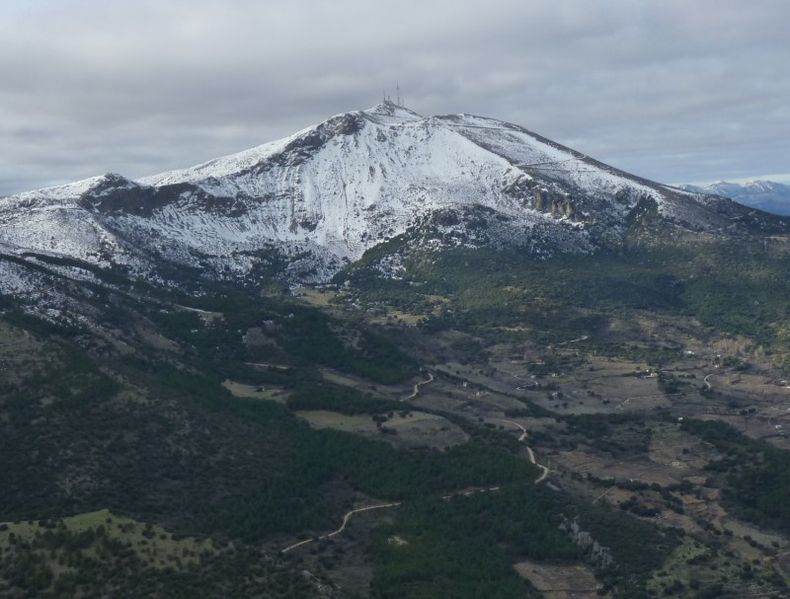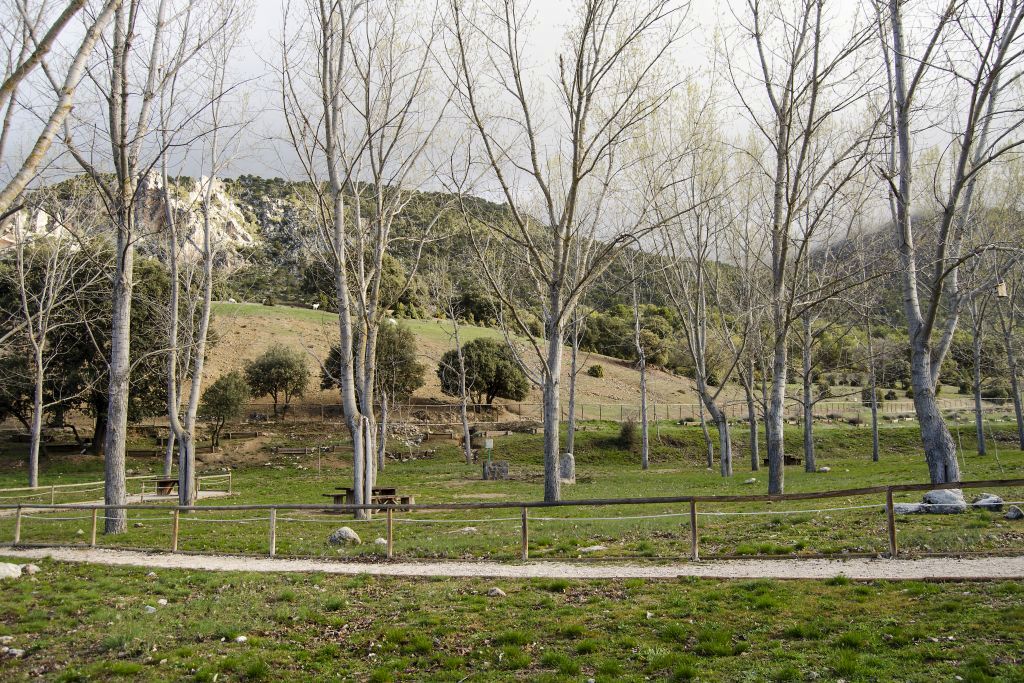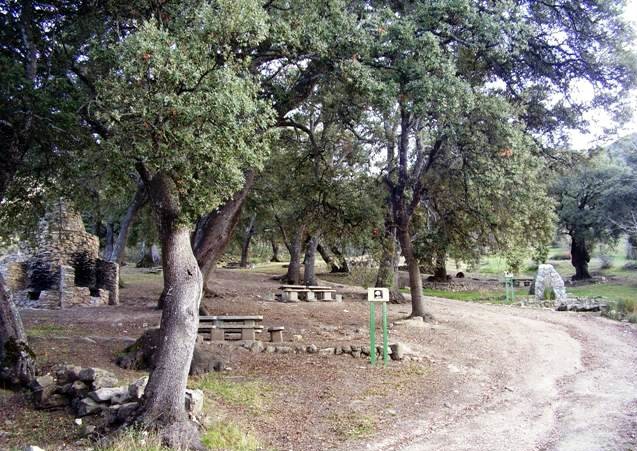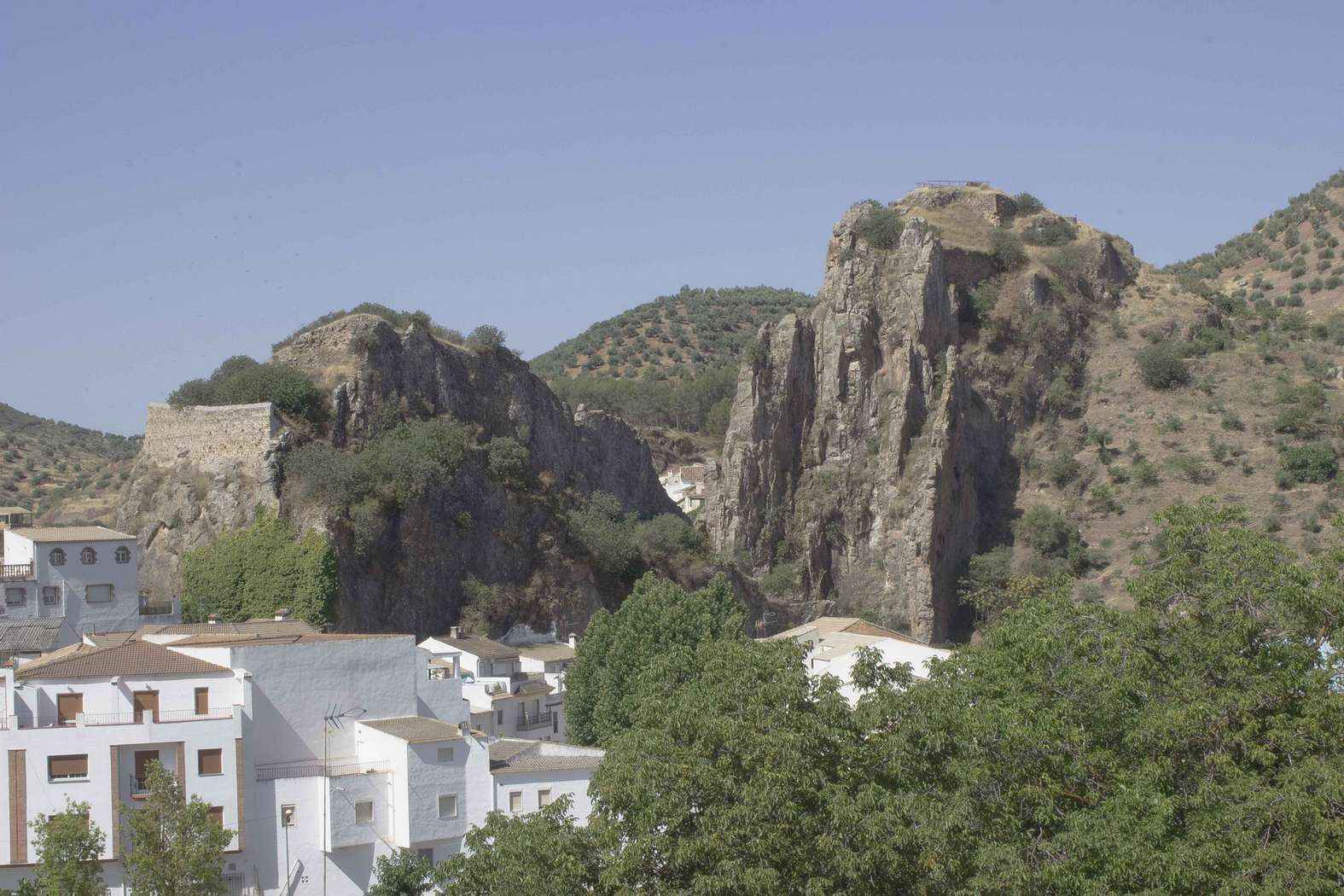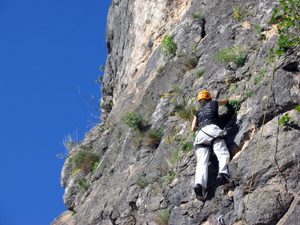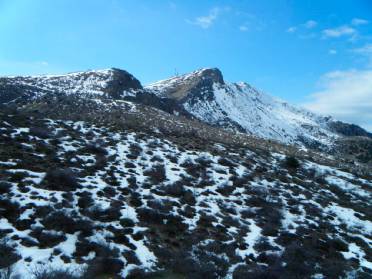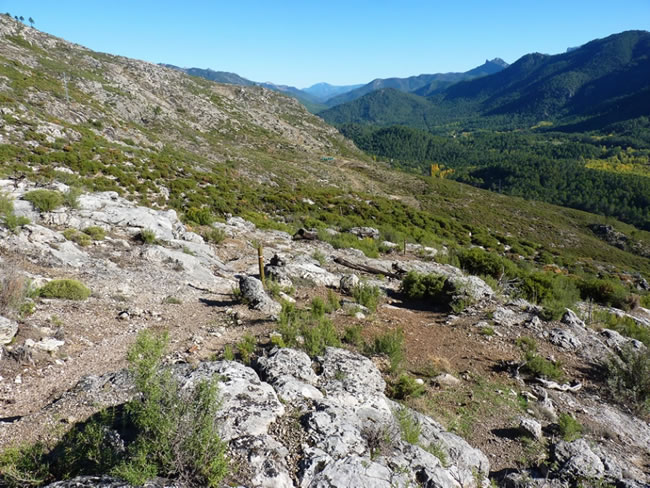


Situated between the Subbética and Prebética mountain ranges, the Sierra Mágina is a veritable open-air geological museum. Its marine origins date back to the Mesozoic Era, with rocks from the Triassic and formations predominantly from the Jurassic and Cretaceous periods, when this area lay beneath ancient oceans.
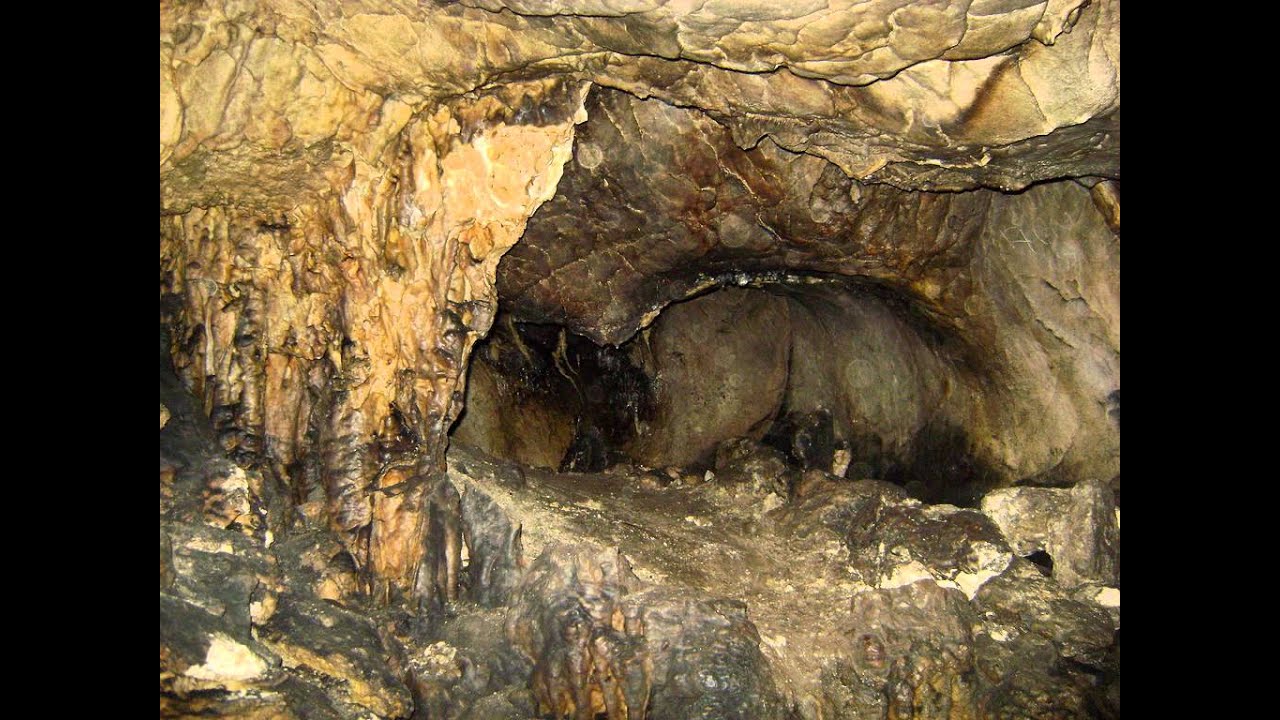
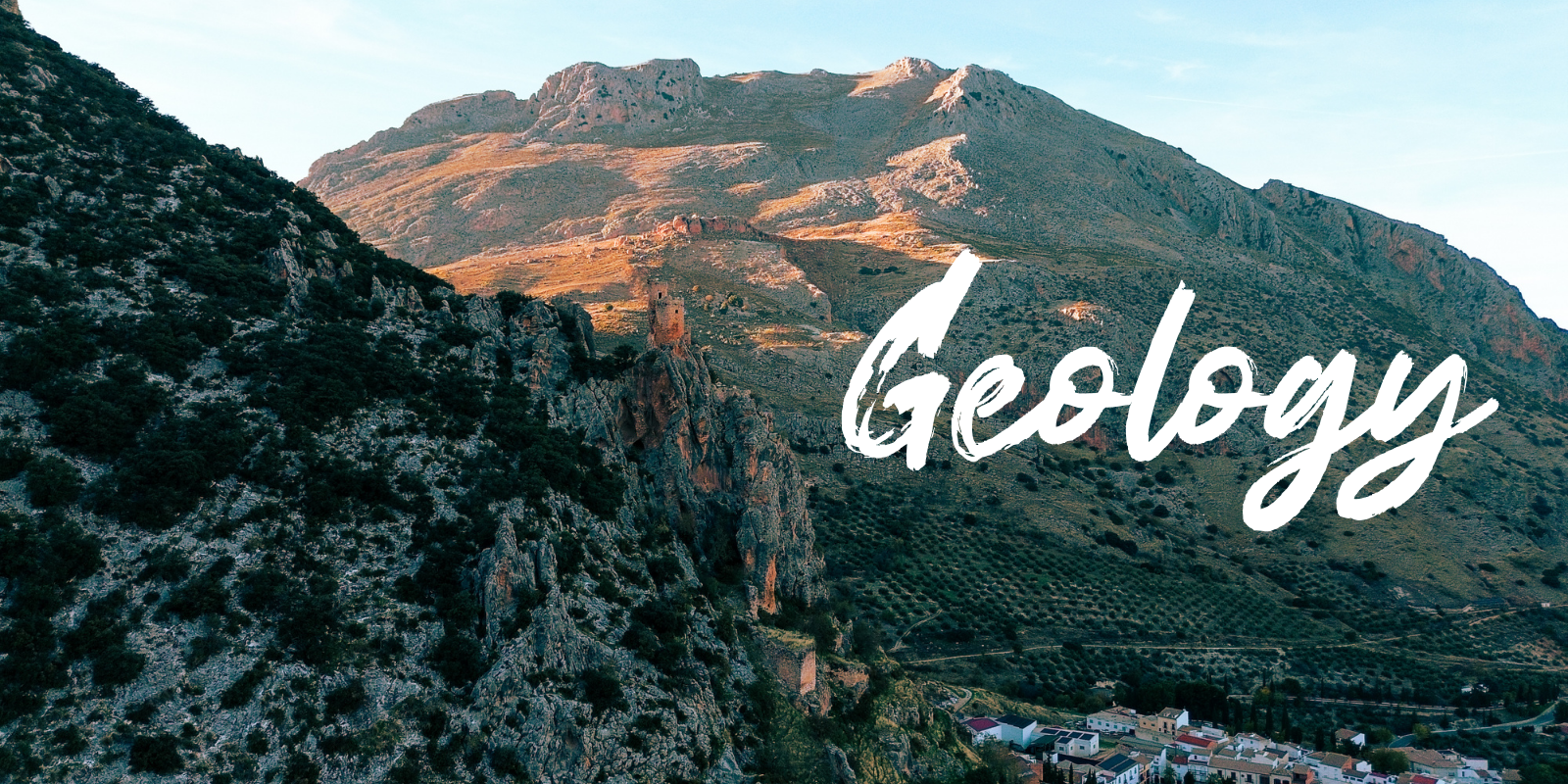
This past has left a valuable palaeontological heritage, such as the reddish limestones containing ammonites and the 16-million-year-old seaweed fossils found at El Torcal (Albanchez de Mágina). Composed mainly of limestone, the mountain range rises abruptly above a sea of olive trees, creating a landscape of striking contrast, shaped over millennia by water into karst formations, sinkholes and ravines.
Alongside the limestone, subvolcanic rocks and traces of submarine volcanism are also found, adding diversity to the terrain, where peaks, fertile valleys and badlands alternate. At lower altitudes, marl and clay soften the terrain and favour crops and springs. Sierra Mágina is, in short, a unique landscape sculpted by rock, water and time.