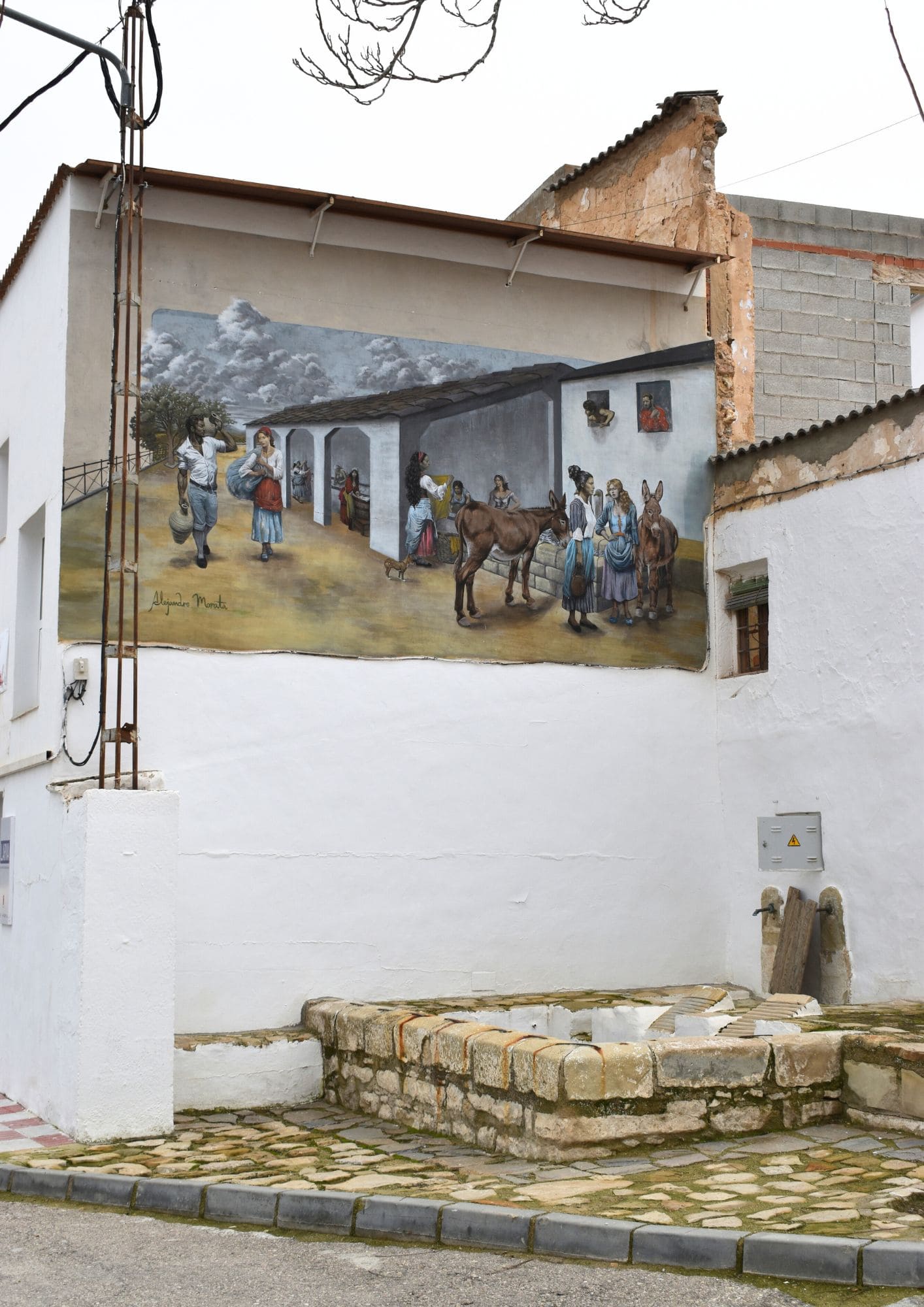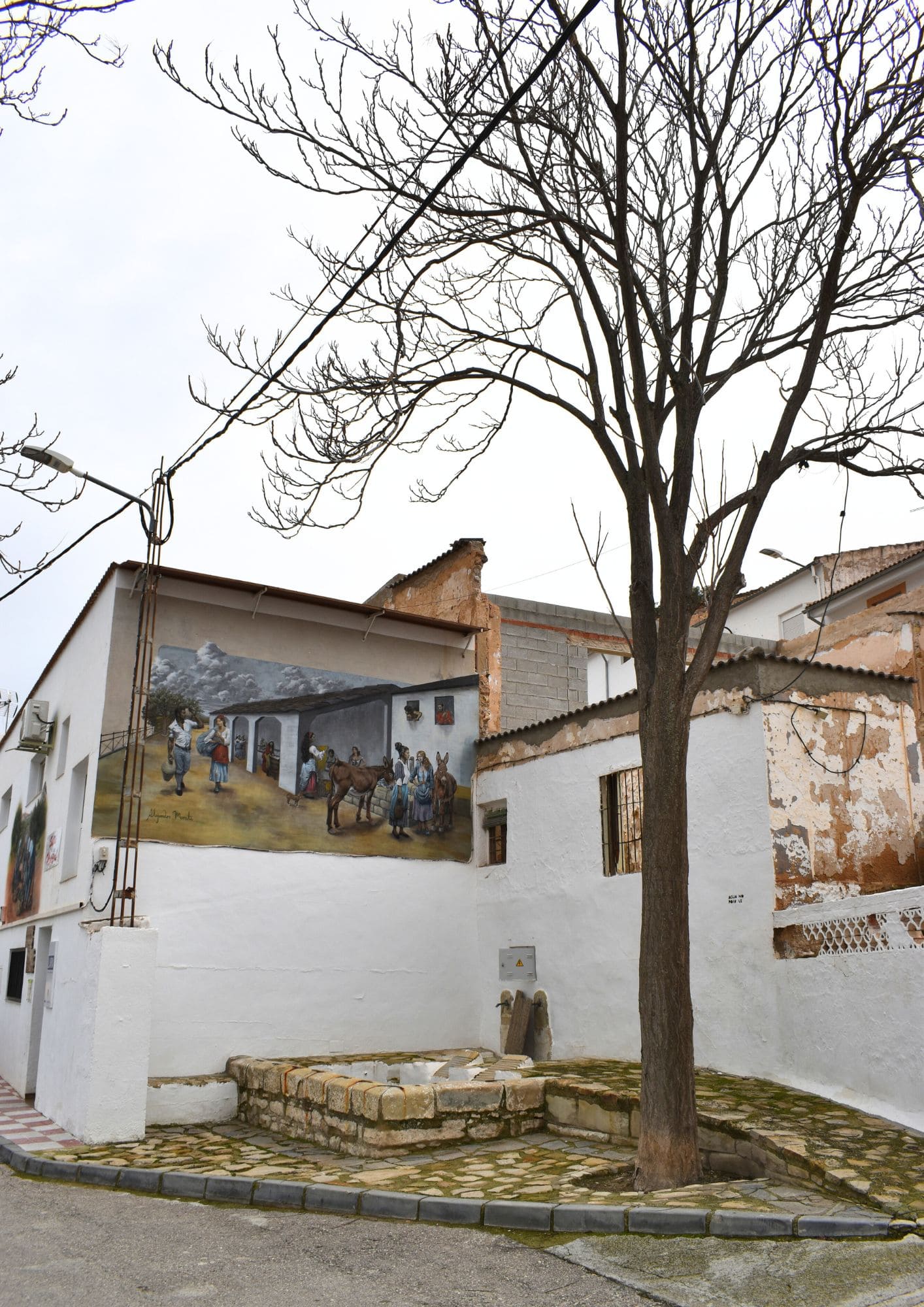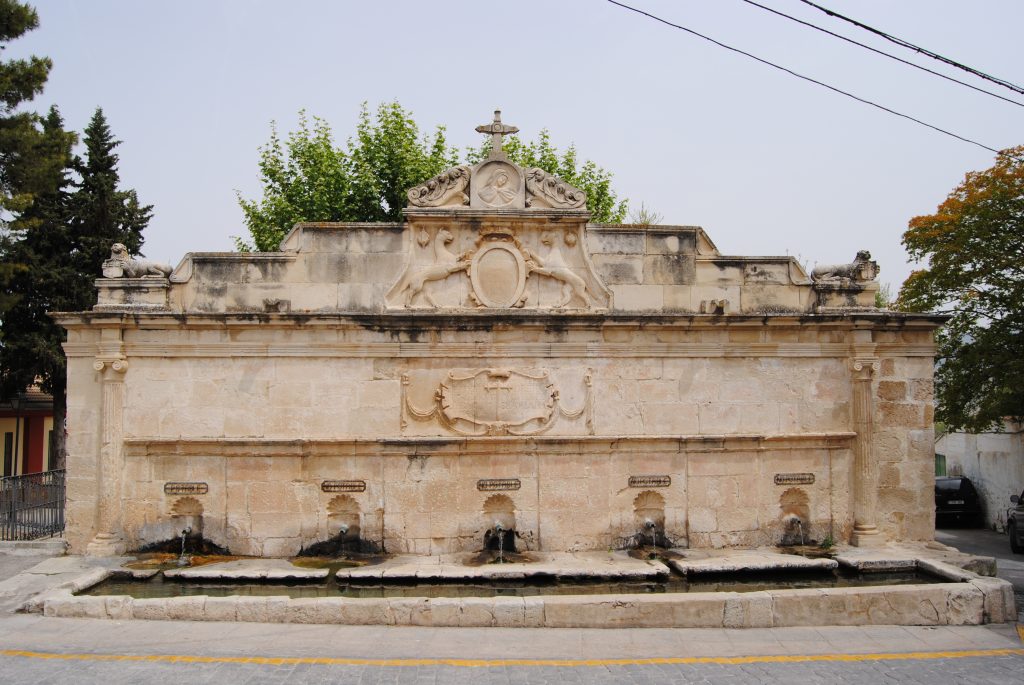


The Pilar–Lavadero de Larva, popularly known as ‘El Pilar’, was for centuries one of the most important factors in the historical and social development of the municipality. Much of the town’s daily and economic life revolved around this fountain.
Due to Larva’s strategic location and the challenges posed by the surrounding terrain, this spot became a meeting place for local traders, livestock farmers and farmers. It was here that the historic Wednesday market was held, a place where trade took place and where travellers and animals could rest by the water.
The fountain originally had four spouts, a drinking trough for livestock and a large washing area, which also made it an important meeting place for the women of the village, who came to wash their clothes and share in daily life.
It was around this spot that the town centre of Larva began to grow. Some historical sources even link the name of the town to the term “Ulluraua”, which could mean “Wednesday market”.
Today, the old pillar-and-washhouse complex has largely disappeared, with only one of the spouts and part of the trough remaining. Even so, its memory remains very much alive in the collective memory of the locals as a symbol of the town’s origins and traditional way of life.