







La Iruela
Singular places
, La Iruela
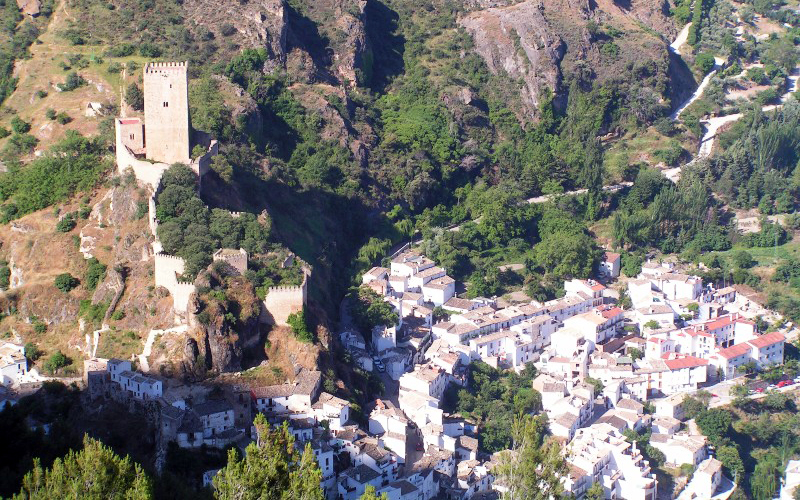
The road leading up to the mountains from Cazorla passes alongside this small yet remarkable village. Its profile is well known thanks to its castle, a legendary fortress dominating the Guadalquivir valley and which entered into the hands of the Templars. The need for defence led to the construction of a castle that, on its steepest side at least, is utterly impregnable. However, La Iruela is also home to other attractions.
Next to the castle you will find the ruins of the church of Santo Domingo de Silos. Legend has it that this church was built on the spot where the Moors used to imprison their Christian captives and where St Dominic carried out his good works. Today you can still see traces of the work of Vandelvira’s pupils, and a visit to the church is a must for history-lovers.
La Iruela was part of Cazorla up until 1370, when Archbishop Gome Manrique gave the town its independence and its own jurisdiction and coat of arms. Its political and territorial position have enabled La Iruela to preserve an important part of its heritage; namely, the Casa Consistorial, which is a magnificent example of the Toledo mudéjar style of architecture, and the church of La Inmaculada Concepción.
The heart of the village is well worth a visit. The streets are steep and narrow, and the buildings sport whitewashed walls and flowers on their balconies. In the centre there is an attractive fountain, next to which a number of different paths lead off around the town. From this location you can walk on up to Calle del Temple, along a beautiful cobbled street lined with fig trees and cypresses.
We recommend:
- Going on to visit Burunchel, which is just five minutes from La Iruela. This charming location is home to the hermitage of San Julián and the temple of the Espíritu Santo, among other attractions.
- Visiting La Iruela on the 27th of August, when the town’s summer festivals take place: the celebrations include a unique firework display in which the castle plays an important part.
Follow us #JaénParaísoInterior


