
 Sierra Cazorla Natural Park and Villas - Home
Sierra Cazorla Natural Park and Villas - Traditions and Land Products
Sierra Cazorla Natural Park and Villas - Home
Sierra Cazorla Natural Park and Villas - Traditions and Land Products
Traditions and land products
Identity, history and modernity in the Syrian society
In the serrana society, cultural elements of their own are present together with others brought by the inhabitants who emigrated to return, as well as new inhabitants who have come with their own views. New technologies and increased mobility are ending those physical and psychological borders that the people of these saws had to face.
When we approach the population of the mountains that make up the Natural Park Sierras de Cazorla, Segura and the Villas we must do so from the traditional isolation that this area of the province has had due to the lack of communications and other infrastructure.
Many villages did not know electricity and running water until the 1980s, and in general the population has become accustomed to the difficulties of displacement between the different villages of the mountains and the administrative headquarters of the province. On the other hand, we cannot lose sight of the fact that the territory of the current park has not belonged to the province of Jaén until the creation of the current provincial division and that, of the three districts as a whole, the de Segura has a special connection with the adjacent areas of Castilla-La Mancha, with which it shares cultural manifestations and many elements of speech.
Change and tradition
However, the changes we have witnessed in recent years in communication and technology make us talk about a population like that in any other part of the country. We cannot fall into customary topics to define the inhabitants of these communities as... "cunning and recellent, victims of a hostile environment that forced them to sharpen meaning and to extreme prudence." Without a doubt these words of Genaro Navarro López published in the 1960s of the last century are totally lost if we take a look at any of our peoples.
Although, indeed, there are some delays in collective memory of this tradition of isolation in which most of these saws have lived. In most places it was common for almost everyone to be bound by family ties due to the low mobility of the population, so it was common for terms such as "brother" or "uncle" to refer to distant relatives, which is still used by older people, especially in villages. On the other hand, the motes were very abundant and passed from generation to generation, and many still remained today.
At present, only about 14,000 people live within the protected space, although the total population of the municipal terms affected by the protected space is 80,000.
In the serrana society, cultural elements of their own are present together with others brought by the inhabitants who emigrated to return, as well as new inhabitants who have come with their own views. New technologies and increased mobility are ending those physical and psychological borders that the people of these saws had to face.
Oil, lamb and tourism
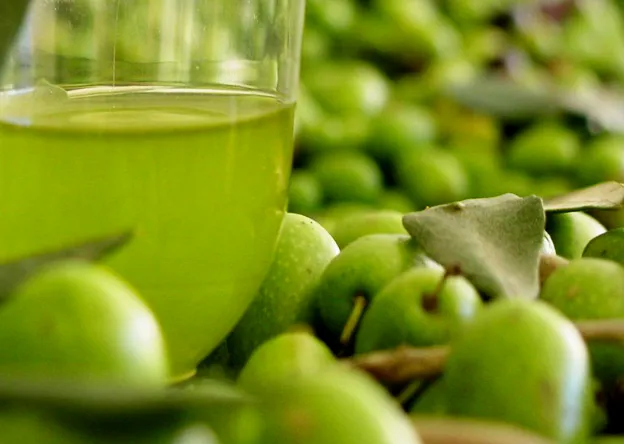
The economy in these saws has always been based on agriculture, livestock and forest-related activities. Historically, we have to distinguish the existence of large owners, whose magnificent houses are still preserved in our villages, and the small farmers, craftsmen and people related to the exploitation of wood, who completed the family economy with a small garden around the shores close to the villages.
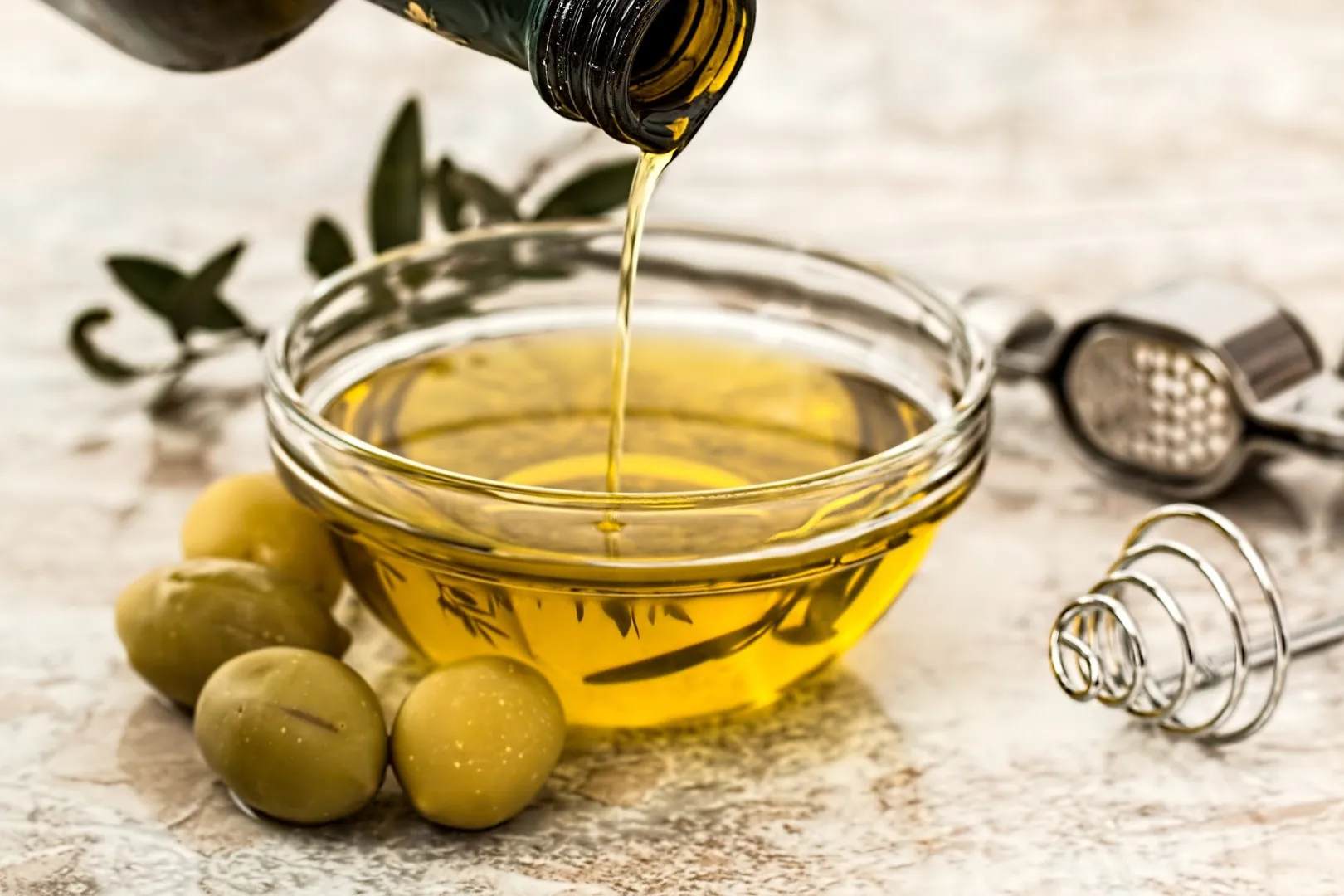
Today the economy of these regions is around the cultivation of the olive tree, which in the interior of the park is a mountain olive tree, not profitable compared to that in other areas of the province, although it produces extra virgin oils of high quality, guaranteed by the Designation of Origin Sierra de Segura and the Designation of Origin Sierra de Cazorla.
The modernization of this sector has many exponents in the park, but two have to be cited for its recognized prestige. One is the Sierra de Génave Cooperative Society (Génave), a pioneer in the production of organic oil in Andalusia, whose distribution is mostly international. The other is Potosí 10 (Orcera), which has directed its production to the excellence of oil, so it has on several occasions obtained the prize of the Ministry of the Environment, Rural and Marine as the best oil in Spain in several ways.
The Segureña sheep, an indigenous race spread throughout the park and in many other nearby areas, is another point of the local economy. The Segureño lamb has its own protected geographical indication - certification similar to the designations of origin - which is making this extraordinary product known to consumers and helping to relaunch the livestock sector.
Tourism has broken in over the last two decades as a vibrant sector, although with unequal implementation in the various areas of protected space, highlighting the greater supply in the region of
Despite the differences between the different regions, the inhabitants of these mountains generally share most of the traditions and cultural elements that we discuss below.
A peculiar speech
The economy in these saws has always been based on agriculture, livestock and forest-related activities. Historically, we have to distinguish the existence of large owners, whose magnificent houses are still preserved in our villages, and the small farmers, craftsmen and people related to the exploitation of wood, who completed the family economy with a small garden around the shores close to the villages.
Today the economy of these regions is around the cultivation of the olive tree, which in the interior of the park is a mountain olive tree, not profitable compared to that in other areas of the province, although it produces extra virgin oils of high quality, guaranteed by the Designation of Origin Sierra de Segura and the Designation of Origin Sierra de Cazorla.
The modernization of this sector has many exponents in the park, but two have to be cited for its recognized prestige. One is the Sierra de Génave Cooperative Society (Génave), a pioneer in the production of organic oil in Andalusia, whose distribution is mostly international. The other is Potosí 10 (Orcera), which has directed its production to the excellence of oil, so it has on several occasions obtained the prize of the Ministry of the Environment, Rural and Marine as the best oil in Spain in several ways.
The Segureña sheep, an indigenous race spread throughout the park and in many other nearby areas, is another point of the local economy. The Segureño lamb has its own protected geographical indication - certification similar to the designations of origin - which is making this extraordinary product known to consumers and helping to relaunch the livestock sector.
Tourism has broken in over the last two decades as a vibrant sector, although with unequal implementation in the various areas of protected space, highlighting the greater supply in the region of
Despite the differences between the different regions, the inhabitants of these mountains generally share most of the traditions and cultural elements that we discuss below.
The dances
In many municipalities of the Park, groups of regional dances are maintained that keep the folklore of each region alive. The serrano folklore was closely related to events related to daily life, such as the day of the deceased, San Anton, weddings, carnival and slaughter. However, a subject that is always present is that of the courtship and the whole theme associated with the marriage, always without losing sight of the Picardia and the double sense of the words.
In the whole of the natural park we can distinguish several types of dances by highlighting in general lines the jotes, the follows, the Malagueñas and the fandangos. Examples include the Malagueñas de Siles, the jota de Benatae, the dance of the christos in Beas, the following in Segura de la Sierra, the Malagueñas de la Puerta de Segura, the fandango de Chirichipe, the jota del Remeneo, the bolero de Villacarillo and the fandango robao de la Iruela and Cazorla.
The cycle of celebrations
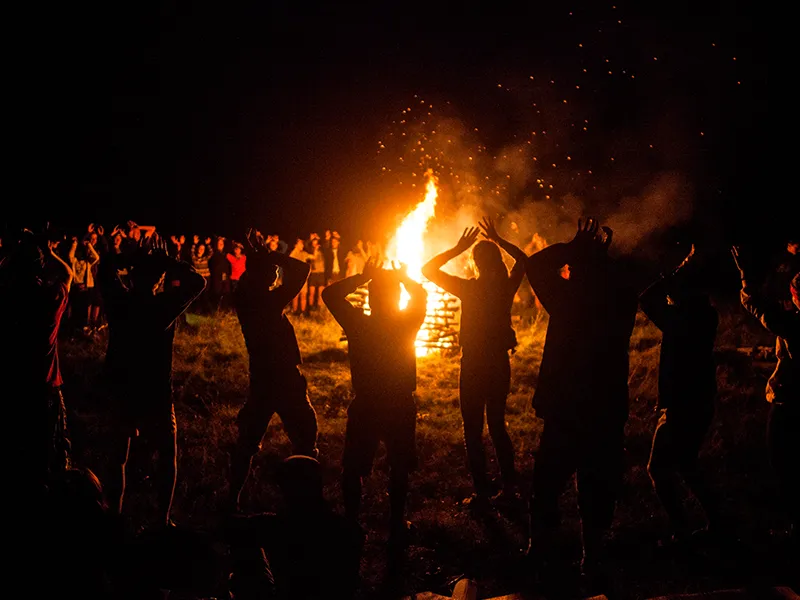
All peoples have traditional celebrations whose origin goes back centuries, as is the case with theLuminaires, fires next to which the neighbors sing and share food next to a glass ofcrow, typical drink from these saws. They continue to be held in Saint Lucia, Saint Anton and the Candelaria.
At Christmas, the living birth of Fontanar, a village near Pozo Alcón, is a must-see event in which about 250 actors stage the birth of Jesus. In Huesa there is a party in honor of San Silvestre in which the charges of captain, flag andguinchewho must accompany the saint in his procession, bound with garments of the 18th century. In February, on the occasion of the feast of San Blas, in some places such as Villanueva del Archbishop there is a Romeria, although in others such as the Gate of Segura, thousands of firecrackers are thrown.
During Holy Week there are processions in all peoples, although it certainly highlights Segura de la Sierra and Villacarillo for the representation of the passion and death of Jesus. In the case of Segura de la Sierra almost all the neighbors collaborate and perform the stations taking advantage of the most beautiful corners of the municipality.
During the month of May many altars are usually dressed with crosses in villages and villages around the cross and devotion to Mary. Altars are improvised and the cross is covered with sheets, flowers and aromatic plants. In May it also takes place in Cazorlacaracoladeon the occasion of San Isicio and consists of placing small oil lamps made with the snail shell during the journey of the procession of the saint. On the occasion of Corpus it is customary in many villages to make carpets that cover the ground with various materials, highlighting Villacarillo with large carpets of wet sawdust or sand in which the symbols are represented
Throughout the year there are numerous Romeries, highlighting those held in the sanctuaries of Tiscar and Fuensanta although there are others who also have great devotion such as the Virgin of the Field, Santa Quiteria or San Isidro.
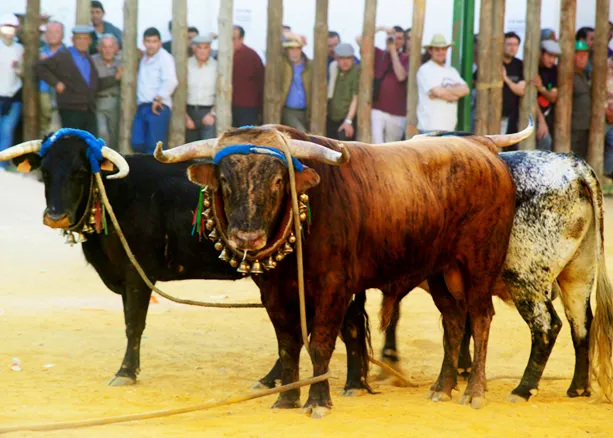
The cobbles are present in almost every place, highlighting those of Iznatoraf and Santiago de la Sword. Arroyo del Ojanco and Beas de Segura celebrate San Marcos with the release of a large number of reses through the streets of the municipality.
The new events
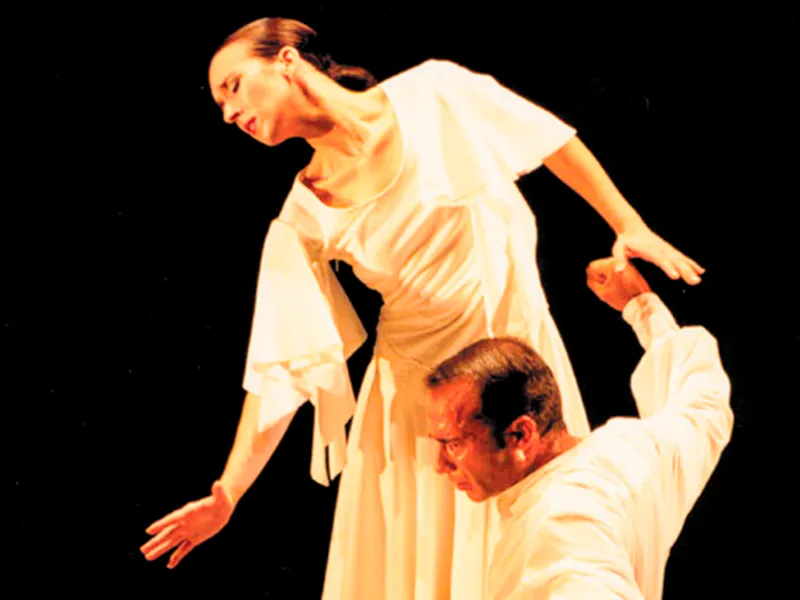
The cultural landscape is complete with the numerous festivals that take place throughout the summer and autumn, constituting an offer for all the public in which the International Safe Air Festival of the Sierra, Bluescazorla, the Cazorla Theatre Festival and the Segura Music Festival, as well as some medieval markets and other cultural activities, stand out.
As a curiosity we can indicate the crazy car race that is held in Villanueva del Archbishop every year during his holidays and that is the only activity of this kind that is carried out in the municipalities that make up the natural park.
The Syrian bowling, an indigenous sport
In sports, we cannot ignore the Syrian bowling, present since the end of the Middle Ages in these mountains. It is the only indigenous sport in Andalusia and is currently getting more and more fans. In many villages of the Park bowling clubs have been formed with the aim of promoting the practice of this sport and putting it in value.
There are normally competitions on the occasion of the village parties, along with others promoted by the clubs themselves, highlighting for example the 24 hours of Bowos in Beas de Segura. On the other hand, the Serrano Bowling Council Cup is organized every year, which is helping to consolidate this game in the Sierras de Cazorla Natural Park, Segura and the Villas. The Andalusian Federation of Bolos organizes a complete sports calendar each year, including 20 competitions.
The bowls combine the strength and the aim, as with a ball the player has to take down some pieces of wood calledmingos. There are two types: high mountain and valley. Its presence is uneven in the natural park, and the valley has been relegated to the Segura valley. In addition to a sports activity, bowling is the opportunity to
In the following links you can see in more detail how this sport is practiced, its standards and even some videos about championships: www.bolosserranos.es The Andalusian Federation of Bowls also has the website www.boloandaluz.org where information can be obtained at the federal level.
