


The landscapes
A FRONDOSO, ENERGY AND DIVERSE PEACE
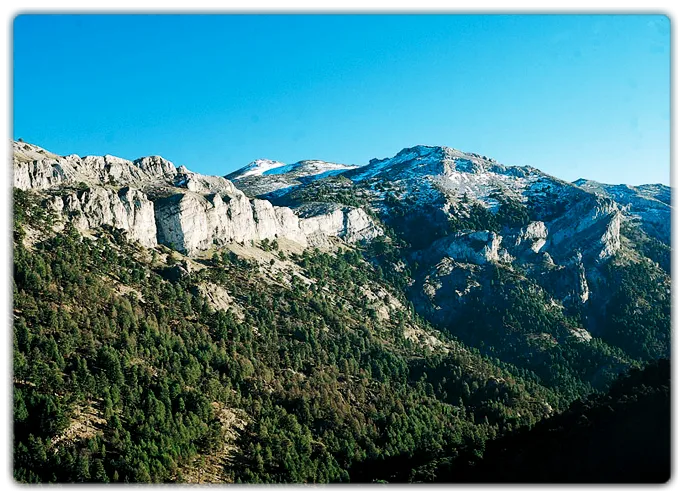
The green south exists: it is in the Sierras de Cazorla, Segura and Las Villas. Only here is it possible that the light blue of the Mediterranean skies, the white of the snow on the summits and the green of the largest continuous forest mass in Spain are founded. This magical combination of light, high mountain, large forests and small villages is not given anywhere else in Spain.
The Natural Park Sierras de Cazorla, Segura and the Villas is overshadowed by the enormous extension of its mountainous, southern territories, where the human footprint is integrated into traditional uses, forming a balanced landscape, but commanded by the forces of nature. For this reason it is less familiar and welcoming in its white villages, in its rivers and transparent streams, in its kind olive lomas.
Climate
A CLIMATE AND LUMINOUS
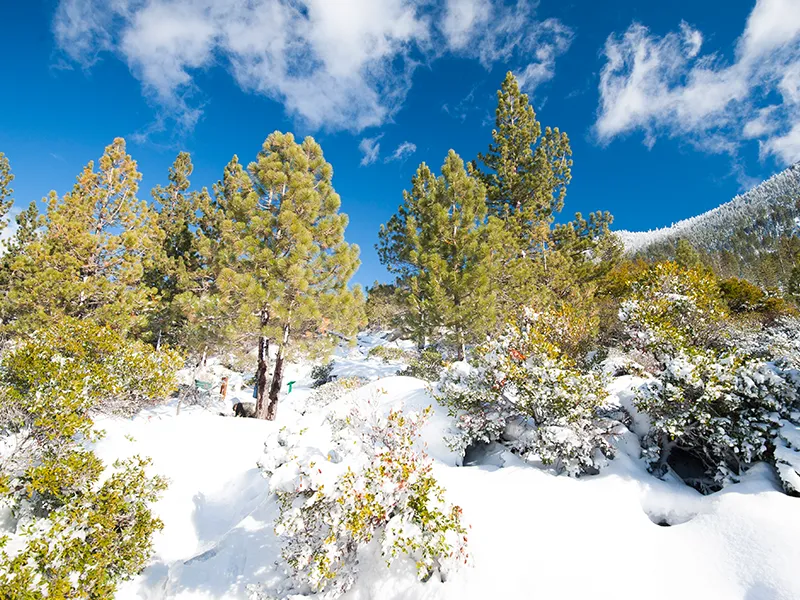
The Natural Park has a very balanced mountain climate. It can be defined as a continental Mediterranean mountain climate, which implies strong contrasts, although nuanced by altitude. But, if we compare the climate of these mountains with that of others in our country, it is very difficult to find others where light, temperature, water and snow are given in a more proportionate way than in the natural park.
Here you will not suffer grey winters where the rule of water and snow force you to lock yourself up for endless months. Nor are there any time periods in which it is difficult to get out of the shadow for most of the hours of the day.
Geology
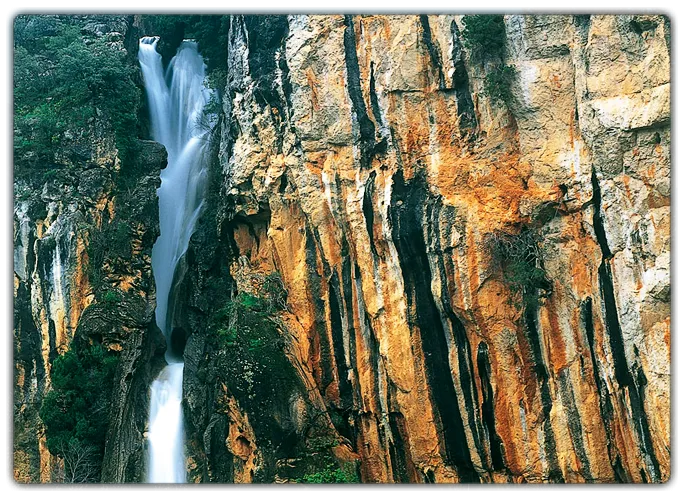
Folders that testify that this area was a sea, shocking mountains and pharallions, folds, failures, throats, caves, simas... All these elements, well visible in the Natural Park, tell us about a story where the mind faces the fascinating challenge of sailing through temporal dimensions that escape our usual perception of time.
In the section "Where the Earth speaks" you will find very detailed information from 27 places where you can appreciate the traces that have left in the Park the geological movements of the area, fortisimos, but so slow that they are imperceptible to the scale of human life. In the section "A portentous landscape" you have information about the park's relief and its striking geoforms.
The Natural Park of the Sierras de Cazorla, Segura and Las Villas is geologically located within the set of Andalusian mountains known as Cordilleras Betios, which are distributed from Cadiz to Jaén, to continue through the province of Albacete towards the Levant, and after being submerged under the waters of the Mediterranean Sea, to emerge forming the Balkan archipelago.
Water
WATER WOMAN TO NATURAL PARK
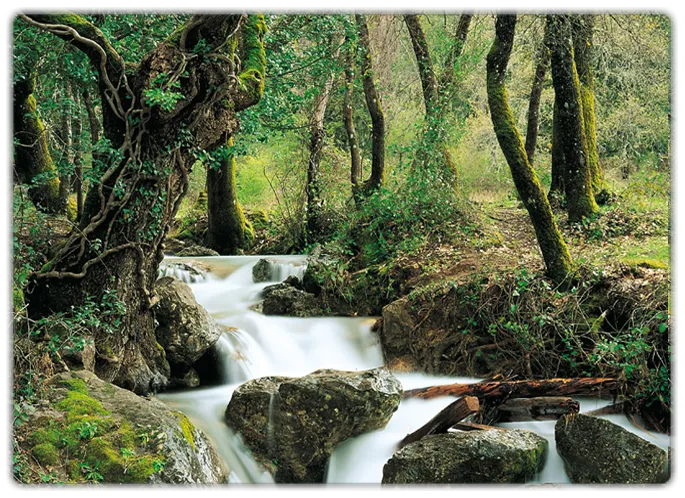
The Guadalquivir River, a life-saving axis in Andalusia, is born in the Natural Park of Cazorla, Segura and Las Villas. That is why it has been said that Andalusia is born in these mountains. Also here the Segura River sprouts, so this Park is the source of two rivers that generate the most wealth in southern Spain. The profusion of water is one of the things that will marvel you most in the park, which is especially comforting for the senses in the context of its Mediterranean climate.
The water loves Cazorla, Segura and Las Villas Natural Park. Attracted by its mountains and forests, it comes in its search with constancy, and it travels through it in all possible ways. It flows through its skin by modeling the landscape with valleys, throats and cannons. And it is allowed to be wanted by the human being by lying in serene reservoirs attached between wooded slopes or serving as a living irrigation for the crops of orchards and olive groves.
The vegetation
A BROCHAZO VERDE IN THE MAP OF THE IBERIC SUREST
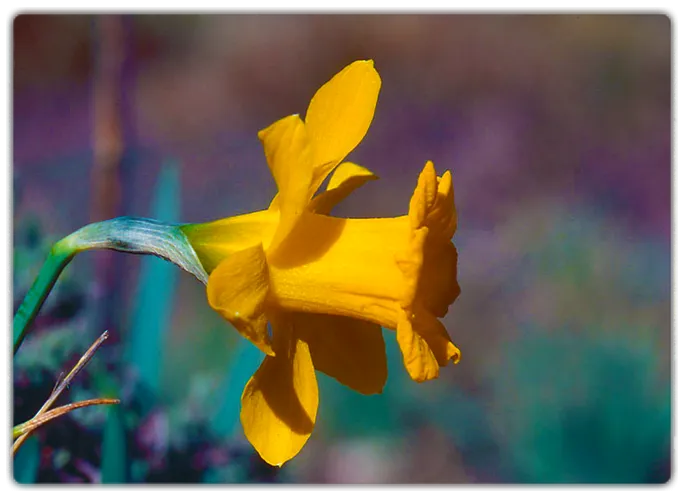
When you enter the natural park it gives you the feeling of being covered by a cozy green vault, under which you are surprised by a huge variety of plants. Knowing the flora of the park, photographing it or simply contemplating it, will give you the intimate satisfaction of being in one of those unique enclaves that still remain on the European continent.
In view of the bird, the Sierras de Cazorla, Segura and Las Villas are impressed by the extensive and rugged vegetation cover that forms their forests, which constitute the largest forest mass in Spain. But if we look at it in detail, we are even more affected by the huge variety of species that make up it: more than 2200 species of plants are known with stem. In other words, on an area that does not reach 0.5% of the Spanish peninsular territory, no less than 25% of the total plant species that live there.
Among the plants of the Park is the family of the beautiful and sophisticated orchids, with 52 species, which constitute more than half of those on the Iberian peninsula.
The mushrooms
THE SOUTH SEAT PARAIDE
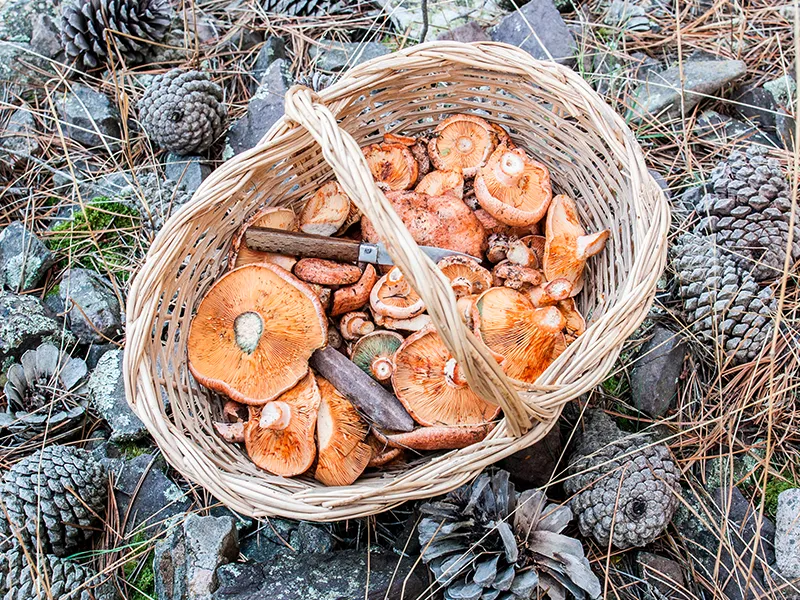
For mushrooms fans, the Cazorla Natural Park, Segura and Las Villas is simply a paradise, both for the variety of species and for the abundance of specimens. The collection of niscalos - here called guiscanos - (Lactarius deliciosus, L. sanguifuus) is a true popular sport for the inhabitants of the park, which each autumn are passionately launched to the pinars to return home with large baskets full of this delicacy.
Many other edible mushrooms are popular, such as the cardo cuco mushroom (Pleurotus eryngii), the cacarria (Morchella esculenta, M.conica, M. elata), the chopo mushroom (Agrocibe aegerita) and the tocona mushroom (Pleurotus ostreatus). Especially coveted are the exquisite mushrooms known as parasol (Macrolepiota procera) and spring or St. George's mushroom (Calocybe gambosa).
Animals
SINGLE PART OF THE TEJID VIBRANT OF LIFE
In a few places in Europe you can see as many wild animals in full freedom as in the Sierras de Cazorla, Segura and Las Villas Natural Park, where the Iberian fauna has an exceptional shelter.
Emotionate at that magical moment when your look captures the montane goat climbing by the unbelievably rocky cresteries. The deer, the gamo and the muflon will also appear in any corner. You will see the family groups made up of females and young people, even large lone males. The nice indigenous squirrel will surprise you by playing acrobat in the woods.
If you look to the sky, you will be surprised how easy it is to look at the leonate vulture by dominating the high-plane snow and the fenced valleys with a paused flight.
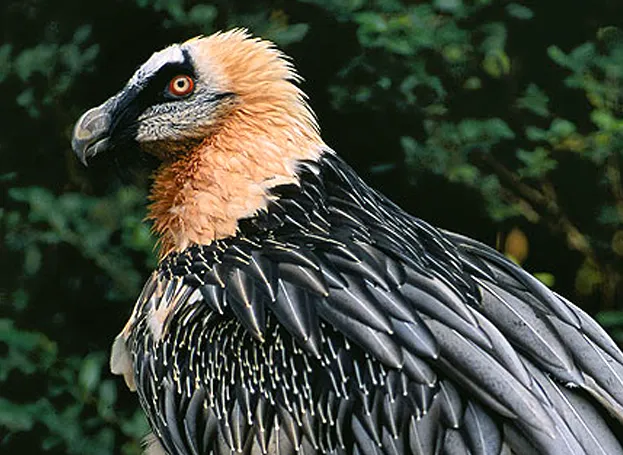
And if you're lucky you'll see an animal that's the pride of the park today: the broken bones. After its extinction in 1986, its return to these saws is the result of an ambitious and complex reintroduction project. Its elegant silhouette next to the most southern canteens is the best proof that the human being adds up, can correct the course and live again in harmony with the rest of nature, and reenter in the south of Spain, playing this park the role of the core of breeding and release in freedom, for the whole Autonomous Community of Andalusia, and beyond. This dream is possible in the Serras de Cazorla, Segura and Las Villas. When you come, you'll check.
