


Pineers, forest shepherds
The exploitation of wood and its transport provided work for many families for much of the year. The process covered the cutting, hairs and transfer to the watersheds for the purpose of driving them along the rivers. This type of activity was often practised during the Middle and Modern Ages. However it is from the construction of the Royal Factory of Tabacos of Seville, and the needs of the Navy when this practice is institutionalized by the creation of the Maritime Province in these mountains.
During the 19th century, short and timely conductions were made for nearby markets, for the Guadalimar and Guadalquivir rivers, and it will not be until the railway boom, and for the need for mischief, when the wood of these saws is continuously exploited again. After the Civil War there is a great demand for mischief to rebuild the railway network. This would be the last time of large short and wooden conductions that, from these saws, would have as their destination the railway station of Linares- Baeza.
The trades related to the process of cutting and driving the wood had as their protagonist the hasher who was in charge of the cutting of the marked trees. The best date for the short was the menguing moon of December, January and February and after the hasher the peeler, who was the one who was the one who was the one who was the one who was the one who was the one who was the one who was the one who was the one who was the one who was the one who was the one who was the one who was. The horraores were in charge of moving the wood through mules and oxen to the cargo, where the riverboats and reels carried the wood to the watersheds to wait at the end of the fall to begin the navigation.
The pineers, with their long rods topped by a double hook, organized the wood in the water and started driving with groups of people who sometimes exceeded 100 people. Among the pineers driving the wood were several categories ranging from the river master to the minors
who helped prepare the food, known as the heteros.There were other forest-related activities, such as resin extraction. The resineros removed or scraped an area of the bark of the pine trees and after installing a small piece to pour the resin into a boiled mud container, they let it fill. The resin collected was made of brea, varnish, soap or water. Another very interesting activity was the distillation of essences, with the harvest of the esdiciones, which is the kind of lavender of the place, being well known in these areas.
Coal, resin, lime, tar, honey... and even ice
With the thicker branches and with wooden trunks, charcoal was made to sell it to the people. It was also sold wood beams made of more fine branches and logs, and this trade was often developed by women and young people.
The wood of the forest served as raw material for carpenters and other artisans who made furniture, chairs and other products for the house. Others, for their part, were building cars and other tools for work on the mountain and the field.
Taking advantage of the wood with a lot of resin, the gluers made vegetable tar through the burning of wood to collect the already burned resin in an outer container. When it was made of juniper wood, the product obtained was called a harvest, and to those who made it, a harvest. Even in the saws that make up the natural park, many remains of old hairs are preserved, excavated in the mountain and that have not been used for years.
A work related to the forest, but not to the wood, was the snow wells. They were wells covered by a small construction to avoid the entry of heat and within which snow was stored to turn it into ice. Close to Siles one is preserved, and next to the castle of Segura one can see only the well of one of these ancient constructions. The snow was getting ready inside and was compact to form the ice. The layers were being separated and in the end it was all covered with vegetables and a final layer of clay earth. This operation allowed the ice to be stored for sale during the summer, always handling it at night or as the sun fell.
The manufacture of lime was a fundamental activity for the construction of traditional houses, and as a testimony there are many remains of old coves in the territory of the natural park. It was often used for private domestic buildings, although on other occasions there were caleros that made it.
directly for sale. There was a need for between ten and twelve carts of wood that was altered between layers of limestone that were available inside a furnace excavated on the ground. After lighting the oven the process lasted about five days and then the stone, if well cooked, was ready to be used both in the argamase of the buildings and to paint the houses.Almost all of these trades have now been lost and only the older have worked in these activities. With the extension of the machinery many of these trades have disappeared, as have the number of people engaged in forestry. There are very few companies dedicated to the cutting and processing of wood, as well as people dedicated to the cutting, hair or jorro of wood.
On the other hand, it is remarkable as there are municipalities such as Siles that have been betting on the recovery and value of these activities through the Hacheros Segureños Contest that has been held annually since 1997 and the Cultural and Environmental Days that are held in Yeste, already in the province of Albacete, and that revolve around the driving of wood by the river and the role of the piners in this process.
Beekeeping has experienced a certain resurgence in recent years, due to the great meliferous potential of the flora of the park, which has about 200 species with beekeeping, resulting in an extraordinary quality, the most common being those of rosemary and the so-called flowers.
The hairdressers
In some pineapples of the park there is still an unusual activity, which is the collection of a lec of the pine trees, here called a pellet, so those who collect them are called hairdressers. Liquens are used in cosmetics for the production of perfumes stabilising substances. This is a hard activity, which requires to stay for weeks in the forest climbing through the trunks of the salgarean pines to collect the lichens attached to their branches. Once collected, they are pressed and grouped in alpaca for transport and sale.
Pastors, transhumance and following lamb
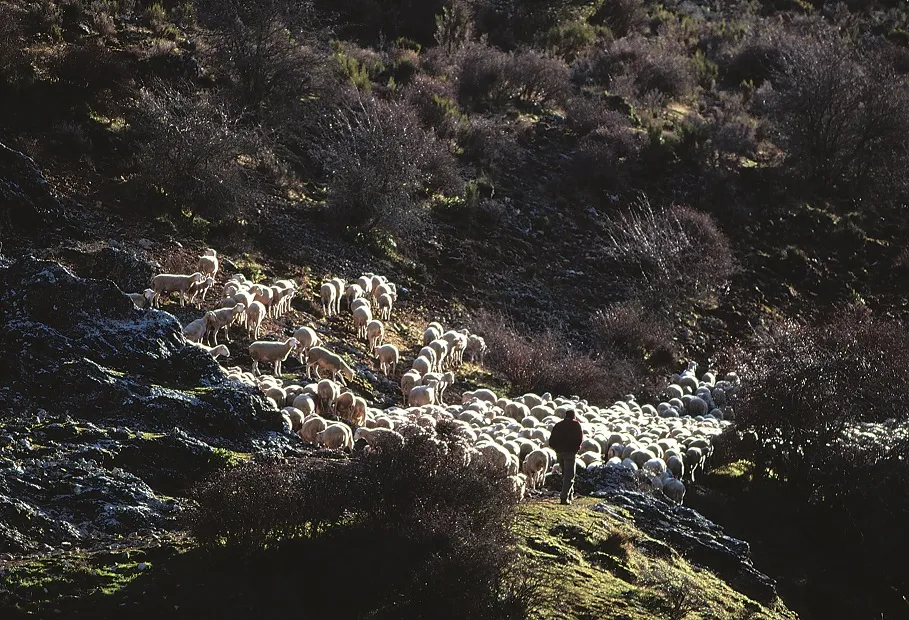
For centuries, livestock has been a substantial part of the economy of these saws and has modeled many of its landscapes. The profession of a shepherd, transmitted and learned under the sun and snow, around the stake or in the transhuman plateau, is an art that requires tempere, observation, patience and sacrifice. Thanks to the pastors, not only an important economic activity, but a complex set of knowledge that remain present in thepear,shaleor transhumanity, as well as in each aprisco, eachtornagus(barren) and every shepherds' shelter.
The livestock of the area is starred by the Segureña sheep, irreplaceable for its perfect adaptation to the climate and the broken orography of the park. Currently it has the protected geographical indication Cordero de las Sierras de Segura and La Sagra, which guarantees the quality of the product.
The livestock activity is especially concentrated in the municipality of Santiago- Pontones, whose environmental characteristics are conducive to this, and it is developed in an extensive regime taking advantage of the pastures of the high areas of the mountain.
Each winter, when the pastures of the higher areas are not usable, a part of the sheep cabin begins the long way down to thepastoralistsof the Sierra Morena jiennense and Manchega, where he spends several months feeding on the pastures propitiated by the benign winter climate of the lowlands. When the spring is fulfilled and exhausted the pastures of those areas, they will make the way back to theirseawaterof origin in the Sierra de Segura, where pastures begin to be grown and juicy and where they will be fed during spring and summer.
The distances are between 150 and 300 kilometres, lasting the journey from seven to ten days. The
The network of livestock roads, which is the extraordinary public heritage of the roads used by the cattle since the Middle Ages to move and feed during their transhuman movements, has within the natural park Sierras de Cazorla, Segura and the Villas a length of 741 kilometres and an area of 2,242 hectares (given the width of these routes), although its conservation status is quite uneven.
The wood and the new benefits
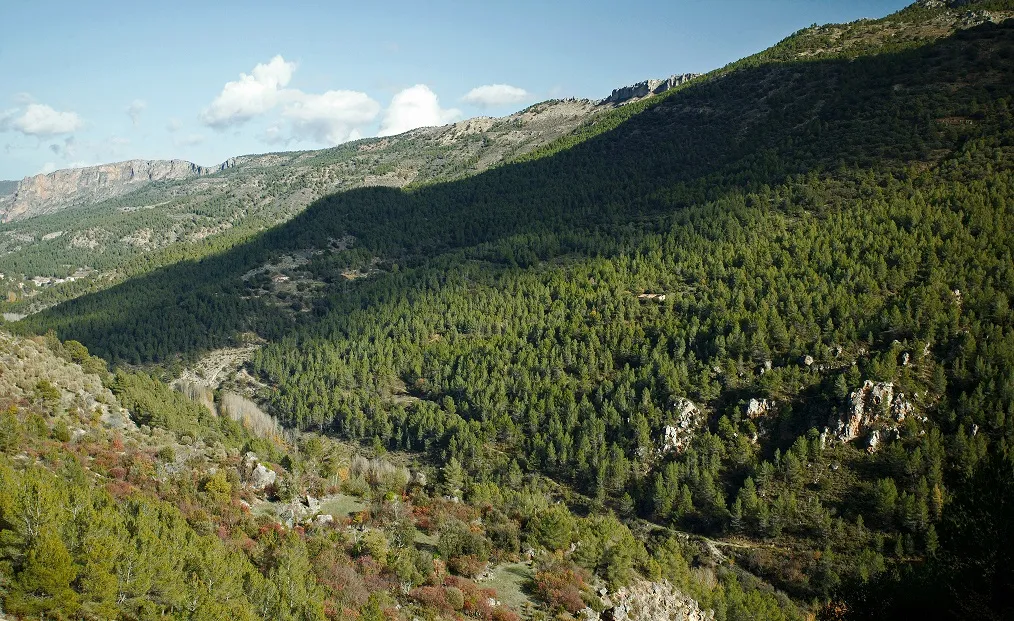
At present, the extraction of wood from forests remains an important use, although it has lost weight for economic and environmental reasons. Much of these benefits are subject to certification processes that ensure their environmental sustainability, and there is an important project for some of the wood to be transformed into products that guarantee greater added value.
Lately, the use of forest waste (branches, cortezas, etc.), as well as the pruning of the olive tree, as a biomass from which heat and energy are obtained, is being made. There are also companies that specialize in the construction of cleaning and conservation of the mountains and, apart from the traditional uses of the mountain such as hunting and fishing, in recent times have a strong influence on tourism activities and, to a lesser extent, the psychological activities, based mainly on the collection of the niscalo, here calledguiscan.
