

Traditions in Sierra Mágina
Sierra Mágina maintains a vibrant calendar of festivals, where the people of the villages continue to celebrate their traditions year after year. Many of these celebrations are linked to history, religion, and agricultural work, especially in the olive groves.
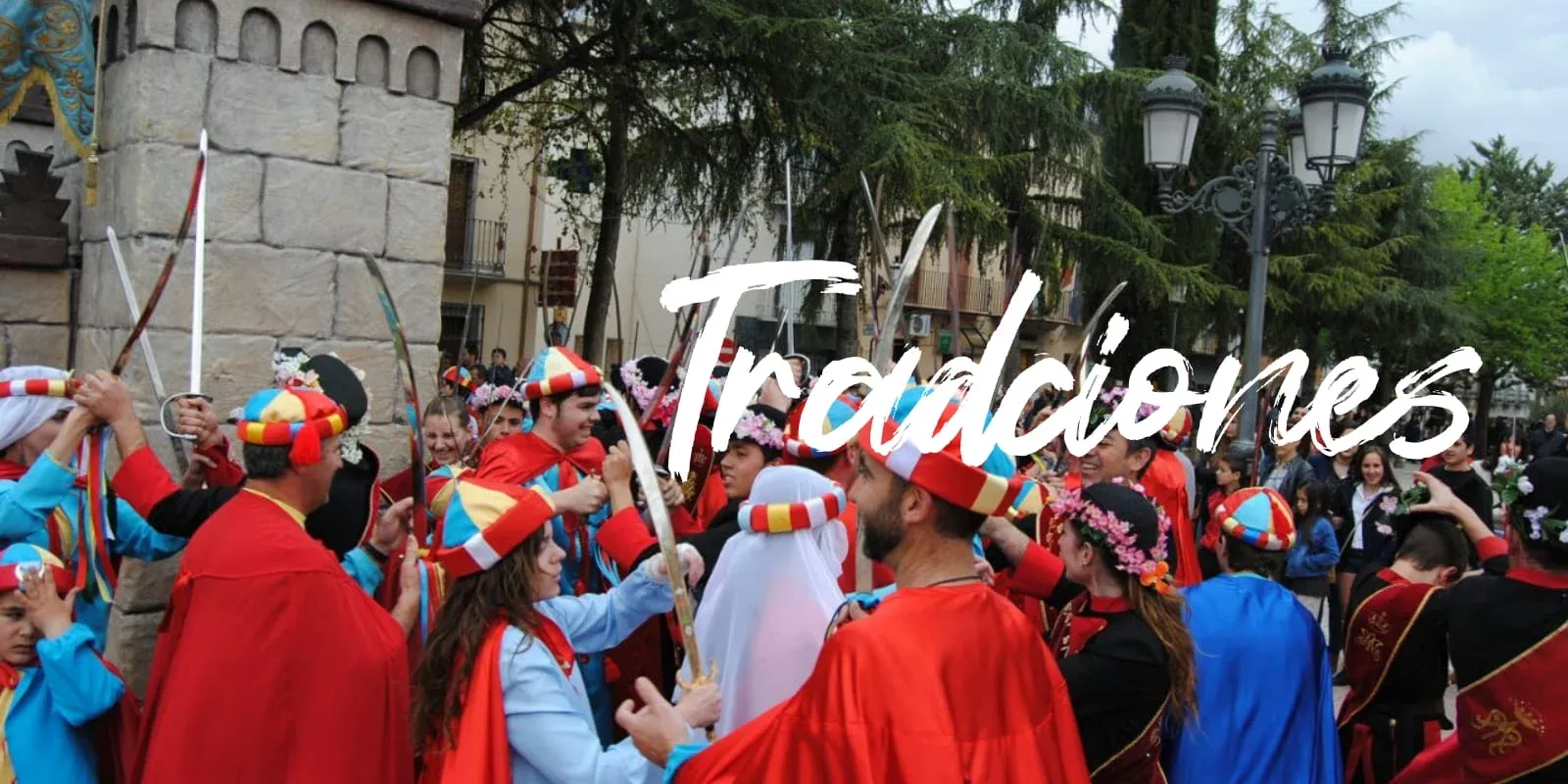
Among the most striking festivals are the Moors and Christians, celebrated in towns such as Campillo de Arenas, Cárcheles, and Bélmez de la Moraleda. For several days, the streets are filled with parades, historical costumes, music, and reenactments that recall the region's borderland past.
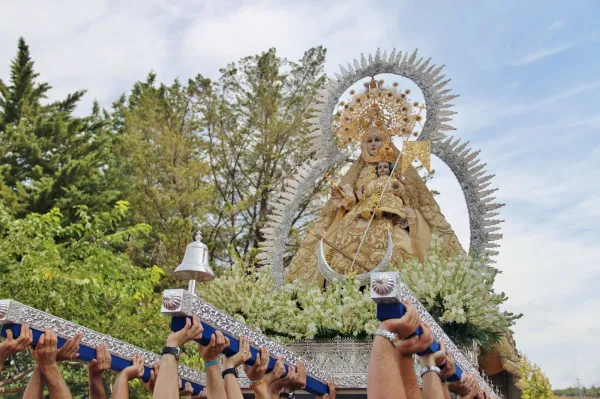
Pilgrimages also play a very important role. The Pilgrimage of the Virgin of Fuensanta, in Huelma, is one of the best known: locals and visitors accompany the image with songs and stops along the way, in a day that combines devotion, community, and mountain scenery.
Here you'll find unique celebrations such as Las Fallas de Mancha Real, the only falla in Andalusia; ancient customs like Las Moniduras, with their 16th-century verses, or the satirical Tíos de Ricia of Jimena, reflect popular wit; while the power of fire and devotion are felt in the Rosary of the Torches, the Bonfires of Saint Anthony and Saint Blaise, and the ancestral Day of the Porridge of Albanchez. In addition, there are unique traditions such as the Perrillo de San Marcos (Little Dog of Saint Mark), the endearing Día de los Pajaritos (Day of the Little Birds), and the Fiesta de los Jornaleros (Festival of the Day Laborers), as well as major pilgrimages like those to the Virgen de la Fuensanta in Huelma and the Virgen de Cuadros in Bedmar. Throughout the year, events that blend tradition and modernity are also held; the Historical Reenactment of Arbuniel, where residents reenact the town's historical periods; the Sierra de Sones Festival in Torres; and ExpoHuelma, considered the region's main trade fair. The Olive Grove and Olive Oil Festival pays tribute to the extra virgin olive oil of Sierra Mágina and everything surrounding the olive grove: the harvest, the olive mills, the recipes, and the way of life in its villages.
Sports also have their place on this calendar. The Sierra Mágina mountain range hosts high-level sporting events such as the Mountain Car Race, the Villa de Noalejo Hill Climb, the Mágina Top Trail, and the Mágina Bike. European and World Paragliding Championships are held in Pegalajar, making the skies of Mágina a meeting point for international pilots and free flight enthusiasts. During these days, the mountain range transforms into a grand stage where the landscape can be experienced from above.
Overall, the traditions and events of Sierra Mágina offer visitors many opportunities to experience the region firsthand: to share in its festivals, discover its products, listen to its music, and feel how village life remains closely linked to the mountains and olive groves.
Traditions in the Sierras de Cazorla, Segura y las Villas Natural Park
In the mountain communities, there are distinct cultural elements alongside those brought by residents who emigrated and later returned, as well as new inhabitants who have arrived with their own perspectives. New technologies and greater mobility are breaking down the physical and psychological barriers that the population of these mountains once faced.
When approaching the population of the mountains that make up the Sierras de Cazorla, Segura y las Villas Natural Park, we must consider the traditional isolation this area of the province has experienced due to a lack of communication and other infrastructure.
Many villages did not have electricity or running water until the 1980s, and in general, the population has become accustomed to the difficulties of traveling between the different villages in the mountains and to the administrative centers of the province. On the other hand, we cannot lose sight of the fact that the territory of the current park did not belong to the province of Jaén until the creation of the current provincial division, and that, of the three districts, the Segura district has a special connection with the bordering areas of Castilla-La Mancha, with which it shares cultural expressions and many elements of its dialect.
Change and tradition
However, the changes we have witnessed in recent years in communication and technology mean that we are talking about a population like any other in the country. We cannot resort to stereotypical stereotypes to define the inhabitants of these regions as "...astute and wary, victims of a hostile environment that forced them to sharpen their senses and exercise extreme caution." These words of Genaro Navarro López, published in the 1960s, certainly lose all relevance if we take a look around any of our villages.
Although, certainly, some remnants of that tradition of isolation in which most of these mountain ranges have lived remain in the collective memory. In most places, it was common for almost everyone to be linked by family ties due to the low population mobility. Therefore, it was common to use terms like "brother" or "uncle" to refer to distant relatives, a practice still used by older people, especially in villages. Nicknames were also very common and passed down from generation to generation, many of which are still used today. Currently, only about 14,000 people live within the protected area, although the total population of the municipalities affected by the protected area reaches 80,000 inhabitants. In the mountain society, there are distinct cultural elements alongside others brought by inhabitants who emigrated and later returned, as well as new inhabitants who have arrived with their own perspectives. New technologies and greater mobility are breaking down the physical and psychological barriers that the population of these mountains once faced.

The dances
In many municipalities within the Park, regional dance groups maintain their traditions, keeping alive the folklore of each region. The folklore of the mountains was closely linked to events in daily life, such as All Souls' Day, Saint Anthony's Day, weddings, Carnival, and the pig slaughter. However, one theme that is always present is courtship and all the related topics of courtship, always with a touch of playful wit and double entendres.
Throughout the natural park, we can distinguish several types of dances, most notably jotas, seguidillas, malagueñas, and fandangos. Examples include the malagueñas of Siles, the jota of Benatae, the dance of the Christs in Beas, the seguidilla in Segura de la Sierra, the malagueñas of Puerta de Segura, the fandango of Chirichipe, the jota of Remeneo, the bolero of Villacarrillo, and the fandango robao of Iruela and Cazorla.

The cycle of celebrations
All the villages have traditional celebrations whose origins date back centuries, such as the luminarias, bonfires around which neighbors sing and share food with a glass of cuerva, a typical drink of these mountains. They are still celebrated on Saint Lucy's Day, Saint Anthony's Day, and Candlemas.
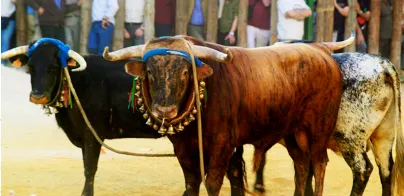
At Christmas, the living nativity scene in Fontanar, a village near Pozo Alcón, is a must-see. Some 250 actors reenact the birth of Jesus. In Huesa, a festival is held in honor of Saint Sylvester, during which the positions of captain, standard-bearer, and guinche are drawn by lot. These individuals must accompany the saint in his procession, dressed in 18th-century attire. In February, on the feast day of Saint Blaise, a pilgrimage takes place in some places like Villanueva del Arzobispo, while in others, like Puerta de Segura, thousands of wheelbarrows full of firecrackers are set off. During Holy Week, there are processions in all the towns, although Segura de la Sierra and Villacarrillo undoubtedly stand out for their reenactments of the Passion and Death of Jesus. In Segura de la Sierra, almost all the residents participate, creating the Stations of the Cross and making use of the most beautiful spots in the town. During the month of May, many altars with crosses are decorated in towns and villages, reflecting devotion to the cross and Mary. Altars are improvised, and the cross is adorned with sheets, flowers, and aromatic plants. In May, the "caracolada" (snail festival) is also held in Cazorla in honor of Saint Isicius. It consists of placing small oil lamps made from snail shells along the saint's procession route. For Corpus Christi, it is customary in many towns to create carpets that cover the ground with various materials. Villacarrillo is particularly noteworthy for its large carpets of damp sawdust or sand depicting traditional symbols of the Eucharist. Throughout the year, numerous pilgrimages take place, most notably those to the sanctuaries of Tiscar and Fuensanta, although others, such as those to the Virgin of Campo, Saint Quiteria, and Saint Isidore, are also highly revered. Running of the heifers is a common event in almost every town, with Iznatoraf and Santiago de la Espada being particularly prominent. Arroyo del Ojanco and Beas de Segura celebrate San Marcos with the release of a large number of cattle through the town's streets.

The new events
The cultural scene is rounded out by the numerous festivals held throughout the summer and autumn, offering something for everyone. Highlights include the FIA-Segura de la Sierra International Air Festival, Bluescazorla, the Cazorla Theatre Festival, and the Música en Segura Festival, as well as several medieval markets and other cultural activities.
As a point of interest, we can mention the soapbox derby held annually in Villanueva del Arzobispo during its festivities. It is the only activity of its kind in the municipalities that make up the natural park.
Bolos serranos, an indigenous sport
In terms of sports, we cannot overlook bolos serranos, a traditional game played in these mountains since the late Middle Ages. It is the only native sport of Andalusia and is currently gaining more and more fans. Bowling clubs have been formed in many towns within the Park to promote and raise awareness of the sport.
Competitions are usually held during town festivals, along with others organized by the clubs themselves, such as the 24-Hour Bowling Tournament in Beas de Segura. Additionally, the Provincial Council Cup of Serranos Bowling is organized every year, which is helping to consolidate the game in the Sierras de Cazorla, Segura y las Villas Natural Park. The Andalusian Bowling Federation organizes a full sporting calendar each year, including around twenty competitions.
Bowling combines strength and aim, as the player must knock down wooden pieces called "mingos" with a ball. There are two modalities: high mountain and valley. Its presence is uneven throughout the natural park, and the valley version is now largely confined to the Segura Valley. Bowling is not only a sport but also a chance to spend quality time with friends, family, or neighbors from other towns who come to play. Visitors to a bowling game will never have trouble joining in and learning more about this local sport.
In the following links, you can see more details about how this sport is played, its rules, and even some videos of championships: www.bolosserranos.es. The Andalusian Bowling Federation also has a website, www.boloandaluz.org, where you can find federation-level information.
Discover
Festivals and traditions
-
4
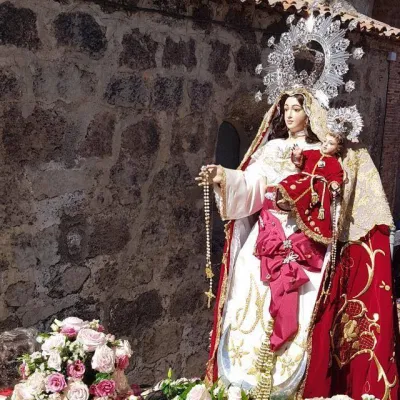
OctNuestra Señora del Rosario
4 October 2026
-
15
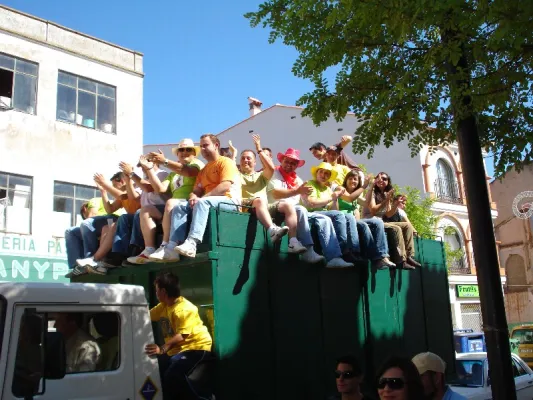
MayFestivities in Honour of San Isidro
15 May 2026
-
15
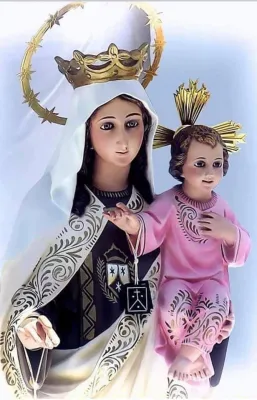
JulFiestas de la Virgen del Carmen
15 July 2026
-
10
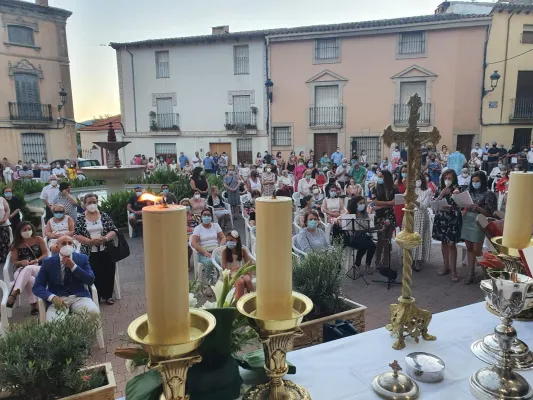
AugFestivities of Nuestra Señora de la Asunción
10 August 2026
-
17
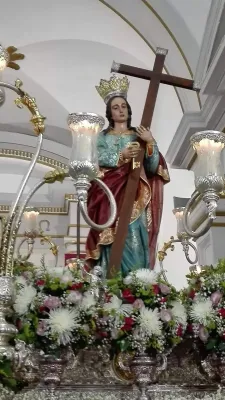
AugPatron Saint Festivities
17 August 2026
-
23
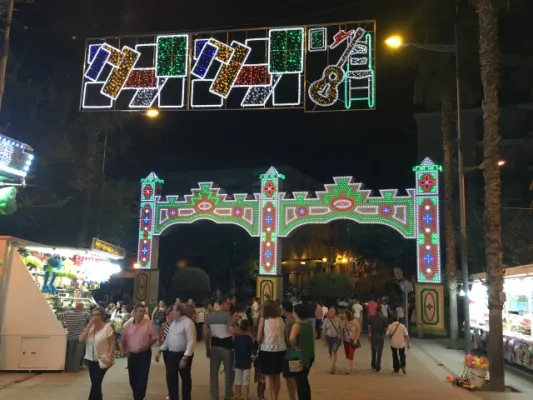
AugFiestas de San Bartolomé
23 August 2026
-
8
SepFestivities in Honour of Nuestra Señora de la Fuensanta
8 September 2026
-
9
SepVillacarrillo Bull Run
9 September 2026

