


Description
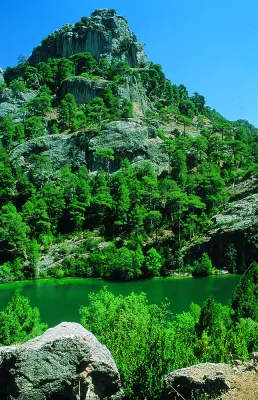
Poyo Sequillo and Cerrada de San Ginés
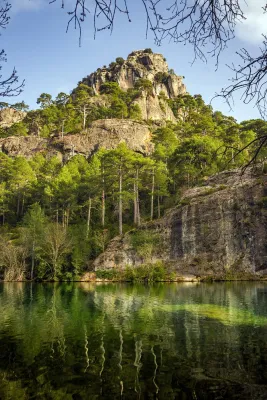
Due to the presence of numerous rocky walls, both wet and dry, the rupic formations (small rock plants) are very abundant in the Park, forming true hanging gardens.
The limestone acts as a sponge by storing water, making life possible between its fissures and small shelves of a multitude of species that adapt to it. Some of these species live on the rocks for simple need, as only in them do they find shelter in front of the tooth of the herbivores.
Among the plant formations that populate the rocks we will distinguish two, those that are in dry walls and those that prefer wet and slender walls, much more scarce. A good place to see both very close is in the Las Villas saw, in Poyo Sequillo the dry walls and in the Cerrada de San Ginés the wet walls.
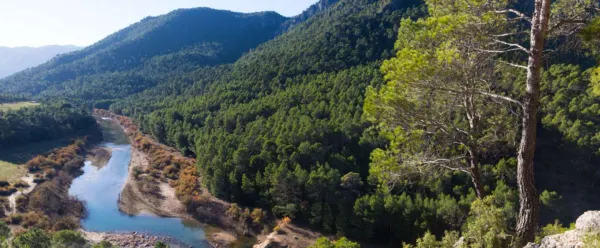
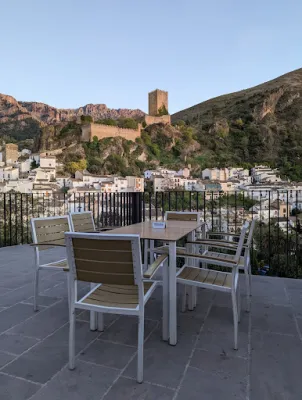
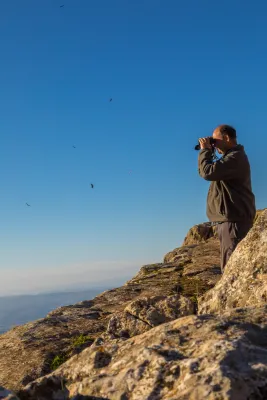
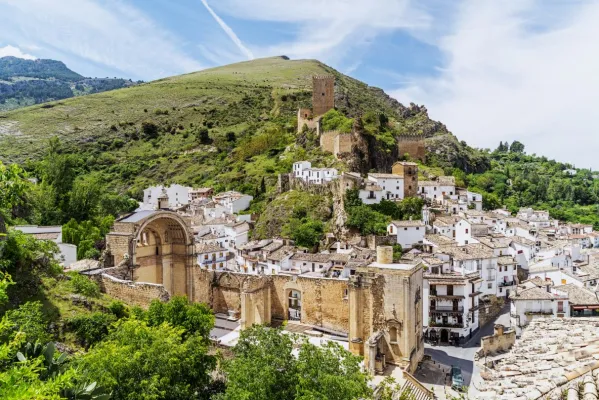
In the area of Poyo Sequillo we will enjoy a magnificent panoramic view of the Sierra de las Villas and its geological formations in bed. Rupicular plants such as the Cazorla violet (Viola cazorlensis), pipyrimañas (Sanguisorba rupestris), rock tea (Jasonia glutinosa), geranium of the waterfalls (Geranium cataractarum), stone breakers (Teucrium rotundifolium), tomils (Thymus orospedanus), and five branches (Potentilla caulescens), among others.
In the Cerrada de San Ginés, we will find the endemic carnivora plant known as the Andalusian grasilla (Pinguicula vallisnerifolia), as well as the widow's flower (Trachelium caeruleum), the Cazorla (Silla reverchinii), the five-in-branch (Potentilla caulescens), which lives in both dry and humid environments, and unnamed species such as Galium erytrirhizon, ferns as the hair of Venus (Adiantum capilluls- venerans and others as Aplentians). The tour has a little more than a kilometer and we advise to do it, because in this small closed the dry walls are alternating with rezummers.
_
As we enter the Las Villas mountains from Mogón, Sao Tomé or Chilluévar, we pass the reservoir of Aguascebas, and a few kilometers later, in the area known as the Collado del Pocico, a series of rocky cuts that flank the road, colonized by a lot of rupeal species, begins on our right.
_
From the previous site, following the road and after overcoming the Collado de la Traviesa and the cortijo of the same name, we reached the recreational area of Gil Cobo. In it we left the vehicle and took a track that goes right before crossing the bridge over the river Aguacebas of Gil Cobo. As soon as we walk, we'll start to see the slimming walls. Just half a mile, on our right, we'll have a big wall with a rupic community of wet wall.
Is part of