Saltar al contenido principal

Jabalquinto

MUNICIPIOS
  • jabalquinto
  • 5f0b26a7-4e0e-a6a3-dd6a-c2285e058627?t=1595516921925
  • 439e9ceb-85a1-e924-3960-c4a2a3415af0?t=1595516950238
  • 585dfc7d-9100-4010-dbb6-3d74b54e8897?t=1595516961295
  • fcf9750b-9782-8672-55df-205dc8e7244e?t=1595516972939
  • 1e4b016a-137c-12de-b293-27a3642ffc38?t=1595517085416
  • jabalquinto
  • 5f0b26a7-4e0e-a6a3-dd6a-c2285e058627?t=1595516921925
  • 439e9ceb-85a1-e924-3960-c4a2a3415af0?t=1595516950238
  • 585dfc7d-9100-4010-dbb6-3d74b54e8897?t=1595516961295
  • fcf9750b-9782-8672-55df-205dc8e7244e?t=1595516972939
  • 1e4b016a-137c-12de-b293-27a3642ffc38?t=1595517085416

Description

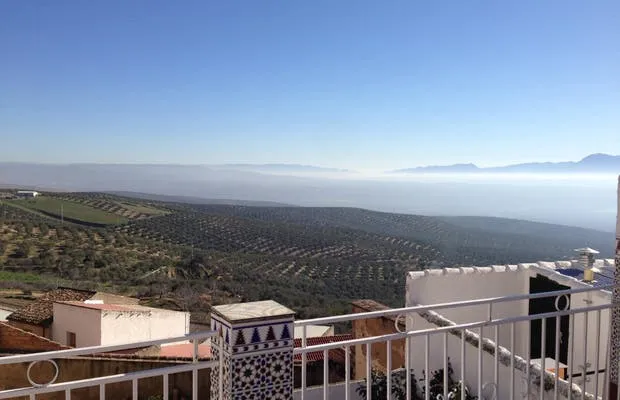
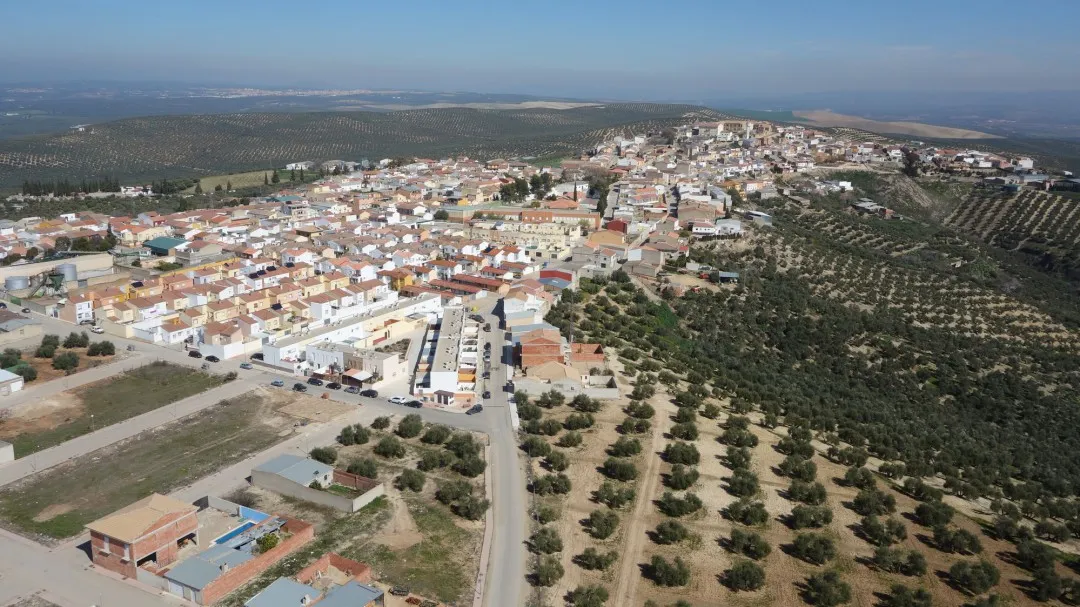
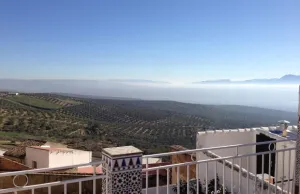
Municipality located at south of the northern region whose territory, almost flat, presents a typical landscape of the olive countryside.The urban core is located at the top of a loin from which you can see a wide panorama and see almost twenty villages around.In addition, Jabalfifth has irrigated land in the vegas of the three rivers which cross their territory: Guadiel, Guadalimar and Guadalquivir.The main activity is agriculture based on the olive treeand crops industrial herbaceous like beet and cotton.Among its architectural heritage is the Parish Church of the Incarnationwhich was built during the 16th, 17th and 18th centuries and has an interesting Renaissance cover; and the Palace of Jabalfifthwhose works were initiated in the 15th century by the Benavides and continued by the Condes of Benavente.

Tourist Office

Plaza Ayuntamiento, 1

Contact Details

953 617 373

Fax: 953 618 004

www.jabalquinto.es

Useful Information

Tourist area: Sierra Morena / Sierras de Andújar and Despeñacolos
Distance to the capital (km): 40
Altitude over sea level (m): 490
Extension (km ²): 73
Number of inhabitants: 2,583
Gentillo: Soap or Soap
Postal code: 23712

Is part of

AUDIOVISUAL CONTENT

MORE INFORMATION

Culture

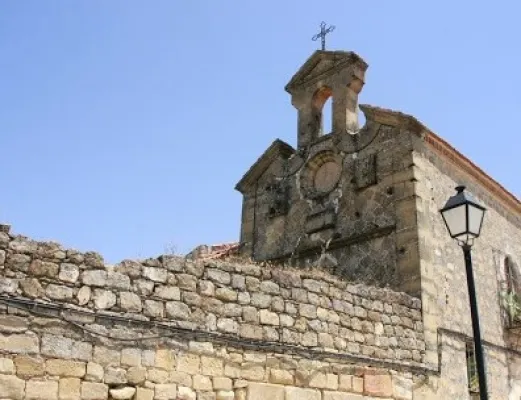
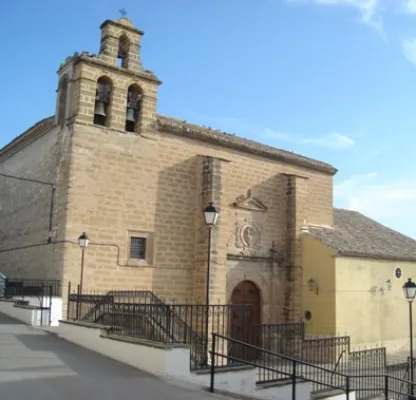
  • Parish Church of the Incarnation. Its construction began in the 16th century, but population growth from the last third of the 18th century required a long process of enlargement that was consumed in the 19th century. The original element is a rectangular ship covered with a half-canyon vault that rests on arches which, in turn, unload on stribs. Very later is the presbyterium, which is accessed by a half-point spinal arch, and whose tester receives light by windows in the form of a clover. The cover is the most important element of the church, it is Renaissance, of 1577; it consists of a half-point arch with imposes and with highlighted key, flanked by Corinthian columns of striated fuse that support in pedestal and topped by an emplement with surges at the ends for the first body and a large shield with the image of the Virgin, crowned by triangular front and small pinacles.
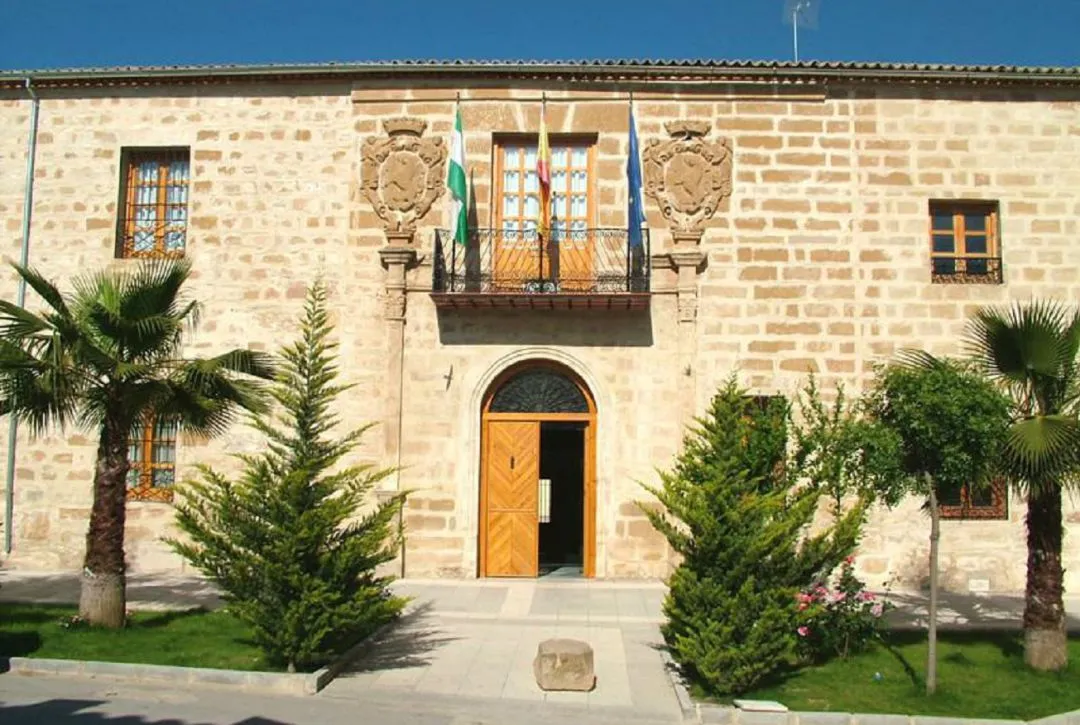
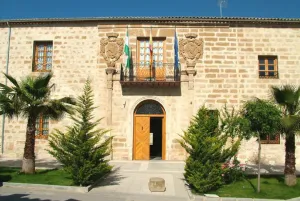
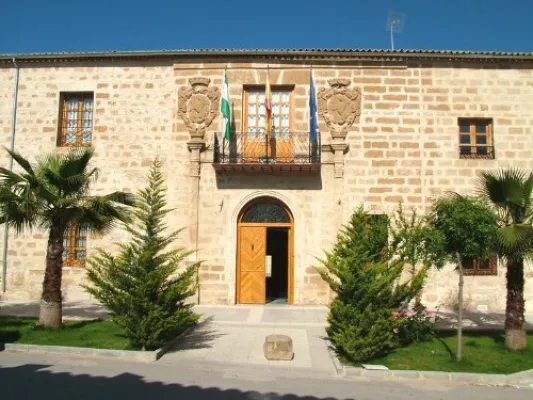
  • Jabalfifth Palace. The most emblematic building of the civil architecture of this municipality, strategically located between the Guadalquivir and the Guadalimar, is the Jabalfifth Palace, which began to be built in the 15th century, was renovated in the 18th and 19th centuries and throughout the second half of the 20th century has been presagiating ruin. Its promoters were the Benavides, the owner of the lordship after his purchase of Baeza, who decided to symbolize his power by raising the palace in the space previously destined for strength, and centuries later they transferred it to the Counts of Benavente. The façade is a two-story canvas, with rectangular voids with bars in which two covers are opened; the main one to the right with double-point door, pulled by fine pilasters of fuse refused on pedestal, is overcome by the opening of a balcony in 1856, in part mutilated by the opening of a balcony; the façade is completed by two large shields, which look at the typical cut-off hides of the 16th century. The other cover, even simpler, consists of an arched arch of long candles, framed by pilasters and cornices. It is currently the seat of the City Council. Both the lending of the Benavides Palace and the architectural severity of the Church of the Incarnation contrast with the simplicity of the rural houses of the municipality.

Nature

Jabalfifth is located south of Sierra Morena, presents the typical landscape of the olive countryside in a situation centered in the provincial context, between the eastern sector of Sierra Morena and the upper part of the Guadalquivir depression, a river that serves as a limit in its term in the south and west.

The term Jabalfifth is made up of a soft relief, where it stands out the presence of a hill that occupies a central position, with the highest level of the municipality with 496 m and on which the urban core is located. On the southern side of this hill there are different streams that drain their waters to the Guadalimar and Guadalquivir rivers; while, the Guadiel is the protagonist of the northern side.

Its main natural appeal is in the environment ofThe Veredon- The Boat, historically known as the Way of the Romans, because there was the ancient Roman road that joined Catulo and Iliturgi with Hispalis, which is located on the right bank of the Guadalquivir River with a typical vegetation riverside of chopos, carrizos, cucaveras and tarays, to which eucaliptos are joined. As we move away from the river bank, other common species such as manrubio, olive odour and paloduz appear. The place has lost much of its previous charm due to the proximity of the olive trees, but the downhill to the edge of the same river offers an ideal corner to enjoy nature.

Few are the animal species linked to the river and its environment that still resist. There are already few frogs and you can still see the viperine culebra swimming. The most common birds in this area are the white lavender, the cascade lavender and the grey papamosca.

Parties and Events

Jabalfifth has been a people that has always been distinguished by its joy and good welcome and by citizen participation in the most important events. Among the festive events, we highlight:

  • La Candelariathat the day takes place 2 February. The traditional festive cycle of the town begins.
  • Holy Week, in which the song of the "pregones" pre-trial parades. The one known as "El Paso," and it takes place on holy Friday that the encounter between the image of Jesus and that of his Mother is represented. The boars feel a special devotion to Our Father Jesus Nazarene, who have him as the patron of the villa.
  • San Isidro, May 15. It is a holiday of an eminently agricultural character, which is celebrated with a parade of chained carrots.
  • Corpus Christi. It is a holiday in which the Eucharistic procession runs the altars set by the neighbors in front of their homes.
  • Feast and Fair in honor of Our Father Jesus Nazarene, is held on July 26. It is striking to see the image process in the middle of July, and it evokes other celebrations that take place in the spring.

Gastronomy

This town wants to stay true to traditional cuisine, as well as to the custom of taking certain dishes in some of the most noted festivities:

  • Wigs, ancient pharinacean cuisine that in other places is named after rags, rags or tannins and that in essence is no less than a mass of flour and water and a little bit of salt, that is made strips or very fine pieces, and that apparently jirons, or torn pieces of fabric, receive such names. This mass will end up being cooked in a broth that carries as first ingredients those that make up a saffrito made with pepper, peeled and chopped tomato, cut onion and garlic, to which they will accompany at the time of cooking the meat of a dry pepper and pepper, together with pieces of minor game meat such as hare, rabbit, perdiz, and if it is time for Lent, cod and even clams. This dish is a relic of traditional cuisine.
  • Potting of chickpeas with codIt's a typical Thursday and Friday holy dish.
  • "Cod, fried or encebolla'cod is one of the preferred fish to be consumed in Lent and Holy Week.
  • Products of the massacre: Although adaptation to the new times, as well as proximity to large cities, contribute to this custom being done with more current methods, there are still those who resist to lose the taste of the "authentic" and carry out their own massacres with the current means but with the festive spirit of the past, in a last attempt not to lose the signs of identity that have survived the heat of the fires and in the oldest cupcakes.

Within the so-called "frying fruits," we have:

  • Borracuelles, they are done when there is some festive event. They are called that because before frying they are soaked in white wine and muscatel.
  • Home cupcakes, which will serve to sweeten the vigil of Thursday and Friday.
  • Eggs, they are made with egg yolks to which honey or sugar, milk, flour and cinnamon are added.

History

So much for found remainssuch as the fact that the three-river courses are near and the circumstance of being settled on a hill from which almost twenty municipalities can be seen, are factors that make the human presence in the territory of Jabalfifth very feasible since the Neolithic time.

It is not confirmed that it became an Iberian oppidum, but what is proven is that this place was on the Roman road that joined Catilus with Cadiz, in which the term Jabalfifth performed the function of a resting area next to the Roman source, where both people and animals could satisfy the thirst.

On the arrival of the Arabs The vegas close to the rivers, which had already been rotated by the Romans, are cultivated and even expand the irrigated areas with the construction of norias and the channelling of the irrigation waters.

The foundation of the villa of Jabalfifth in 14th century, is closely linked to the creation of Signora de Biedma Day, who gets the Baeza Council to hand over the former Islamic villages of Estivel and La Ventosilla to him in lordship with the order to redeem them.

Sánchez de Biedma Day left these population centres in inheritance to his son Manuel de Benavides, who already in the Year 1446 He acted like I Lord of Jabalfifth. During the 16th century, with the increase in the rotated and cultivated areas, the number of inhabitants is also increased, from 120 to 1,200 in the 17th century.

During 18th century the number of inhabitants would decline due to the high taxes that farmers have to bear. Although this demographic pox would soon be overcome and again with the diversification of crops, where the olive tree is gaining implantation on cereals, the number of inhabitants reaping, reaching 3,725, the highest figure achieved in the 1950s.

From this date on, for different reasons: the post-war, the decrease in the sales prices of the products obtained, years of bad harvests and the emergence of the phenomenon of emigration, both to the more industrialized cities of Spain, and to foreign nations, a decrease in the number of inhabitants is beginning, currently at 2,039.

In this municipality

3

Accommodations

4

Restaurants

1

Services

3

Events

We recommend