

Description
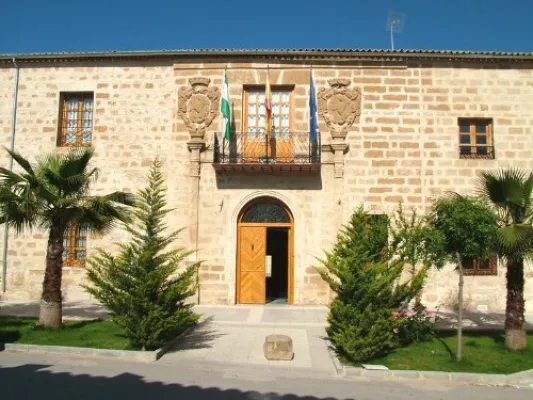
If the Palace of the Benavids is the most significant of the civil cultural goods in contrast to the aesthetic poverty and architectural simplicity of the City Hall, religious representativeness is held by the parish church of the Incarnation. Its proportions are discreet; its construction began in the 16th century, but population growth from the last third of the 18th century required a long process of enlargement that was consumed throughout the 19th century.
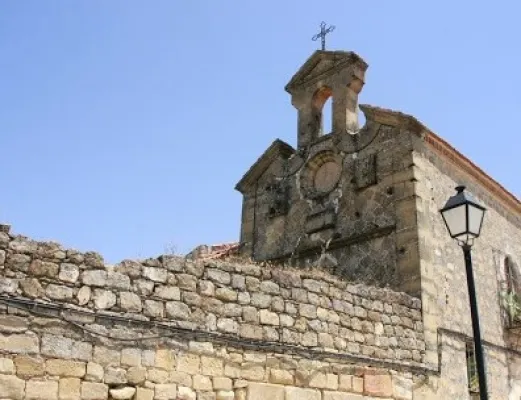
The original element is its rectangular ship covered by a half-barrel vault that rests on fajon arches which, in turn, unload over foothills. Very later is the presbyterium, which is accessed by a half-point spinal arch, and whose flat tester receives light by clover-shaped windows. Outside, on the right side, at the feet, a swordsman with two bodies is raised, the lower one with two moons with a half-point arc and the upper one with a single hole of bells. However, the most prominent of the parochial is the cover, Renaissance as the ship, between verticalized strokes. In the middle point arc a small sheet emphasizes the key and the gears contain triangular plates. The jambas, on the other hand, are smooth and the flank columns with Corinthian capitals. The internment has double architrabe and, above it and the stone vases of the ends of the cornice, there is a striking medallion, on the parchment board, with a relief of the Saying Virgin with the Child on the knees and a cherub at the feet.