Holly and Lauroid Forests de alta montaña
Unique Landscapes, Natural Park, Forests and Wildlife
Siles



Canyon of Poyo Torres
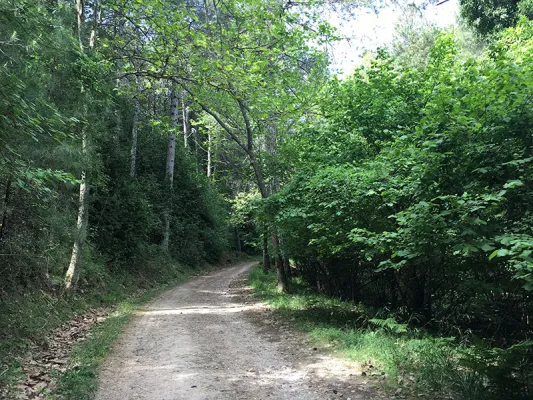
Just get out of the car, we will find ourselves surrounded by twins (Quercus pirenaica), in a thick and very closed forest. Melojar is one of the most demanding ecosystems in soil quality, depth of this and humidity, in the Park is poorly represented, only a few nuclei of the Segura saw. They maintain a entourage of plant species that accompany the melojo, forming one of the most important and interesting forests in the Park.
These forests were more abundant and extensive in past times, but the use of their wood, the transformation of the soil they occupy and sometimes the plunder to which they have been subjected, reduced them to small spots or enclaves, reaching very low today, especially in southern Spain. In the park already it must have been small the extension that would occupy this forest, but at present only a few very small enclaves remain, where the twins form bosquets, and there are also isolated specimens intermingled in the pineapples (salgareños).
The twins are oily and, therefore, to the melojar environment reminiscent of that of the Atlantic forests, moist, with bruises, of stray trunks and covered with moss, specific to Galicia, Asturias or Centro Europa. The melojar extends through the Atlantic area of the Iberian Peninsula, but also through the central system and other areas of the interior, reaching Sierra Morena.
In the melojar we find other arboreal elements such as the pespejón (Sorbus tormentinalis), the complaint (Quercus faginea) (with which it is sometimes hybrided producing a hybrid called Quercus x welwitschii), arches (Acer granatense) and salgarean pines (Pinus nigra salzmannii) generally repopulation. They also abound shrubs such as majuelos (Crataegus monogina), black thorns (Crataegus laciniata), aligustres (Ligustrun vulgare), skirmishes (Rosa spp.), magullos (Malus sylvestris), zarzas (Rubus ulmifolius, R. canescens) and some willows or sarctiles (Salix atronaea).
On the ground of the melojar we find herbaceas, including Poa nemoralis, Brachypodium sylvaticin and medium Briza, other companions are the gold button (Geum sylvaticum), primavera (Primula vulgaris), violets (Viola odorata), filipendales (Filipendula vulgaris), orchids (Orchis langei, O. coriophora), narcissos (Narcissus triandus palidulus), and species of Solomon (and the area of the idatus).
LOCATION
It is on the verge of the track that accesses Las Herrerias, which we take from the road that goes from Siles to Rio Madera (JF-7038), to take the detour after passing through the CEDEFO de Navalhora. We'll go up to see the start of a forest track that goes left, to counter if we go to the Wood River. It's well indicated as the Herrerías. We can park or continue by vehicle, we advise parking and walking on the track a few meters.
Is part of