Holly and Lauroid Forests de alta montaña
Unique Landscapes, Natural Park, Forests and Wildlife
Siles



Bucentaine
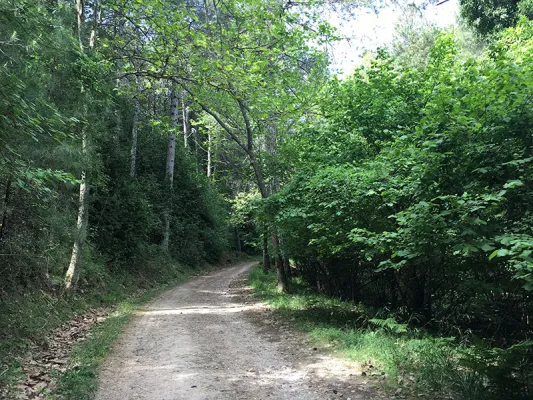
The main attraction of this forest track is the carrasco pine forest that crosses, under which a closed forest of oak, madroños and doves grows. In addition, just as the village of Puentehonda appears before us, we see on the right, on the same road, two gigantic and venerable examples of carrasco pine, which are included in the Inventory of Singular Trees of Andalusia with the names of Pino de los Barrilos de Puentehonda and Pino del Cerro Bucentaina and respectively. The latter is 32 m high and 4.5 m in diameter at its base.
If of any pine you can say is Mediterranean, this is the carrasco pine (Pinus halepensis). Its same vernacular name indicates hardness, as it is a tree that colonizes rocky, arid grounds, stony and sunny slopes, where no other tree can live. Because of its capacity to hold in dry periods (it survives with less than 300 mm of rain per year) and its colonizing capacity of degraded and dry areas, it extends through much of the Park, from its basal areas to 1600 m of altitude. This pine has been, next to the Salgareño, one of the most planted pine trees in the mountains of these saws. Where the aridity is noted, a tree plants it face: our carrasco pine.
The normal thing in the composition of this forest is to find an arbustive stratum characteristic of the serial phases of the Mediterranean forest, usually of initial phases, but also with an arbustive stratum of more advanced phases in the process of plant succession. This is how we find pineapples with rosemary (Rosmarinus officinalis), lentils (Pistacia lenticus), cornicabras (Pistacia terebinthus), aliagas (Genista scorpius), jara morisca (Cistus salvifolius), juniperus oxicedrus (juniperus oxicedrus). fumans (fumana thymifolia), asparagus (Asparragus acutifolius). There are also numerous aromatic plants, such as ejanas (Thymus masticina) and omilos (Thymus orospedanus, Thymus zigis), but a species that almost always accompanies the carrion pines is the spartum (Stypa tenacsima).
LOCATION
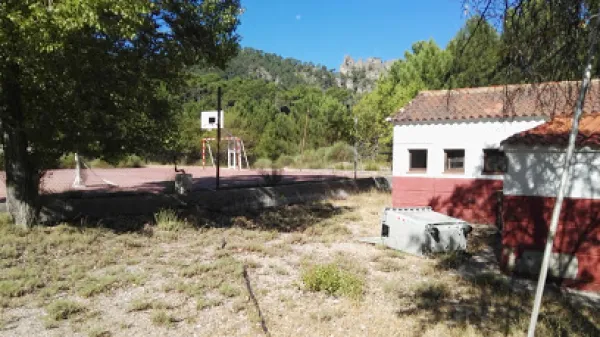
Start of the tour in the Recreative Area of La Peña del Olivar, on the road from Siles to Las Azeas. It's marked PR-A 175. This route, of just under 5 km, runs along a narrow forest track that we recommend to walk. The first kilometer is quite steep, but the rest is barely at a level.
Is part of