Saltar al contenido principal

Albanchez de Mágina

MUNICIPIOS
  • albanchez de mágina
  • albanchez de mágina
  • albanchez-de-magina-poblacion-2-jpg
  • albanchez-de-magina-poblacion-3-jpg
  • mon288-jpg
  • mon126-2-jpg
  • mon484-2-jpg
  • mon095-2-jpg
  • albanchez de mágina
  • albanchez de mágina
  • albanchez-de-magina-poblacion-2-jpg
  • albanchez-de-magina-poblacion-3-jpg
  • mon288-jpg
  • mon126-2-jpg
  • mon484-2-jpg
  • mon095-2-jpg

Description

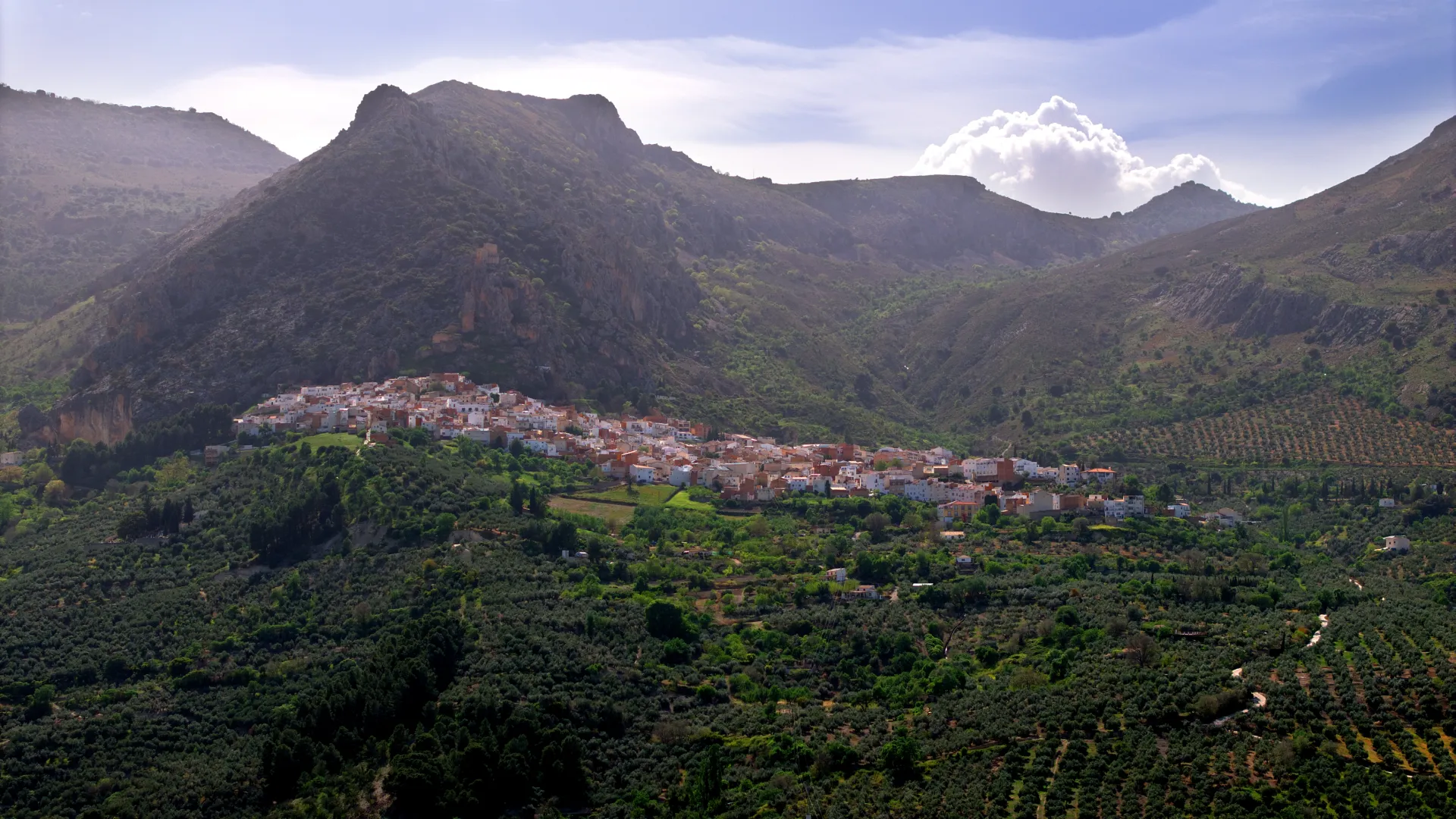
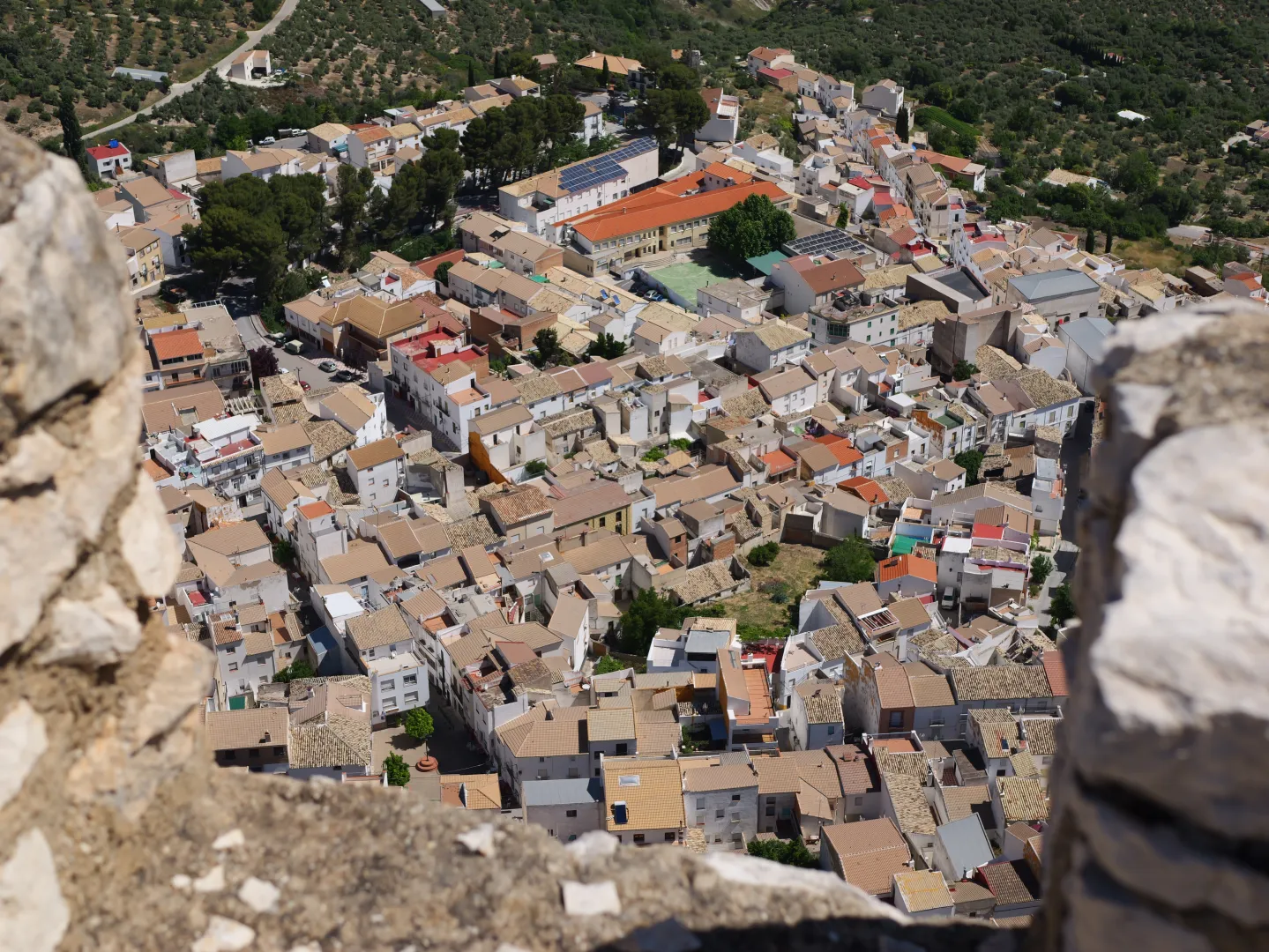
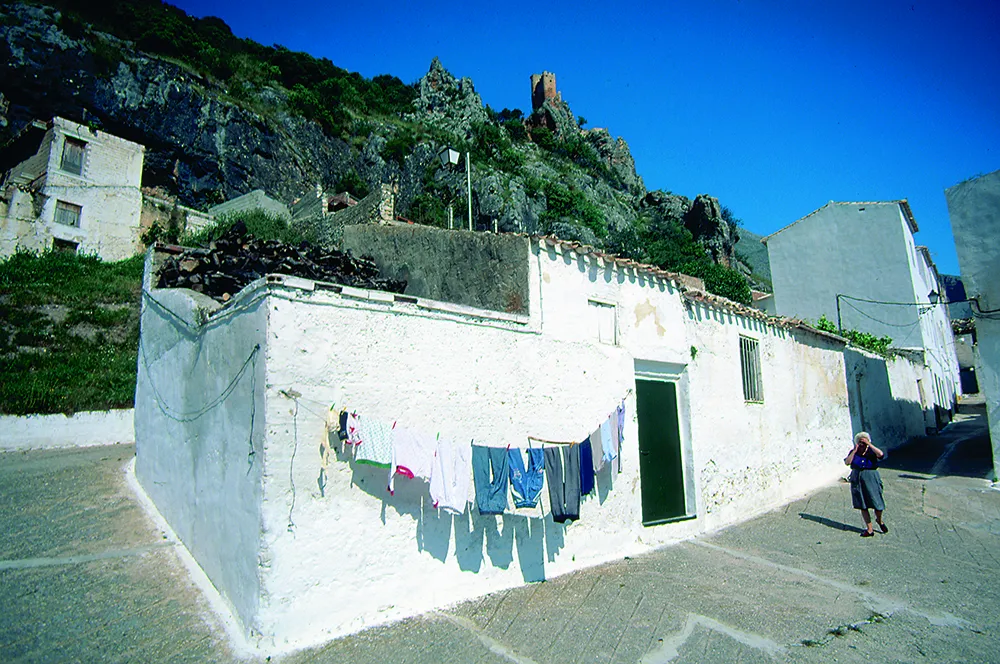
A population located to the south of the province, between soft hills, olive fields and fruit. Its term belongs to the Natural Park of Sierra Magina, which is part of the Subbetica and offers beautiful and spectacular landscapes. In its municipal term is the highest elevation of the province of Jaén, the Pico Magina. In terms of vegetation, there are frequent cobblestones, complaints, carrasco pine and salgareño. Its rich and varied fauna is also important.

Albanchez de Mágina (formerly called Albanchez de Ubeda until 2000) is a municipality in the region of Sierra Magina, in the province of Jaén, Andalusia. Most of the municipal term, as well as the urban core, are within the Sierra Magina Natural Park. In its municipal term is located the highest elevation of the province of Jaén, the Pico Magina, with 2,167 meters of altitude.

Access to the town is made on the A-320 road, with a detour in the population of Jimena on the J-3105 road or from Torres on the Port of Aznaitín (JA-1107). Distance from Jaén, 40 km., Ubeda and Baeza at 35 km., Cazorla at 55 km. and Granada 117 km.

Useful Information

Tourist area: Sierra Magina

Distance to the capital: 45

Altitude over sea level (m): 862

Extension (Km2): 39

Number of inhabitants: 1228

Gentillo: Albanchecinos

Postal code: 23538

Is part of

AUDIOVISUAL CONTENT

MORE INFORMATION

Culture

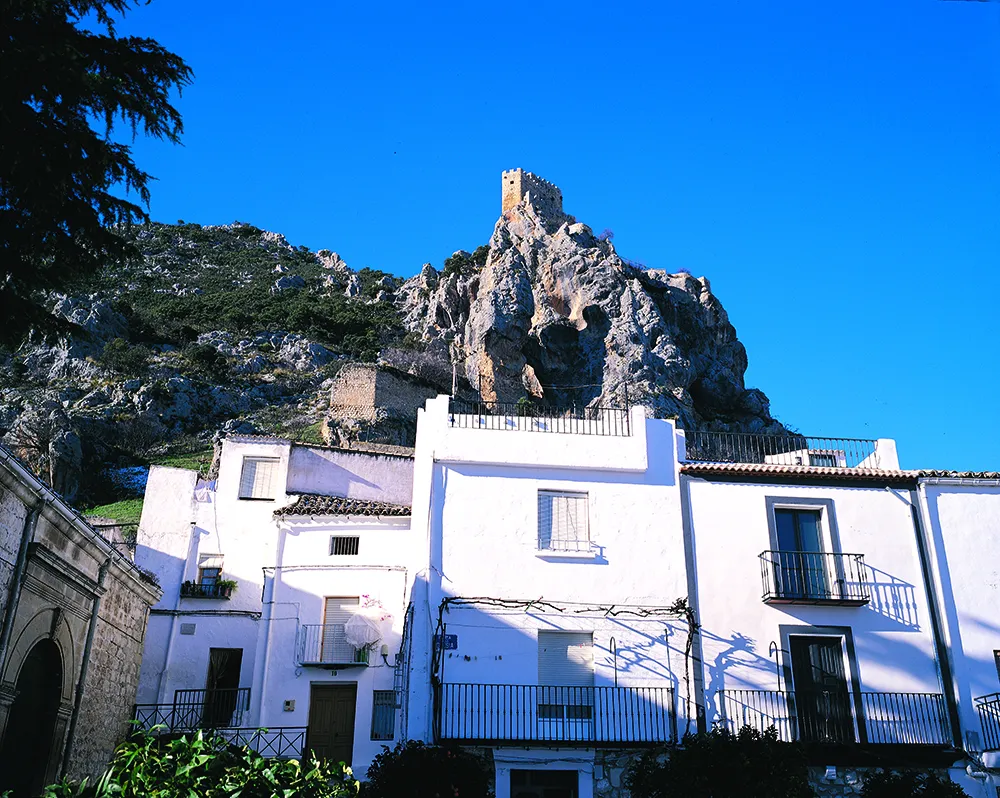
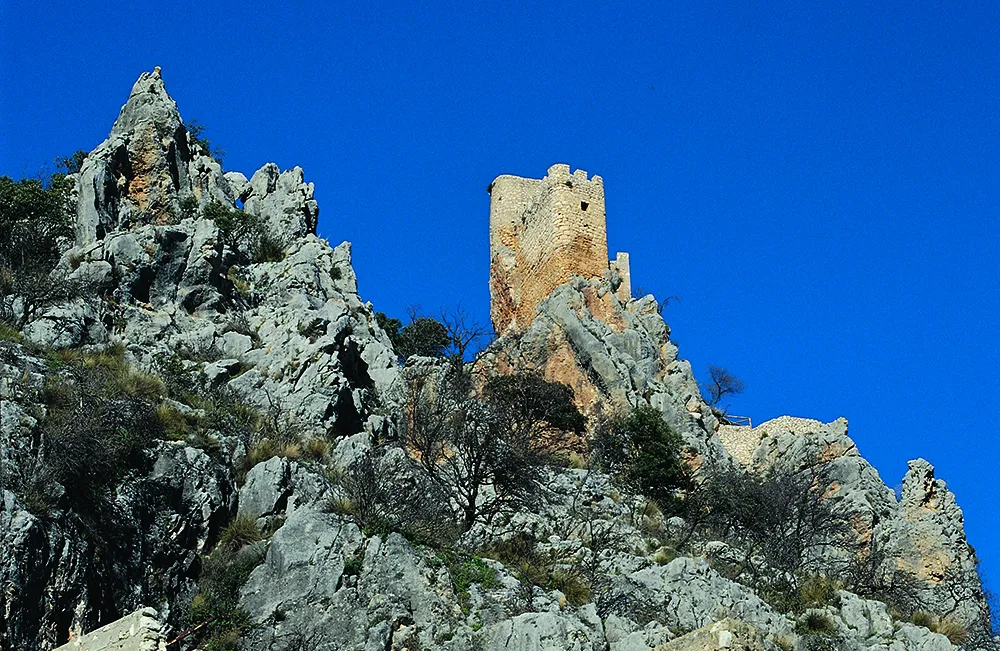
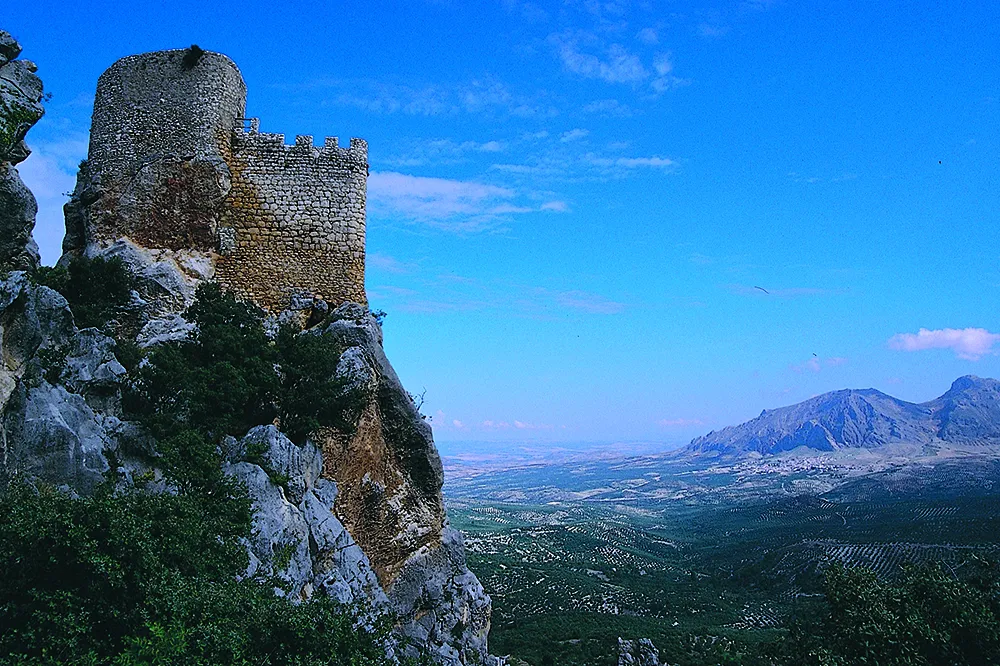
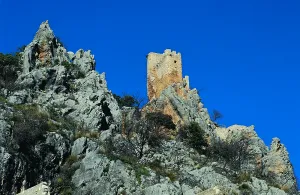
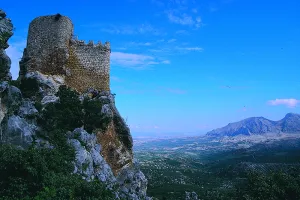
  • Castle.The castle of Albanchez de Mágina dominates and presides the village, which is located on the first ridge of the Sierra de los Castillejos. Despite its small dimensions and its inner narrows, its arriseach position makes it extremely difficult to access. Of presumably Christian origin, its construction was made with argamasa and it had to rise late, in the Middle Ages, in the early 14th century, as an alternative to another Muslim castle from which there are only remains, built with tapial in the lower and closer to the people. The castle was linked to the Order of Santiago, which created the command of Bedmar and Albanchez.

    What is preserved from it is its alcazarejo, built with masonry, which consists of two small, impressive nuclei because of its exterior appearance and the closing of the rock on which it sits, but with little internal capacity to house troops and beings. The highest core is a narrow rectangular platform that enables a small interior space. The entrance opens to the terrace of a rectangular floor turret that housed two cameras: one top, covered with a half-barrel vault, now melted, and one lower, a aljibe, with slightly pointed vault and remains of the stucco that covered it.

    The castle also had a small courtyard of triangular weapons with almond parapet and saetera windows, a square terrace with albarrana to defend over the cliff, protective walls, today practically destroyed, and rounded corners outside as it was a calatravo castle. It was declared Good Cultural Interest in 1985.
  • Church of the Assumption. The parish church of Albanchez de Magina, a Renaissance church, has the dignity of simplicity and austerity in both design and execution. On the north wall is identified a sober facade with a half-point arch, the key of which is marked by a mensula, and which supports imposts on jambas. The cover is topped by an internment. Its interior structure is marked by three ships, the largest being the central, which also stands out hierarchical in the outer volumetric because it has a higher height. The inner spaces are separated by columns and semi-columns crowned with Tuscan capitals. Its presbytery is flat and covered by a half-barrel vault.
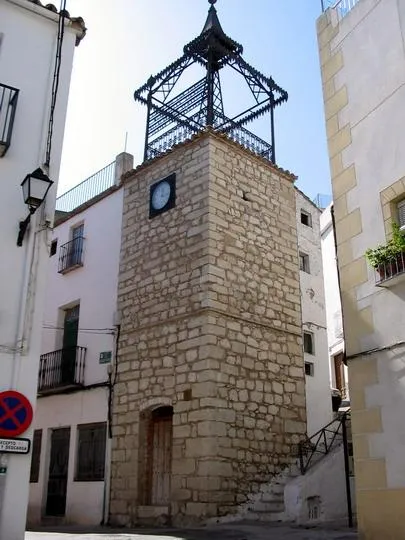
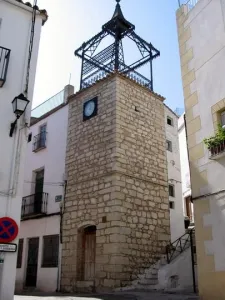
  • Watch tower. XXXTorreon century square floor built with masonry. It is topped by a bell tower of cast iron structure built in 1883.
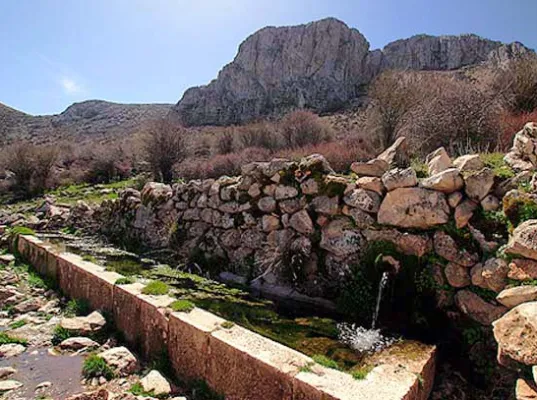
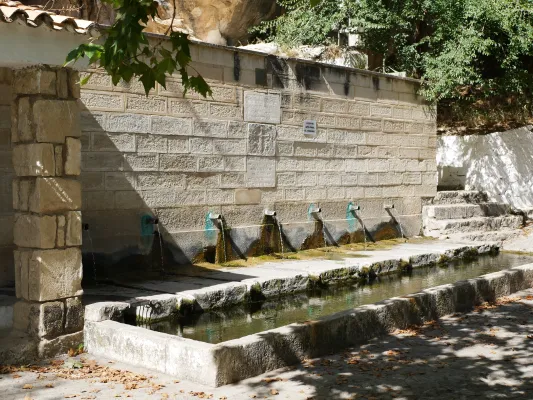
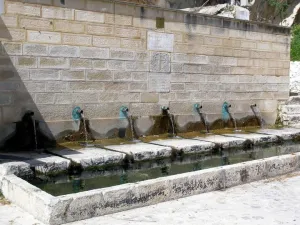
  • Source of the seven years. Pilar abrevadero with front of armchairs, and public laundry, example of traditional rural architecture related to the use of water for the consumption and irrigation of gardens, which possibly goes back to the 16th century. View with excellent views over the garden, olive and saw landscape.
  • Silk source. Source and public laundry that gives name to the area where the bushes were grown. The production and trade of silk, introduced by Muslims, was one of the economic bases of Albanchez until the 18th century.

Nature

  • Source of the Espino. It is a water birth located in the middle of the Mediterranean mountain, with geological and vegetable formations of high natural value.
  • The Boiler of Uncle Wolf and the left-handed.It is a set of river pods and a waterfall inside a cave, all in a very mountainous environment.
  • The Serrezuela and the Port of the Aznaitin.Mountain area with stunning landscape views of the region.
  • Hutar site. Natural site at the birth of the Hútar Arroyo, located 2 km. of the town. Recreational area with barbecues, bar- restaurant, swimming pool and sports court, between springs and abundant vegetation. The waters of Hútar have historically been used for irrigation and as a driving force for the flour mills in Albanchez.
  • The Caño del Aguaderon area. Water birth at 1,800 meters of altitude in a high mountain environment. Area of pastures traditionally dedicated to pasture, so the fountains, pilares- abrevadero and huts or pastor's cabins abound. The altitude of the saw allows the presence of birds that nedify above 1,500 meters, such as the Red Roquer, the Grey Collalba and the Royal Eagle.
  • The Turcal. Geological formation with an abrupt relief of slices and rocky florings containing so-called algal bowls or fossils from the seabed 16 million years ago.
  • Path of Great Tour GR (E4)that crosses the province of Jaén runs through the term of Albanchez.
  • The Dehesa. The site is located in the place where the first limestone rocky outings of the base of Mount Aznaitín, which has a high landscape value, appear. In 2003, ten Escalada Days were opened which with different degrees of difficulty are a great opportunity to encourage and / or practice this sport.

Parties and Events

  • The Festival of the Candelaria on February 2, also known as Rosca Day. During the Mass there are a few thistles that are spread among the attendees. It is considered that those who take them are protected from the diseases of the throat and stomach.
  • In Albanchez, the habit of overthrowing the mozzas remains. The bordes are the fruit of the enea. They are collected during the summer and stored in the house chambers, in the straits, to dry. The Carnival Sunday They are taken out to throw them at the girls. When peeling them, they take off a white and melosous fuzz that adheres to the hair and clothes. It is said that the more a girl is loved, the more bordered she must throw her suitor in her face, so that that day the streets of the village will be carpeted with the annoying hairchair, in so curious "demonstration" of love.
  • The day 3 of May with the procession of Rosario de Los Hachones the employers' parties of San Francisco de Paulaheld from 3 to 6 May. The participants go through the streets carrying hashons or teas made with spartum and fish. At the passage of the procession, four luminaires, large laces of wood and olive branches, are put on, to which salt is cast to grow and prevent the passage of the comitiva. The light of the hashons and luminaries in the darkness of the night recalls the dawn of the Aurora, in a ritual that synthesizes the character of fire as a magical-symbolic element and the Christian tradition of prayer of the Rosary.
  • Procession in honour of San Francisco de Paula on May 4, Albanchez pattern, crop protector and rain propitiator. During the journey the neighbors cast wheat, from the balconies, on the paths of the throne, as a symbol of thanks for the given and begging harvest for the coming.
  • The night of San Juan a tradition related to falling in love is celebrated. The moors place the hangings on the doors of the mores, with different meaning depending on the type of ornament: the flowers are proof of affection, the branches of fig tree mean that the moose is a little locuel, the parra's sarment indicates that they have seen it drink wine, and a cardo, that its character is hard.
  • The day 1 August the day of the gazhaswhere in most houses the August gazhas are eaten, made with flour, water, pepper and tomato. It is popular belief that eating the hot gaches in the middle of summer, the heat will be kept throughout the winter, especially during the olive collection. In the collection of the olive that is cold is that it has not eaten the gazhas of August 1. At present, there is a competition on that day for the production of gachas in the Natural Area of Hútar, during a holiday and the coexistence of all those who do not want to spend the winter cold.

Gastronomy


Its gastronomy of Moorish origin is rich and varied, preserving the peculiarity of possessing the only Maize stew which can be taken throughout the province of Jaén. It is a summer dish where the corn grains, once crushed in the mortar, will give body to a broth made from a saffrito of peppers, beans, tomato and fresh guindilla, which will then be cooked with pepper, saffron, cumin, garlic and salt.

Another of the traditional Czech Albanian dishes is called flakes, which are only a variant of the rags with hare, in which the mass is threaded laboriously to form small pieces of the size of the swollen corn, accompanied by orchard products such as green peppers, potatoes, eggplants and beans.

The heritage of the Andalusian gastronomy is present in much of the recipes and culinary habits that are preserved in Albanchez, such as the rye, made with lamb blood, and consumed in all relevant celebrations, the bordullos and the peas of corn and wheat. In the chapter of sweets, the almondmade of ground almond, egg, cinnamon, sugar and lemon scraping.

For dessert, the flakes, which can be taken with sugar and cinnamon or honey; or the not less almond almonds, delicious conjunction of meringue, sugar and almonds passed through the oven. Unforgivable as dessert of the traditional weddings of old was the refreshing melon saladand as dessert or snack of the autumn evenings the no less traditional weddings, so called to the pitancero sponsales of a dry fig, preserved in flour, and a piece of walnut, almond or peeled acorn that is placed inside.

History

The oldest news in the history of Albanchez is found in the Cueva de los Skeletos, in the The Fuckers' place. It was discovered in the 19th century by peasants. It was the finding of several skeletons, sitting in semicircle and armed with arrows, whose tips were acute pedernals, with knives and spears also of pedernal. The researchers have identified him with a multiple burial of the Age of the Bronze. In the municipal term, several treasuries of coins and several inscriptions have been found, of which some researchers have deduced the existence of a buried Roman city, Campanjana.

The urban core of Albanchez must have originated between the 7th and 9th centuries, when the peasant population used the rock, under which the people lie, to seek refuge. By the 11th century the wall of the population would be built, which was then above the current one. From this primitive fortification remain the remains of a square tower.

After the Spanish conquest the castle was built on the rock, although it is difficult to specify who built it, for during the middle age Albanchez belonged to various lords, although above all it belonged to the Order of Santiagor. In 1309 Fernando IV grants the villa to this Order of Santiago, which created the Bedmar and Albanchezwhose presence lasted, at intervals, until the 19th century. From the news in the leagues we know that he belonged to the Lordship of Jodar, until in 1338 Ruy Fernández He sold it to the Ubeda Council for 1,500 maravedis. Albanchez was dependent on Bedmar until the infant Enrique de Aragón the villa was made independent by privilege given in Valladolid on 18 November 1419, later confirmed by other kings.

After the reconquest there was a demographic increase supported by the repopulation measures and movements, the development of an economy of a marked agricultural character and the raising of partridges and pigeons and goats, lanar and cattle. The economic decline of the state in the 17th century accentuates this situation in Albanchez due to its subsistence economy. The fact that it is evidenced by the state of ruin that the castle had at this time or the sinking of the roof of the parish temple.

The 18th and first half of the 19th century meant a shy attempt to recover. This is demonstrated by the reconstruction of the church giving rise to the current one. Another of the most significant facts is the definitive disappearance of the Enabling to the heat of measures such as the Demortization of Mendizábal in 1836.

In this municipality

11

Accommodations

5

Restaurants

7

Events

We recommend