

C/ Arcadio Ardoy, 6, Chiclana de Segura - 23264

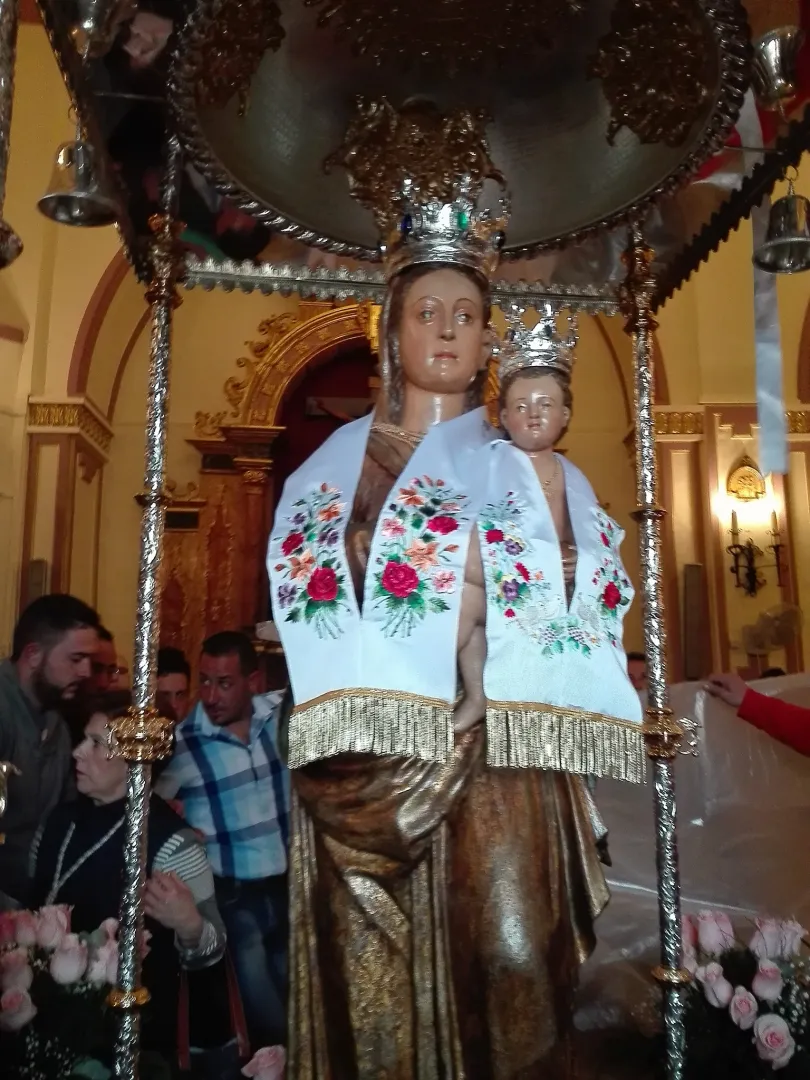
On the second Sunday of May, although the traditional date was 8 May, the popular “Romería de la Carrasca” takes place, in honour of the patron saint, a festival celebrated since time immemorial by the people of Chiclana and those of Venta de los Santos, the latter now belonging to the municipality of Montizón. Like any devotion to a patron saint, this one comes with its own history and legend, both woven into the very foundations of Chiclana's festive tradition. Popular tradition tells that when Venta de los Santos belonged to Chiclana, both the people of Chiclana and those of Venta used to hold a joint pilgrimage in honour of the Virgen de Nazaret and the Cristo de la Expiración, celebrated at a spot known as the “Cortijillo de la Virgen”. In 1767, King Charles III issued the Charter of the New Settlements of Sierra Morena, giving rise to the new settlement of Montizón, to which Venta de los Santos would come to belong. A dispute then arose between the parishioners of both places over who would keep the beautiful Gothic image of the Virgen de Nazaret. The bishop had to intervene in the matter, deciding that the two images should be assigned by lottery; as chance would have it, the Virgin went to Venta de los Santos, while the Christ went to Chiclana. Legend has it that when the young men of both settlements went to lift the image assigned to them by lot, they found they could not lift it, no matter how hard they tried. They then decided to swap the teams of bearers, and the people of Venta were able to lift the Christ, while those of Chiclana lifted the Virgin — taken as a providential sign of where the holy images wished to reside. When the people of Chiclana carried the Virgin in procession towards their town, so that she would remain there permanently, they stopped to rest at the spot known as La Carrasca, which has since been called the “Descansadero de la Carrasca”, and is the place from which, every year, their patron saint, the Virgen de Nazaret, is carried in pilgrimage.
On 8 September, further celebrations are held in honour of the patron saint, including the traditional bull runs. The origins of this tradition date back to the 15th and 16th centuries, held right in the historic centre, where a bullring is built entirely by hand. The sight of the bulls being brought up across the countryside into the streets of Chiclana, viewed from the Trascastillo, is an unforgettable spectacle.


