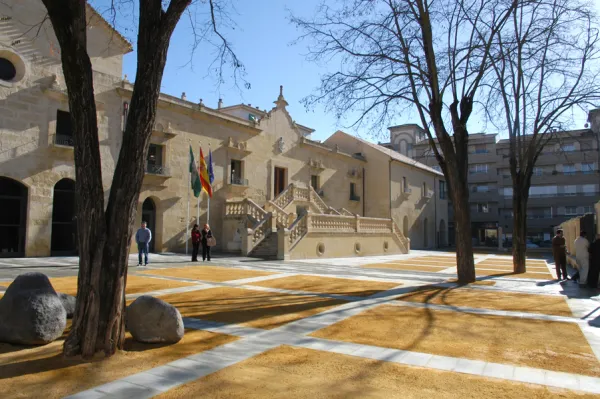
Abacial Palace - Municipal Museum of Alcalá la Real and Territory Interpretation Centre
Museums and Visitor Centers
Alcalá la Real


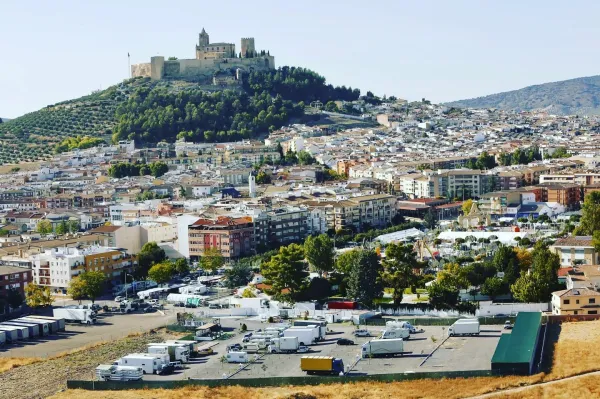
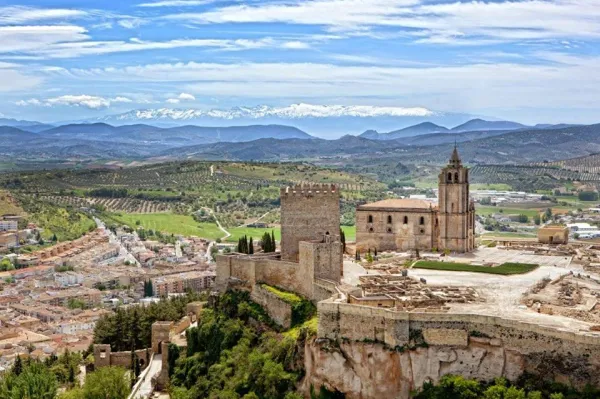
Alcalá la Real is located within the betico territories of the Andes, characterized by a great diversity of landscapes and ecosystems.
This diversity is conditioned by its irregular topography from the 400 m of Fuente Álamo to the 1.553 m of the peak of La Martina, as well as by the pronounced dominant climatology, with temos peratures that ascend to the 35 ° C du rante the months of vera no and descend to the -6 ° C in winter.
It is important to highlight forms such as Los Tajos, impressive cut and rocky, under which the natural vegetation is served, as a sign of what at one time were the Mediterranean bays of the southern Iberian Peninsula, species such as the oak (Quercus rotundifolia) and the whim (Quercus faginea) dominate the arboreum stratum and others like the peonies (Poeoni broteroi), madreselvas (Lonicera implexa), majuelos (Crataegus monogytoo, or the forest, etc.).
In these enclaves, and developing on the limestone walls, we can find an ende- same plant from the south of the Iberian Peninsula from which only 22 populations of Andalusia have been found and is listed as in danger of extinction, the Saetica Sarcopacnos subsp. Baetica.
As for the fauna that we can find in this ecosystem, from birds such as the vulgar cernicalo (Falco tinnunculus), gratilla (Corvus mone-du / o), piquirroja (Pymhocorax pyrrohocorax), crows (Corvus corax), red roquero (Monticola saxatilis), etc. We can also observe the occasional passage of some perdicular eagle couple (Hieraaetus fasciatus), the migration of the leonate vultures (Gyps fulvus) and other birds found in the forest area such as the boy owl (As / o otus), the real red colirar (Phien / curus phoen / curus), the oropen (On'o / us or / us), etc.
There is also a great diversity of wild mammals in this area that seek refuge in this enclave, although they are species that are difficult to observe, we can detect their presence based on prints and other records, species such as the Garduña (Tuesday foina), Gin (Genettagenetta), badger (Meles meles) and a large number of microfuels that act as the basis of the trophic chain.
It is also interesting to discover the area of Los Llanos, a large plateau where the tree vegetation is absent and where the number of stone or majano accumulations that give the territory a lunar look stand out.
Despite their yerma appearance, the Llanos have high biodiversity and possibilities for observing wildlife. The flora is characterized by the abundance of aromatic species such as lavandas (Lavandula), rosemary (Rosamrinus officinalis), tomi llos (Thymus) etc and fauna, we find a large number of birds linked to this type of large and unequipped ecosystems of arboreal vegetation such as the common cogujada (Calerida cristata), the montesina cogujada (Calenda íeck / oe), the chitovia (Lullulina arbórea), the calandria (Melanocorypha cala), the common (Saxacarus), the (Saguluus párama), the (La páribana (Párárágina), the (La párágina), the (Página), the common (La página), the