Beas de Segura



Pilate boat, Borosa River
This cornicabral is extended by the Pilate Boat, at the head of the Borosa River, where there are the largest copies of those in the Park.
When enjoying plant formations, preference is often given to those that are starring in trees, but in these saws many are dominated by shrubs. This is the case with the cornicabral, of great ecological and landscape importance, especially in the autumn, when they become almost red.
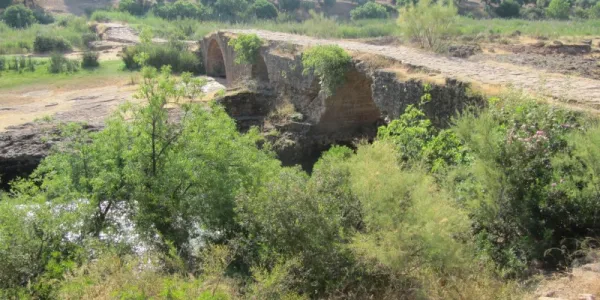
Once we get to Central, we're already in the middle of the cornicabral. A mile earlier, from the Nidillo Strike, we will be accompanied by the cornicabra to our right on a very stony and pending slope. At the end of the route, in front of the bridge that crosses the Borosa River to access the central one, on the hillside that extends to our left after crossing the bridge, we will observe large trees, which look like oak trees, but if you look at us it will surprise us that they are large cornicabra. In the fall we are presented with a multitude of warm colors ranging from orange to dark red.
The cornicabral that we see is associated with little vegetation in its lowland, this is because the presence of cattle (wild or domestic ungulates) benefits the cornicabra, its outbreaks and spills of seed are very toxic and not appetizing to the cattle, so it is not easy to see other species accompanying the cornicabral, and more in areas frequented by the cattle. However, they are usually seen in oak (Quercus ilex ballota), arces de Montpelier (Acer mosnpessulanum), agracejos (Phillyrea latifolia), sabinas (Juniperus phoenicea), lentisco (Pistacia lenticus), rosemos (Rosmarinus officinalis), torvizcos (Daphne gnidium), esamujos (Rosa ssp.) and among herbaceas we highlight the peony or rose of mountain (Paeonia broteroi), as well as in the gradivos (Rachos), as in the gradivázos, as in the gradivánas in the gracos (Rachos, as in the gradius, as in the gradivás, as in the gradivázos, as in the gracos (Rachos), as in the gradius, as in the gradivávás, as in the gradius in the gracas in the gracos, as in the (Poa bulbosa, Agrostis ssp., Cynosurus echinatus, Aegilops geniculata, Arrhenatherum elatinus, etc.).
The name of the cornicabra is due to the protuberances in the form of goat horn so characteristic in leaves and stems, which are gills produced by the bite of an insect, which uses them as food for its larvae.
We suggest:
Route of the Borosa, from the place known as La Central. To reach the cornicabral we must remount the Borosa River along the track that passes to its vera, and that ends up in a hydroelectric power plant. We take it on the farm of Borosa, a well-known place. We have 8 km ahead of us, but they don't have much slope and can be done easily, and we go all the way through the Borosa River, which is one of the most spectacular and popular routes of the Park.
Is part of