Contact Details
Fax: 953 661 104



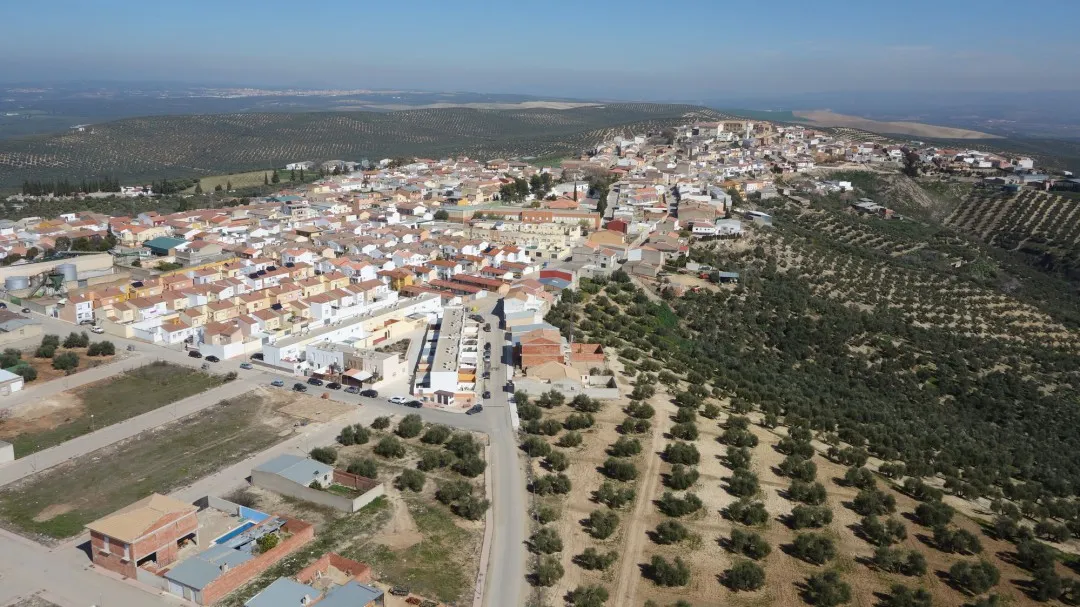




Carboneros is a small municipality in the northern part of Jaén, and is located on the southern façade of Sierra Morena, next to the Madrid- Sevilla motorway.
In its municipal term, the adhesitated land in which some wineries have been installed prevails, and is also rich in minor hunting. Currently its economic base is the cultivation of olive trees. And in it, we can distinguish three areas: the northern area, with very strong slopes between 700 to 1300 m of altitude; the southern area, close to Vilches, Linares and Baños of the oak, which has a soft morphology and with moderate slopes, linked to the Guadiel and Guadalén rivers; and a central area of relief varied from 6 to 500 meters.
This population was founded in 1768, at the initiative of King Charles III, as part of the illustrated project that was named "Nuevos Poblos de Sierra Morena y Andalucía," and which were governed by a specific Population Force for these new settlements.
In the vicinity, there are other population centres dependent on Carboneros: La Mesa, El Acebuchar and Los Cuelos.
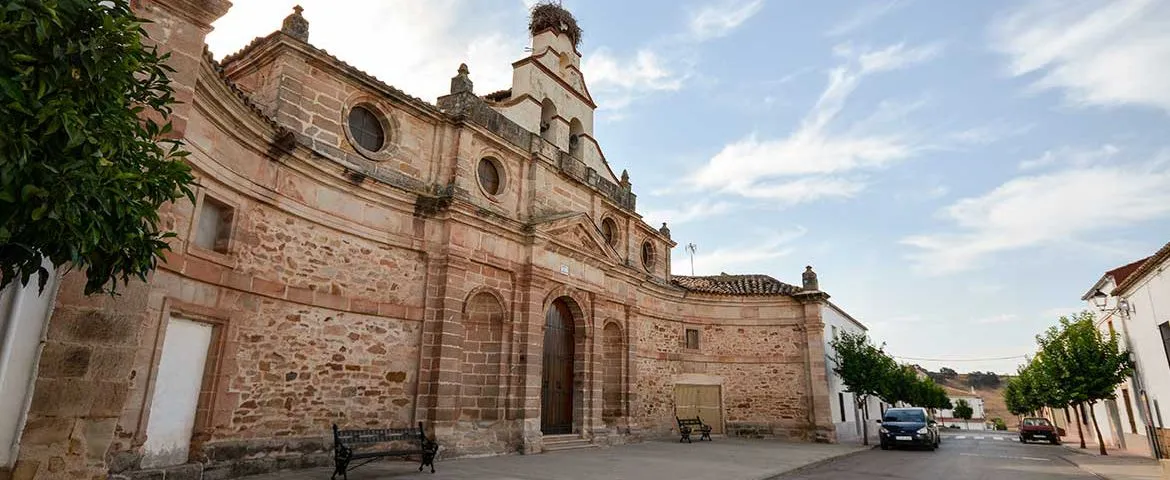
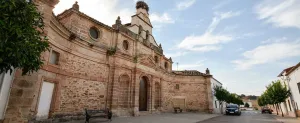
The parish church of the Immaculate Conception, built in the second half of the 18th century, in a neoclassical style, stands out from its artistic heritage, with two Tuscan pilasters and two large side niches.

From the artistic heritage we highlight:
Carboneros is delimited by two rivers, the Gloves and Rumble. They and their main tributaries, La Campana, Guadiel, Guadalén, travel and drain the lands of their municipal term.
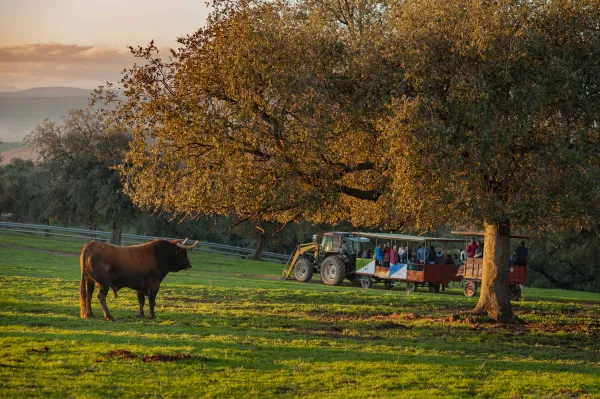
Its enclave in the southern part of Sierra Morena makes it especially attractive for nature lovers. Here we have the opportunity to enjoy a landscape full of contrasts: to the north, with more steep mountains, and in the central and southern area with adhesitated spaces and the presence, mainly, of oak trees; they are ideal places for extensive livestock.
It has an abundant and heterogeneous vegetation, highlighting the olive, oak, cork, chestnut, oaks, eucalyptus...
Of his fauna We point out the abundance of small game animals: hares, rabbits, partridges, quail... We meet with cattle cattle, sheep and goats. And it is very easy to witness the majestic flight of the multiple rapes that overfly these territories.
The environment of the reservoirs presents beautiful images of the Mediterranean forest, which makes us connect with the characteristic nature of Sierra Morena.
The reservoir of La Fernandina is a leisure area for the carbonarians and visitors where they can perform outdoor and aquatic recreational activities.
The people of Carboneros founded by settlers from different countries of Central-Europe have as their patron, as in other populations, the "Immaculate Conception," and celebrate the parties in their honor from 7 to 9 December.
These other festivities are also celebrated:
The unique location of Carboneros, located between the saw, the olive field and the Madrid- Sevilla motorway, has led to the development of a varied and rich gastronomy. The hunting and the animals that are raised in this area have a special protagonism, without forgetting the pure olive oil, an ingredient that can never be missed in the kitchen.
Among the dishes with the most roots in the area, we highlight:
The name of "Carboneros" it mentions its wealth and ancient mining activity that dates back to the times of General Cartaginese Anibal.
The written sources of the silver mines in the area of Catulus mention the Well of Baebelo, identified in the mining village of Palazuelos, in the municipal term of Carboneros. In this mine, large amounts of silver were obtained.
After the Roman conquest, the mine continues to operate as the sources and ceramic materials testify.
The current urban and landscape configuration has the imprint of the people of Colonization founded by the king Charles III in 1767, within the New villages of Sierra Morena.
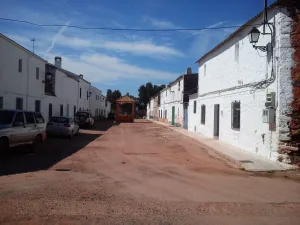
In Carboneros the process begins with the construction of five houses, a church, a prison compound and a posite. The process was consolidated and the population continued to increase, while specializing in olive cultivation. The new planning, in addition to seeking a new social project, also carries out a different urbanism, with straight streets, with a main street that flows into the square, in which the church and the buildings of the civil and religious powers are located.
Dependents of Carboneros, several villages are created as The Ajuchar, The Bureau and The necks. It is sought with these new population centres, that the peasants dwell closer to the lands they have to cultivate to avoid investing time in displacement.
These new sites are built under the classic precepts of symmetry and order that were established for the rest of the locations of the Colonization.
In 2017, the 250 anniversary of the New Populations was celebrated in this town, and in others around it, with the organization of numerous events and activities, including an International Congress.
Carboneros presents diversity of craft activities related to processing of plant fibres (esparto, anea, pita and wicker), with wood (ebanistería, artisanal production and furniture restoration), textiles (embroidery, ball lace, mesh, crochet), the forge, the quarry and food processing (pastry, chacinas, jams and liquors).
Today, an effort is being made to ensure that these artisanal knowledge is maintained and transmitted to the new generations.
"The Oil of Life" It is the name that receives the solidarity program of the sponsorship of olive trees, which the Lumière Foundation has been developing for a decade, but which in recent years is transcending internationally thanks to the participation of institutions of great social importance. This solidarity initiative contributes, through the sponsorship of olive trees, to the financing of different social and cultural projects throughout Spain, in order to protect the environment and promote the conservation of the centenary olive trees of the Spanish geography, and includes the transfer of what was collected to NGOs, associations or foundations, upon request, so that they can develop their own social, cultural, sports or environmental projects.
To "El Oil de la Vida" has recently joined the City of Carboneros, which on 24 September 2019 signed with Antonio Mayoralas, president of the Foundation, a cooperation agreement to work together on the solidarity program of the sponsorship of olive trees giving the City a place that will host the headquarters of the programme that the Lumière Foundation develops for all of Andalusia. In addition, on December 13 of that same year, the Lumière Foundation signed with Scholas in, the Vatican, the agreement to sponsor an olive tree for its holiness The Pope located in Carboneros, under the motto "Take care of an olive tree, take care of life."
1
2
1
3