

Hiking Route Casa Forestal de la Zarza passing through La Iruela and Santo Tomé
Description
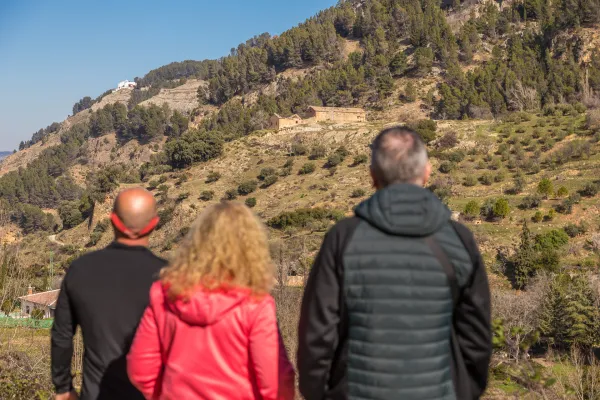
The path goes first through the mountain ridge that allows us to observe on one side the area prepared with olive groves and to the bottom of the Loma and on the other side the Valle del Guadalquivir in the interior of the Natural Park, following the track we will reach the Fountain Forest House of La Zarza. Here we will enjoy a panoramic view of the valley and several summits (El Yelmo, Banderillas and Cabeza del Tejo)...
Is part of

Datos de la ruta
ROUTE NAME
Ruta de Senderismo Casa Forestal de la Zarza que discurre por La Iruela y Santo Tomé
TRAIL TYPE
--
DIFFICULTY
Alta
TOTAL DISTANCE (IN KILOMETERS) 10,78 km
-
Stretch of asphalt or concrete:
-
Section of track, forest road, or dry watercourse:
-
Trail section:
-
Sections of livestock trails:
HUSO 30S
ESTIMATED TRAVEL TIME
3 h 30 min
ROAD SURFACE TYPE
Trail
--
--
DIFFICULTY. RATING ACCORDING TO THE MIDE METHOD
--
MEANS
Severity of the natural environment
--
ITINERARY
Route guidance
--
DISPLACEMENT
Difficulty moving about
--
EFFORT
Amount of effort required
ACCESSIBILITY TYPE
TIME OF YEAR
All year round
SIGNALING
No
PERFIL DE ALTURAS

MORE INFORMATION
TUNNELS
STEEL VIADUCTS
METAL WALKWAYS
WATER POINTS
PONTOONS
GUARD BOOTHS AND BARRIERS
SWITCHMAN'S CABINS
CYCLABILITY
RECREATIONAL OR SPORTS AREAS NEAR THE TRAIL
AID STATIONS
LINKS TO OTHER TRAILS
SHELTERS
RECOMMENDATIONS
OTHER INFORMATION OF INTEREST (ARCHITECTURAL OR HISTORICAL-CULTURAL, GEOLOGICAL-ECOLOGICAL)
Technical Description
Bidirectional
DEDE_
The path goes first through the mountain ridge that allows us to observe on one side the area prepared with olive groves and to the bottom of the Loma and on the other side the Valle del Guadalquivir in the interior of the Natural Park, following the track we will reach the Fountain Forest House of La Zarza. Here we will enjoy a panoramic view of the valley and several summits (El Yelmo, Banderillas and Cabeza del Tejo). Then we go down a path of high slope, old horseshoe road, which passes by the Barranco de la Tuerta, Arroyo del Sauco and the Huertezuelos to end on the road A-319.
Along the way there is a good representation of pine masses, oaks and complaints and even some maples. The lentilery is based on lentils, rosemary, jars and omillos and in the vicinity of the Arroyo more hygrophilic species like willows and chopos. The cornicabra formations in the hills are interesting and in the autumn give an ocre color to the tour.
At the beginning of the route it is common to find leonate vultures and in the descent, in the Barranco and next to the Arroyo it is easy to observe boar, and in the rocky mountain goats. In the rest of the forest mass there are also ungulates: deer and go.
DEDE_
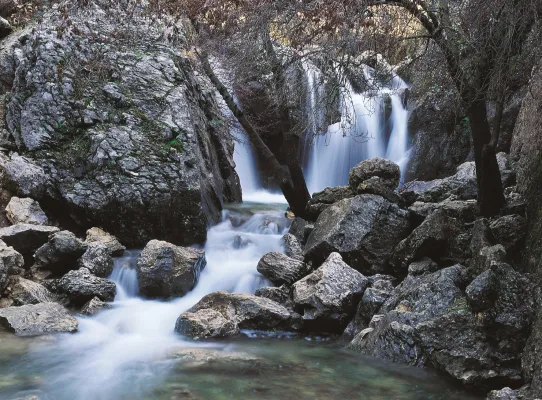
Starting from the Ericas (in the A-319), we ascend through Los Huertezuelos, the Arroyo del Sauco and the Barranco de La Tuerta to reach the forest house of the Fuente de la Zarza. It is an old horseshoe road with strong slopes that in the past joined the Forest Houses of the Sierra. As we gain height we have a panoramic view of the valley and the forest house even of several summits (El Yelmo, Banderillas and Cabeza del Tejo). In the first stretch, we can enjoy the sound of the water and freshness of the Arroyo which in summer represents a true oasis on this slope.
After the forest house of the Fuente de la Zarza, we continue on a road that passes through the mountain crest that allows us to observe on one side the area prepare with olive groves and at the bottom of the Loma, and on the other side the Valle del Guadalquivir in the interior of the Natural Park.
Along the way there is a good representation of pine masses, oaks and complaints and even some maples. The lentilery is based on lentils, rosemary, jars and omillos and in the vicinity of the Arroyo more hygrophilic species like willows and chopos. The cornicabra formations in the hills that in the autumn give an ocre color to the tour are interesting.
Next to the Arroyo it is common to observe boar, and in the rocky mountain goats. In the rest of the forest mass there are also ungulates: deer and gus and in the final part of the tour we can observe leonate vultures.