


Description
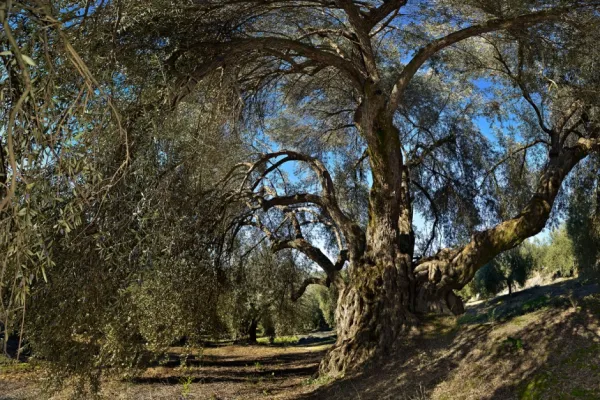
At the bottom of some valleys, deep and fertile soil coexist with thermal investment processes. These particular conditions of soil and climate make it possible to establish deciduous forests. These forests are very restricted to small enclaves in the Guadalquivir valley, as their ancient domains have been strongly transformed by human beings over the centuries.
In the area of Tejina we have a splendid deciduous forest made up of complaints (Quercus faginea) that have leaves that are larger and more lustrous than those of high mountains, mapes of Montpelier (Acer monspessulanum), serbales (domestic Sorbus), pespejones (Sorbus tormentinalis) and pyruetans or wild perals (Pyrus bourgeana).
They are accompanied by shrubs such as majuelos (Crataegus monogina), endrines (Prunus spinosa), skirmishes or tapasses (Rosa spp.) and species of the Mediterranean forest, such as madroños (Arbutus unedo), agracejos or lebiernagos (Phylirea latifolia), wild jazmines (Jazminum fruticans), hedras (Hedera helix). In wet areas there are zarzas (Rubus ulmifolius), and in the forest and stony areas there are splits (Lavandula latifolia).
Among the herbaceous plants are grasses such as Brachypodium phoenocoids, Holcus lanatus, other species such as orchids (Ophrys lutea, O. apifera, O. tenthredinifera), trees (Trifolium campestre, T. strellatum), violets (Viola odorata) and others such as Bupleurum rigidum, Bellis perennis, etc.
We suggest:
- When you are in places like this, very few, remember that these deciduous forests are authentic ecological shelters for fauna, because the fruits of many of its plant species mature in winter, which makes many birds survive when food is scarce in all other places. In turn, these birds help in the dispersion of the seeds. The human transformation of these areas threatens the stability of this ecosystem and involves serious biodiversity losses. Today many of the plant components of this forest are protected by law in Andalusia. We cannot afford to lose the most precious natural treasures, our forests.
Valle del Guadalquivir, on the road A-319 (km 42), a little below the Puente del Hacha, in the area known as Tejina.
Is part of