

Description
Monument of the Historical-Artistic Set. Incoation 01 / 04 / 85. The professional activity of Andrés de Vandelvira revolved not only around religious or private architecture, but was also hired by the Councils to intervene in various municipal works: sources, bridges, foundings or grain stores, municipalities, etc. In the villa of La Iruela, the Pósito, the current headquarters of the City Council, has arrived today, from which the contract has been retained, published by V. M. Ruiz Fuentes.
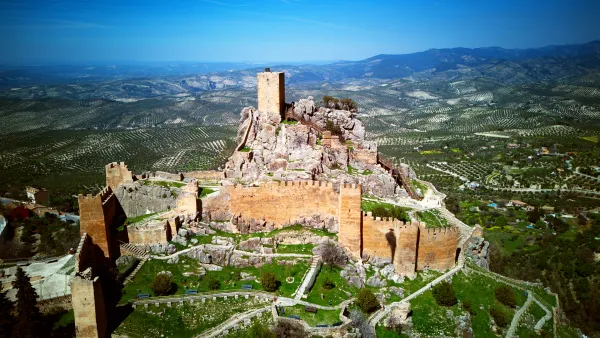
In 1572, the cantero Pedro Venetian and the mason Luís de Vilches committed themselves to building the posio, in accordance with the conditions and traces dictated by Andrés de Vandelvira. The building, of a rectangular floor, defines the confluence of the streets Corredera and San Antón with the square of the Constitution. It rises in the planned enranche in the 16th century, outside the medieval compound, essentially formed by the castle and the Renaissance church raised at the foot of it, in which, although perhaps not directly, Andrés de Vandelvira was able to intervene.
The ground floor, with a stone factory seen, is most likely the best preserved part, as the high ones (originally compartmentalized in trickery and built in brick and masonry) were later adapted for other local administrative functions. The singularity of this building is in the division drawn by Vandelvira on the ground floor, made up of five small rectangular ships covered with parallel half-barrel vaults, popularly called the "positillos," built in silery, which communicate directly with the outside based on half-point voids, being the largest central than the other ones.
Typically Vandelvira acuña a model, developed in such a way in the Pósito de Baeza, in which the knowledge of the stereotomy or cutting of the stone requires a great perfection due to the need for the isolation of wetlands to preserve the genre stored in the best conditions. Several heraldic shields are preserved in the building and, as a reminder of the recovery of the advance of Cazorla (in which the villa of La Iruela was included) by the Archbishopric of Toledo, in the early 17th century was placed by the command of Archbishop Don Bernardo de Rojas and Sandoval in the capitular room an allusive inscription to perpetuate this important event. A lot of effort and money cost Toledo's mitre to be made again with her old territory, which was taken from her in 1545 by Don Francisco de los Cobos, Secretary of the Emperor Charles V.
Is part of