

Description
Necklace of the Beer
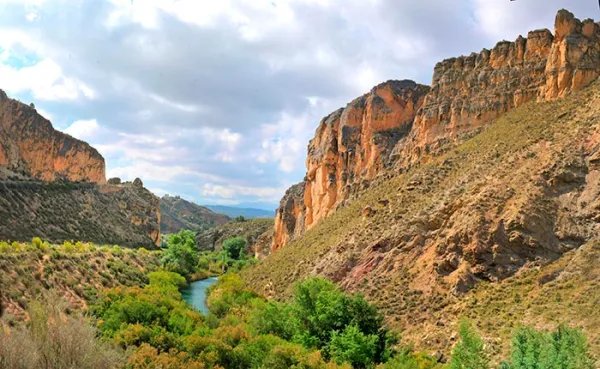
The site is really special for the great variety of species we found. In it we can walk and enjoy one of the few high mountain deciduous forests that have left in the Natural Park.
Today we can no longer define as forests the few remaining stains, even though in past times they spread across large areas of the high mountain of these saws, wearing the valleys and vessels of lush forests. At present their presence is limited to small holes, rails and rails in which deep and fertile soil is accumulated.
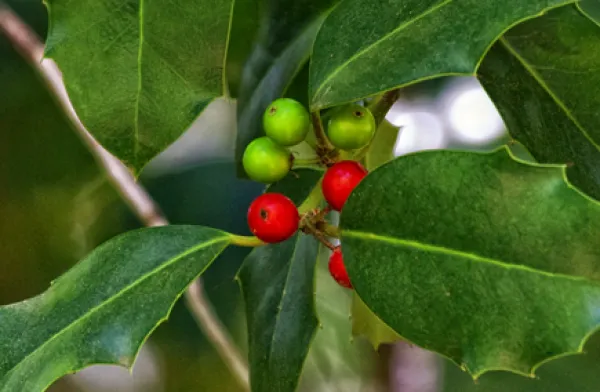
These beautiful bosquets are made up of maple (Acer granatense), mustard (Sorbus aria), cereal (Prunus mahaleb) and whine (Quercus faginea), accompanied by a shrub of spiners with majuelos (Crataegus monogina), rars (Berberis vulgaris australis), skirmishes (Rosa spp.), madreselvas (Lonicera spladada, L. etrusca), sanjuaneros (Lonicera arborea) and spinos (Cratagulata).
We suggest:
- Later there is Nava Noguera and the control of Rambla Seca, which marks the entrance to the Campos de Hernán Pelea, one of the most original and overwhelming landscapes of the Park.
- There are other very accessible places where we can enjoy these exceptional bosquets, such as the surroundings of the Collado del Ventano in the Calar de Navalespino and the Barranco del Guadalentín.
- Don't miss these sketches in the fall.
LOCATION
We access the road that goes from Vadillo Castril to Santiago de la Espada, which becomes a ground track from Los Collados, but the firm is good and we can reach the destination point without great problems. Once we have ascended to the Saves of San Pedro, we are already on the line, we arrive at the junction of the Laguna of Valdeazores, which is about 9 km from the Navy. We look at the extraordinary landscape, as we take the Guadalanimin ravine to our right. As we pass through the Collado de la Zarca (where there is a track to our right, cut to traffic with a chain), we lose sight of the Barranco del Guadalentín and enter a few rails. Less than a kilometre after a few curves are presented to our right, in the sense of the march, a few holes full of trees.
Is part of