

Description
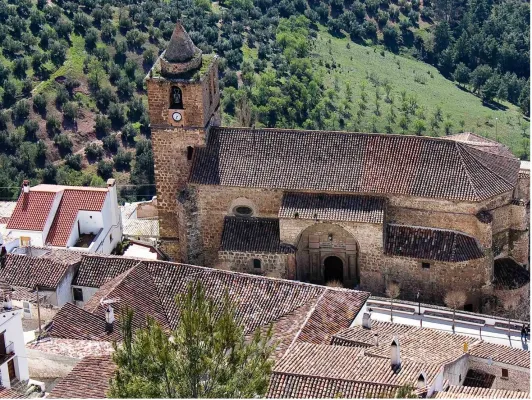
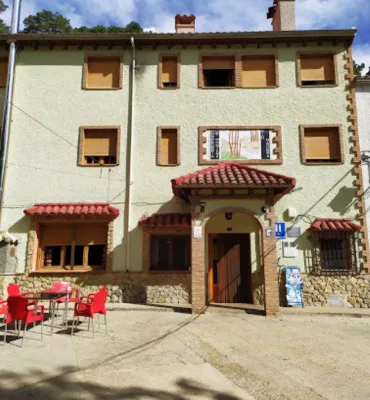
Monument of the Historical-Artistic Set. Declared 05 / 07 / 1962 The practical visits by the visitors of the Order of Santiago to the populations dependent on the Encomienda de Segura de la Sierra, provide us with numerous data on the situation of their parish factories, some of them built on a new floor, others with important works of consolidation, expansion or reform.
It is through the visit of October 9, 1525 that we know that the parish church of Santa María del Collado is being made again, at the head of the factory, the bartender Maese Rodrigo. Through the description made by the visitors in the visit to the temple on January 19, 1537 it seems that the temple was finished.
On this occasion with the visitors, the master singers Francisco de Luna and Andrés de Vandelvira travelled to Segura de la Sierra, without a doubt to inspect what was built by Maese Domingo, which apparently presented certain problems; Luna and Vandelvira made a statement "(...) for the security repair of the yglesia desta villa e de la nesçaña that çerca dello has and what in it they contenydo make haber in the yglesia that they do from here two years first that they verge (...)."
The documentation silences the detailed content of this statement and, therefore, we do not know the level of intervention of both teachers, but they had to give orders to solve the defects of the Gothic factory built by Maese Rodrigo, but also to end, among other works, the tower chapitel, the chorus stairs or the vaulted chapel of baptism. However, the most clearly vandelvirian piece preserved in the temple is its main cover, covered by a large arcosolio with a half-canyon vault of Spanish-manchega tradition; it was ordered to work by the visitors in 1554, although the order was not carried out until the end of the century.
Vandelvira died in 1575 and, therefore, was not able to take care of it, but in any case the piece responds to a clear compositional scheme developed by it in the covers of the churches of San Miguel de Jaén, San Juan Evangelista de Mancha Real, or that of San Nicolás in Ubeda, but with a greater constructive and ornamental dryness not without classical correction; it is formed by the consabid arch of half-point on impostes with jambos and threaded, which is flanqué by two pairs of columns of compound and transphizon the same, with the two-and-a-a-a-a-a-a-a-a-a-a-a-a-a-a-a-a-a-a-a-a-a-a-a-a-two-a-a-a-a-a-a-a-a-a-a-a-two-a-a-a-a-a-a-a-a-a-a-a-a-a-a-a-a-a-a-a-a-a-
The data provided and the consequences that can be derived from them suggest a direct intervention by Andrés de Vandelvira in the church of Segura de la Sierra and a fluid relationship with the sanctiaguists responsible for his factory. This relationship was initiated thanks to his father-in-law Francisco de Luna, a singing teacher whose professional activity from the beginning was closely linked to the Order of Santiago on Spanish-manchegas lands.
Is part of