






Description
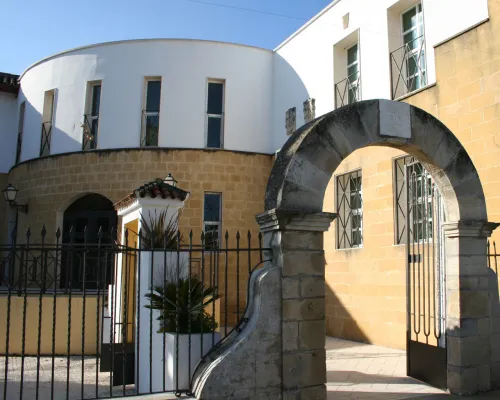
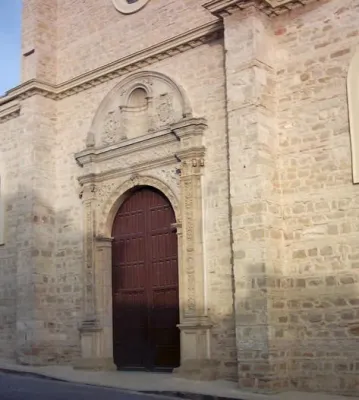
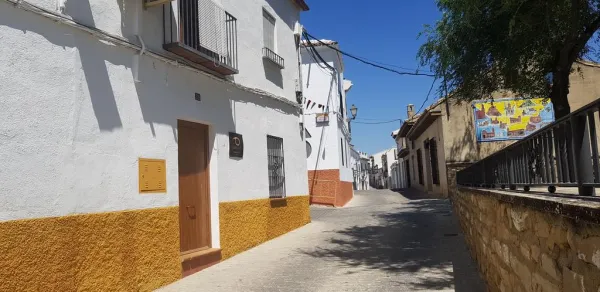
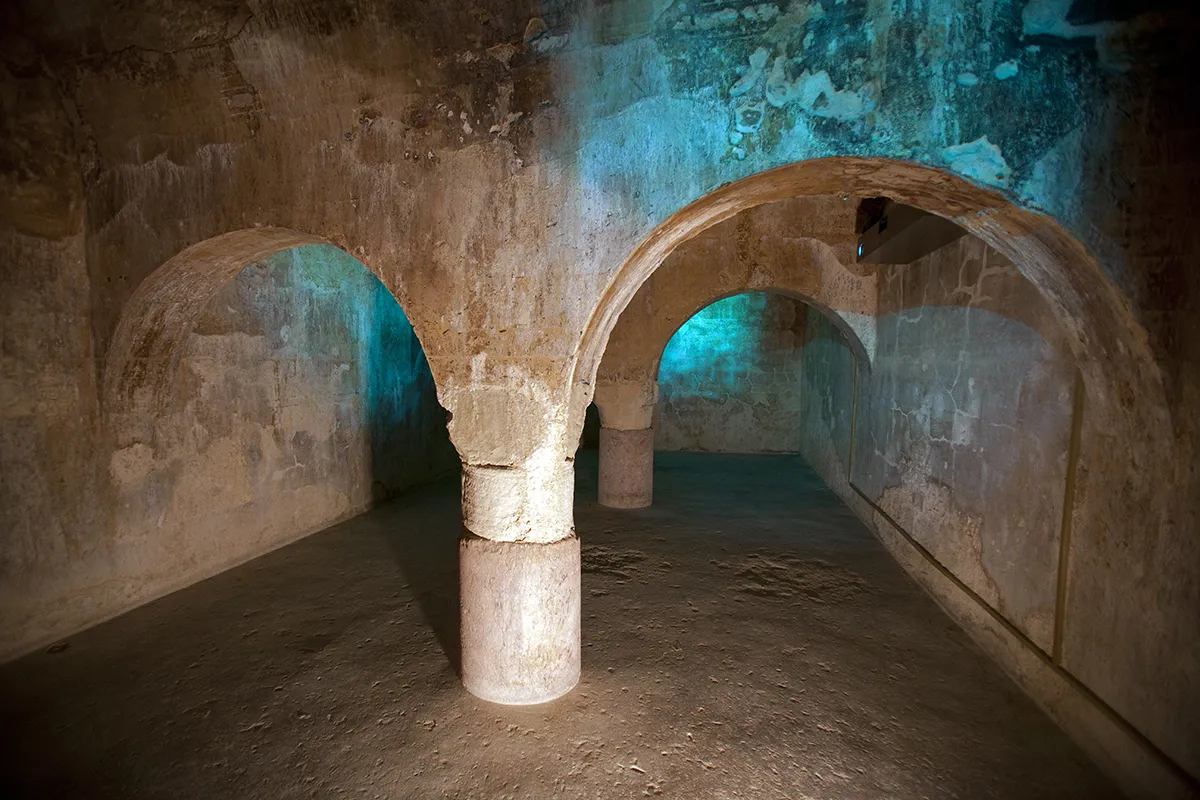
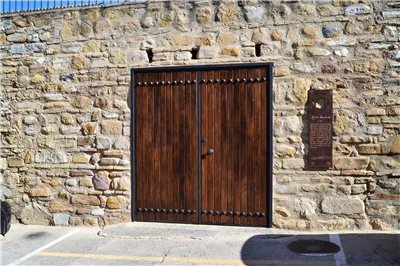
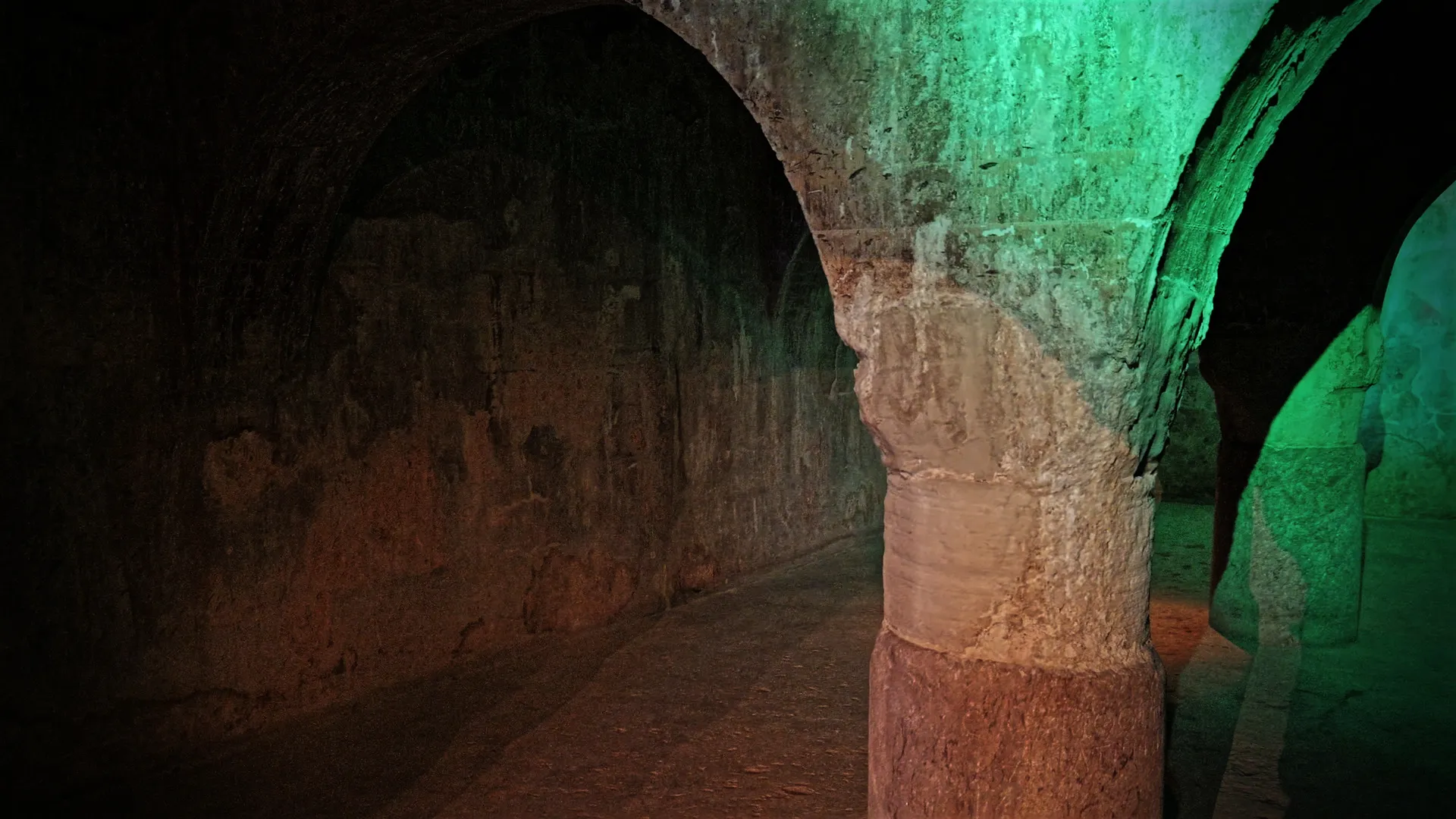
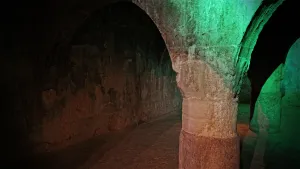
The fortified complex of Arjona, from the medieval period, was a large complex composed of a citadel, a fortress and a large exterior walled enclosure dotted with towers. Although hardly any structures of the fortress have been preserved, it is worth highlighting the presence of vestiges of its defenses, towers and canvases, scattered among the hamlet, as well as the Almohad cistern, with columns from the Roman period, which can be visited next to the church. On site no. 22 of the Calle Sol, the rehabilitation of part of the wall canvas, and an attached tower, has allowed the creation of a small space for interpretation of the walls of Arjona. In the Plaza de Santa María, the highest area of the town, settlements have occurred from Prehistory to the present day. It was originally a town from the Copper and Bronze Ages and then an Iberian oppidum that ended up becoming the Roman Urgavo municipium. After a sharp decrease in the population in the Visigoth era, the Muslim occupation brought with it a great development of the city, now called Qal'at Aryununa, head of one of the main administrative districts of the Cora de Jaén. Once conquered by the Christian armies, it was converted into the head of one of the great councils of Villa y Tierra of the kingdom of Jaén and head of the Commandery of the Order of Calatrava.The fortified complex of Arjona, from medieval times, formed a complex and impregnable defensive system, made up of three walled enclosures: a first ring of walls marked by 24 towers that protected the city, an Alcazaba and the Alcázar. It would also have other defensive elements such as a moat, which has been documented to the south of the fortress, and a wall that would create a list or transit area. Seven gates flanked by pairs of towers would open in the walls of Arjona, except for the New Gate, which, in reality, was a gate. Most of these defensive elements were built with irregular masonry, which can be considered ashlar, joined with lime and sand mortar. The current Plaza de Santa María became the Alcazaba during the Middle Ages, located in the highest place in the area. A walled enclosure in which the palatine areas were built that housed the ruling classes and the military establishment. Occupying one end of it was the Alcázar, the political center of the city. The Iglesia de Santa María, which presides over the aforementioned square, is identified with the primitive Aljama mosque, which would be built in front of the Islamic palaces. Next to it, a large medieval cistern is preserved today, possibly Almohad, with a rectangular floor plan and covered with 3 barrel vaults supported by semicircular arches, which rest on Roman columns, some with inscriptions. Currently, some vestiges of its defenses remain standing, scattered among the hamlet, towers and canvases embedded in the backs of the houses, serving as party walls for homes located on the streets of Reloj, Belén, Sol, etc. In addition, there are fragments of the Alcazaba wall on the Paseo de los Mártires, acting as its retaining wall. Testimonies of canvases embedded in the party walls that separate Hospital de San Miguel and Alcázar Street are also preserved. The city of Arjona occupies the summit and upper slopes of a level hill, from which it dominates a large territory and the communication routes between the Guadalquivir valley and the Campiña. Due to its strategic value, it has been occupied from Prehistory to the present day. A settlement from the Copper and Bronze Ages was located in the space now occupied by the Plaza de Santa María. Its occupation continued during the Iberian period, with the establishment of a medium-sized oppidum protected by a solid walled enclosure reinforced with bastions and towers, which would exceed the space of the current plaza. With the arrival of the Romans, the settlement became the municipium of Urgavo, one of the most important municipalities on a political level since the Augustan period and one of the first to achieve full Roman citizenship. Arjona will continue to be in the power of Rome until 412 AD, later, during the Visigothic period, the area of occupation would be reduced to the highest area of the hill. After the Muslim conquest, the Banu Bayla lineage settled in current Arjona, which will be known as Qal'at Aryununa. At this time the walls were reinforced and the citadel was built, occupying what was the Iberian oppidum. Arjona became the head of one of the main administrative districts (Iqlim) in which the Kura of Yayyan was structured, on which the existing rural settlements in its area of influence would depend. At the end of the 9th century, the emir Abd Allah ordered Arjona and Andújar to be fortified, in order to concentrate the surrounding peasant population in these towns. The city of Arjona would be consolidated, like other towns in the Guadalquivir Valley, between the 11th and 13th centuries, as a consequence of the unstable political situation in al-Andalus after the disintegration of the Umayyad Caliphate, and due to the pressure of the Christian armies. During this period, the greatest development of the city took place, which resulted in a reinforcement of its defenses and the configuration of its medieval urban planning framework. In 1232 Muhammad ibn Yusuf ibn Nasr ibn al-Ahmar (Alhamar), originally from Arjona, proclaimed himself sultan in Jaén and six years later he founded a new kingdom with its capital in Granada. In 1244, Nuño González besieged Arjona and the Muslim authorities agreed to surrender, handing over the city without resistance. It became part of the royal lands, becoming one of the great councils of Villa y Tierra in which the kingdom of Jaén was structured. In the year 1248 it was granted the title of Villa by King Sancho. In compensation for the support provided, the city became part of the lordship of the Constable of Castile, Ruy López Dávalos, later becoming part of the possessions of D. Álvaro de Luna, who finally exchanged it to the Order of Calatrava for other possessions, which made it head of the Order's Encomienda. The disappearance of the Castilian-Nasrid border left a good part of the structures that made up the Arjona walled fence obsolete. After a restoration and musealization carried out in 2008, with sound and visual effects that imitate the sound and movement of water, it has become a tourist reference in the town. El Aljibe is part of the Route of the Castles and Battles of Jaén. Juan Eslava Galán uses the Aljibe Almohad to, once again, offer religious symbolism in his novel and remember his Iberian past. (…) On the ground, a few meters from the Baphomet, there was an iron trap. This must be the access to the Almohad cistern that the secretary of the town hall told us about -Pío deduced. "To the cistern and the spring," said Íñiguez. A spring in a high place sacralized a place in the religion of the Iberians. And here the Calatravos came to install the church and the Bafomet. (…) LEGENDS The victor's mare. Al-lushi had an excellent mare, which became so well known among the Christians of the neighboring regions that the Castilian king wanted to buy her at any price. But its owner was so in love with it that he denied it to her. For three nights he heard a voice in his dreams that told him: "Go to Arjona and take the mare with you; ask for one they call Mohammed-ben-Yusuf and as soon as you find him, sell her to him, because with her he will conquer Jaén and other cities and this conquest will be very beneficial for future generations." They told him that it must be Alhamar, so he left for Arjona. In the castle mosque he revealed his dream and they agreed on a price for the animal. A year later, Alhamar took the royal title in his hometown, Arjona, he took over the city of Jaén and later Córdoba, Seville, Granada, Málaga, Almería and many others, being the founder of the Nasrid dynasty and kingdom.
Is part of


Loading 3D model. Once loaded, interact using your mouse or hand.
Cargando panorama 360. Una vez cargado interactúa con el ratón o la mano