Tourist Office


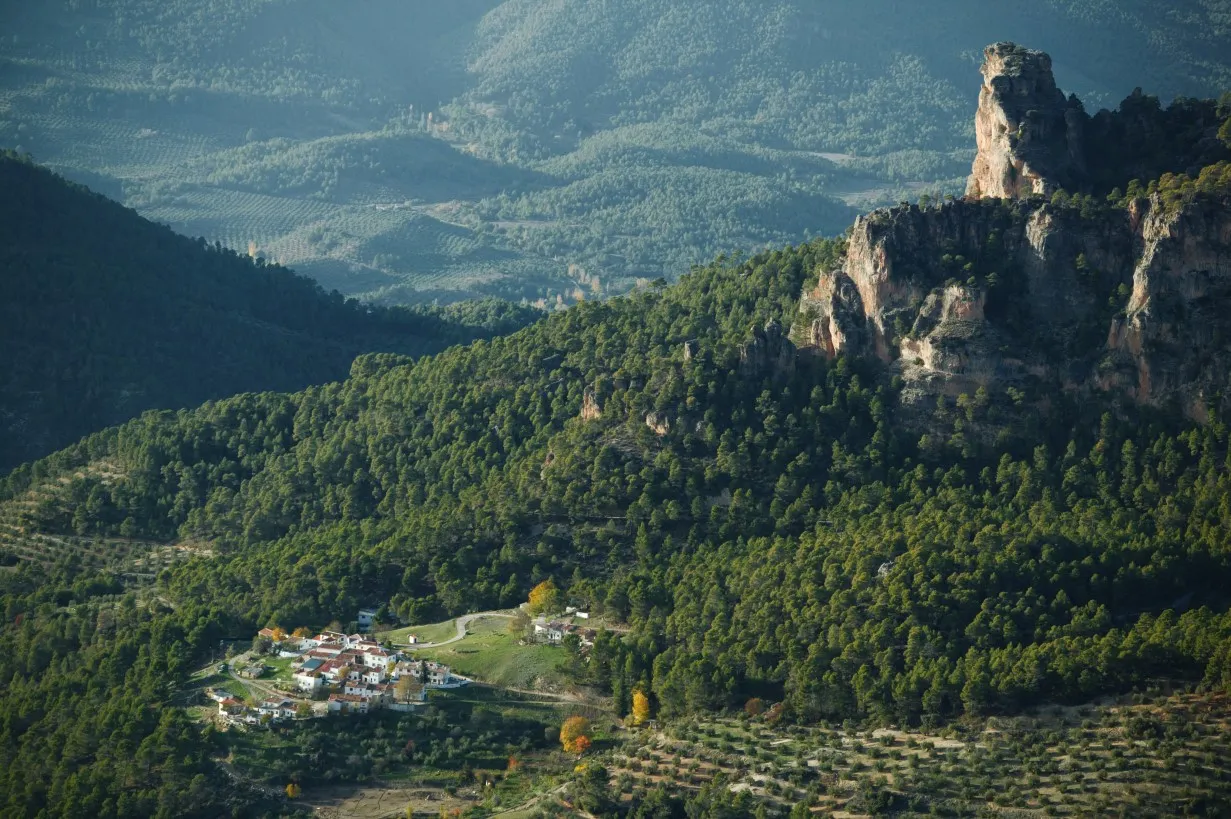

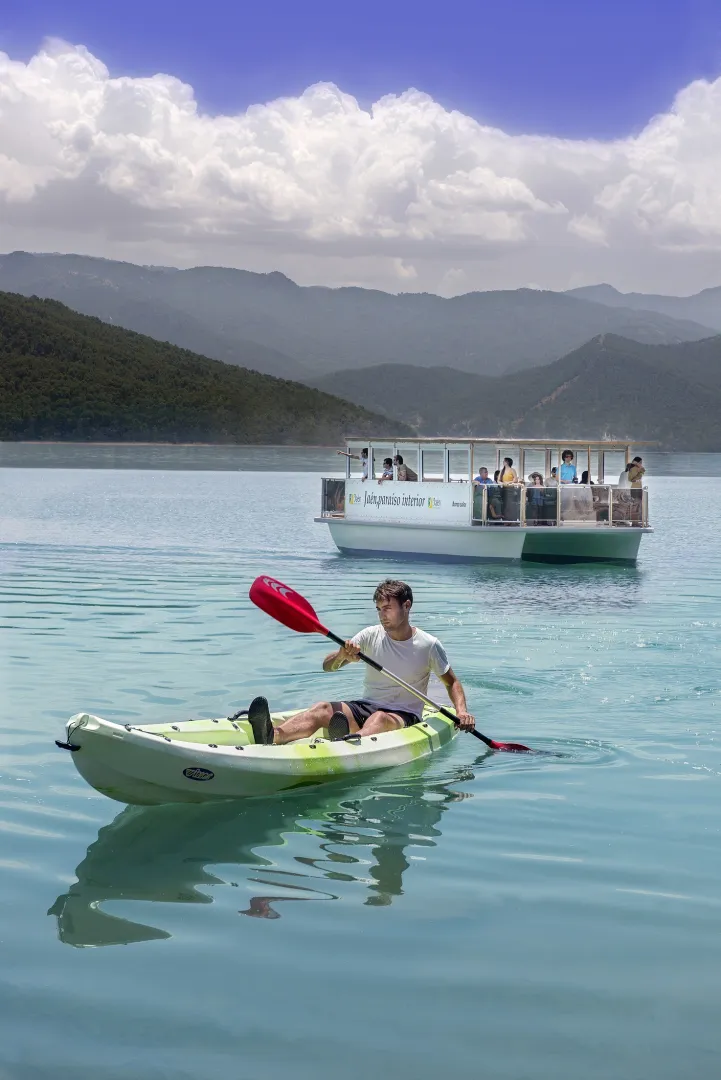



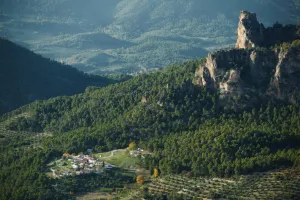




Nice town located in the Sierra de Segura, fully included within the Parque Natural de las Sierras de Cazorla, Segura and Las Villas. Next to the reservoir of the Tranco de Beas and the valley of the Guadalquivir River at its beginning.
The municipality of Hornos belongs to several villages spread throughout the municipality: Cañada Morales, La Capellanía, El Carrascal, Fuente de la Higuera, Guadabraz, Hornos El Viejo, El Majal, La Plantera, El Tovar, El Tranco and La Venta. Some of them are located in places of great beauty, such as La Plantera or La Capellanía, and others are more active thanks to their situation, such as Cañada Morales or El Tranco. The rest with a marked agricultural character, where peace and tranquility are assured, are currently developing interesting quality tourist infrastructure such as rural houses.
Furnaces are essentially forest, the pinars occupy about 80% of their municipal term.
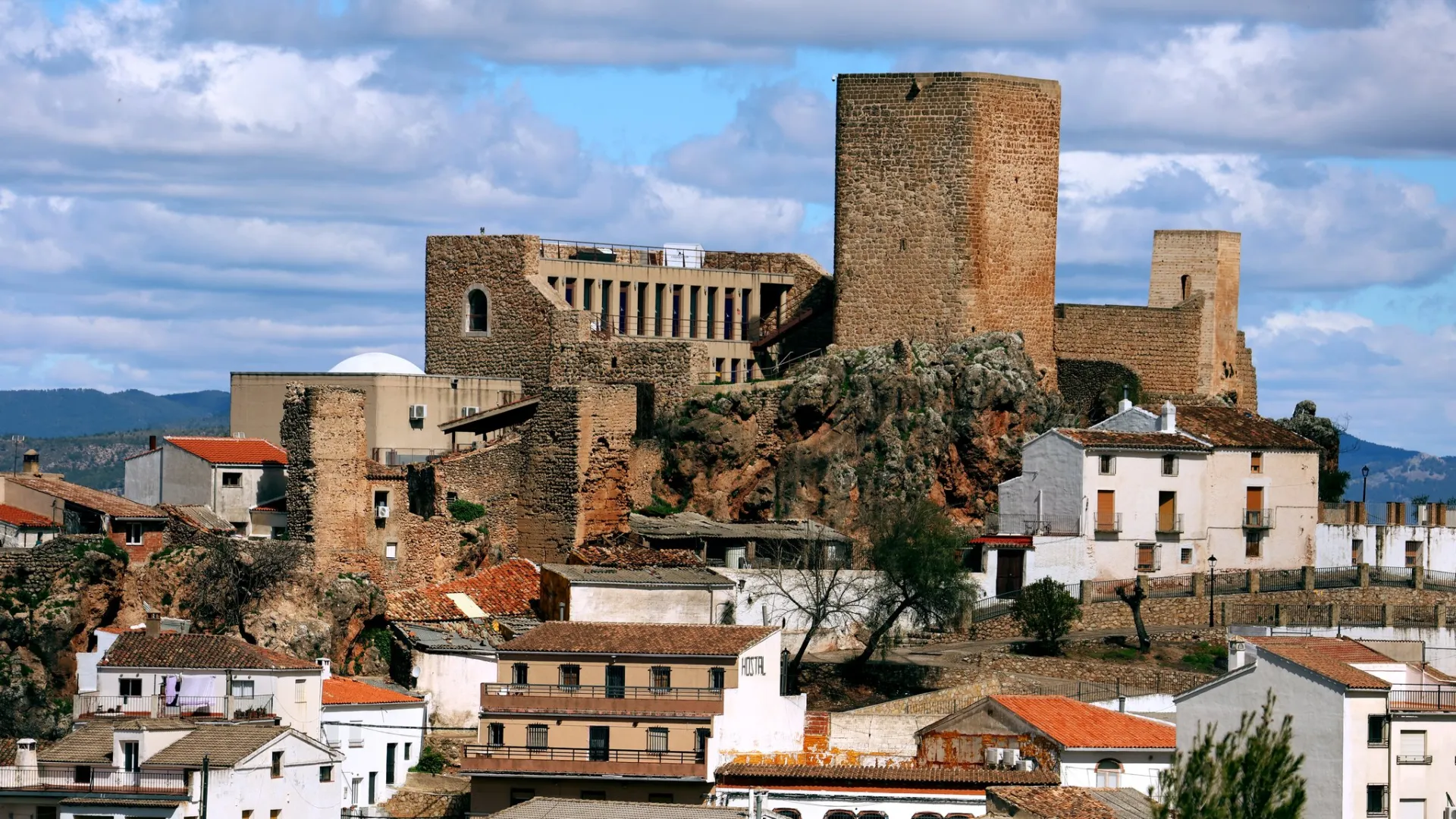
The urban core is surprised to be located on a large peñasco. Its medieval character gives it a special charm. It has been declared an Artistic Historical Set in 1985.
Its economy is based on tourism, forest use and olive cultivation. Without forgetting the very important activities and fishing.
It has a rich heritage: the Castle, the Church of Our Lady of the Assumption, the Castle of Bujaraiza, the Puerta de la Villa, the Mirador del Aguilón and the Tower of Bujarcaiz.

Is part of


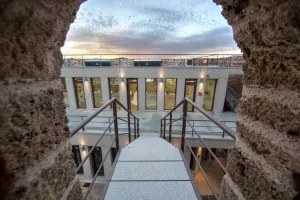
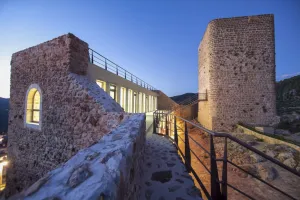
Castle. Hornos was granted by Fernando III the Holy, after his conquest in 1239 to the Order of Santiago. The time at which the castle would be built, probably on an earlier Muslim fortress from which the aljibe is preserved.
Of a purely defensive nature, the trapezoidal shape set is built with small masonry. It is made up of a magnificent Tribute Tower, three slender torreons square floor and the outer wall of a room that closed the courtyard of arms.
The Tower of Tribute in square shape and rounded corners, something common in the constructions of the Order of Santiago, has only one entrance at half height.
In its interior two overlapping rooms supported by vaults and communicated by a staircase carved in thick wall.
By the end of the 20th century, the rehabilitation of the castle that was very damaged began. After many attempts, in 2011 the works of their total restoration were completed. It has been declared Good of Cultural Interest in 1985.
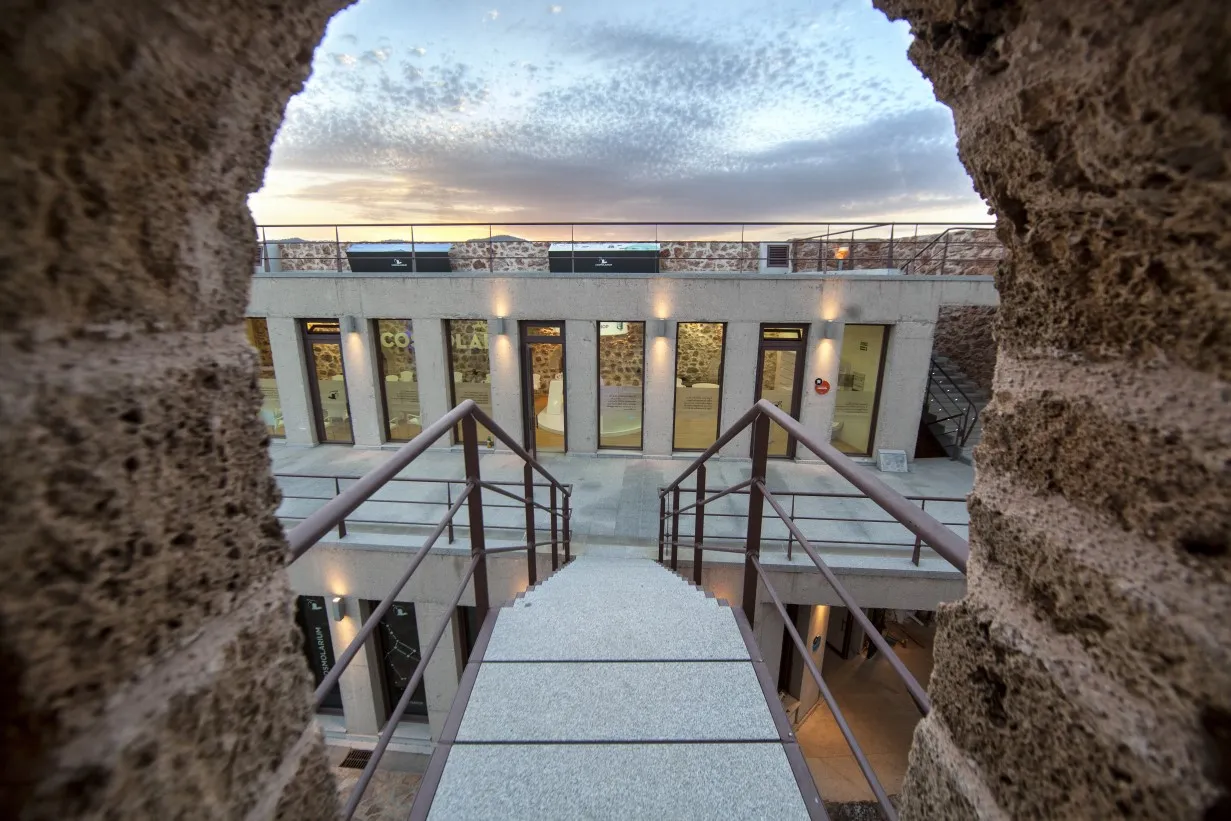
Located inside the castle you can visit one of the most important tourist resources of the area as is the Cosmolarium.It is a centre for the dissemination of astronomy that consists of a digital planetarium, with a dome of 8 meters in diameter that shows enveloping audiovisual productions, complete exhibition rooms on the Universe, spaces for workshops and educational games, as well as a terrace for astronomical observations.
Parish Church of the Assumption. Data from the first half of the 16th century. Its construction follows the style of the Order of Santiago. Of a square floor, with one ship and side chapels, it is divided into three square sections separated by fajon arches.
The decks are gothic, the 16-century renaissance-style altarpiece as it is recorded. The cover is one of the first plateresque in the province of Jaén, although it is currently damaged by time.
The tower stands out for the gargobles of the cornice and the Gothic crest of the mast. We can say it's a magnificent example between Gothic and Renaissance.
In it was found the ornamental vessel in the form of a Nazi-style amphora, with motifs glazed in blue and gold on white enamelled background that is preserved in the National Archaeological Museum.
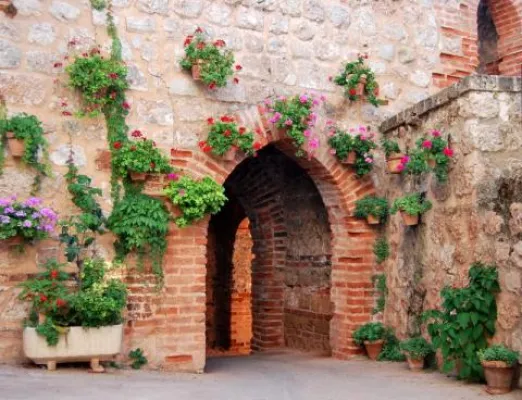
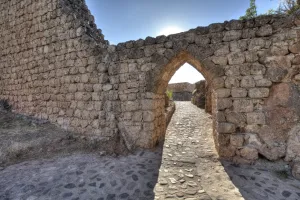
The Villa Gate. It's a door on the wall dating back to the 11th century. It is built in elbow to make access to the enemy difficult, which makes you think of a mothade origin. Made of masonry and red brick in the vaults, as well as a small window of the facade. Declared Good of Cultural Interest in 1985.
Bujaraiza Castle. It rises on a the island in the waters of the Tranco reservoir. It is a small fortress formed by a walled polygonal enclosure and a tower of tribute. It is built with small-size masonry yarn, with lime mortar. Declared Good of Cultural Interest in 1985.
Tower of Bujarcaiz. It is currently submerged under the waters of the Tranco reservoir. It was part of the surveillance system of the Hornos castle. It is a square floor construction and a troncoconic form.
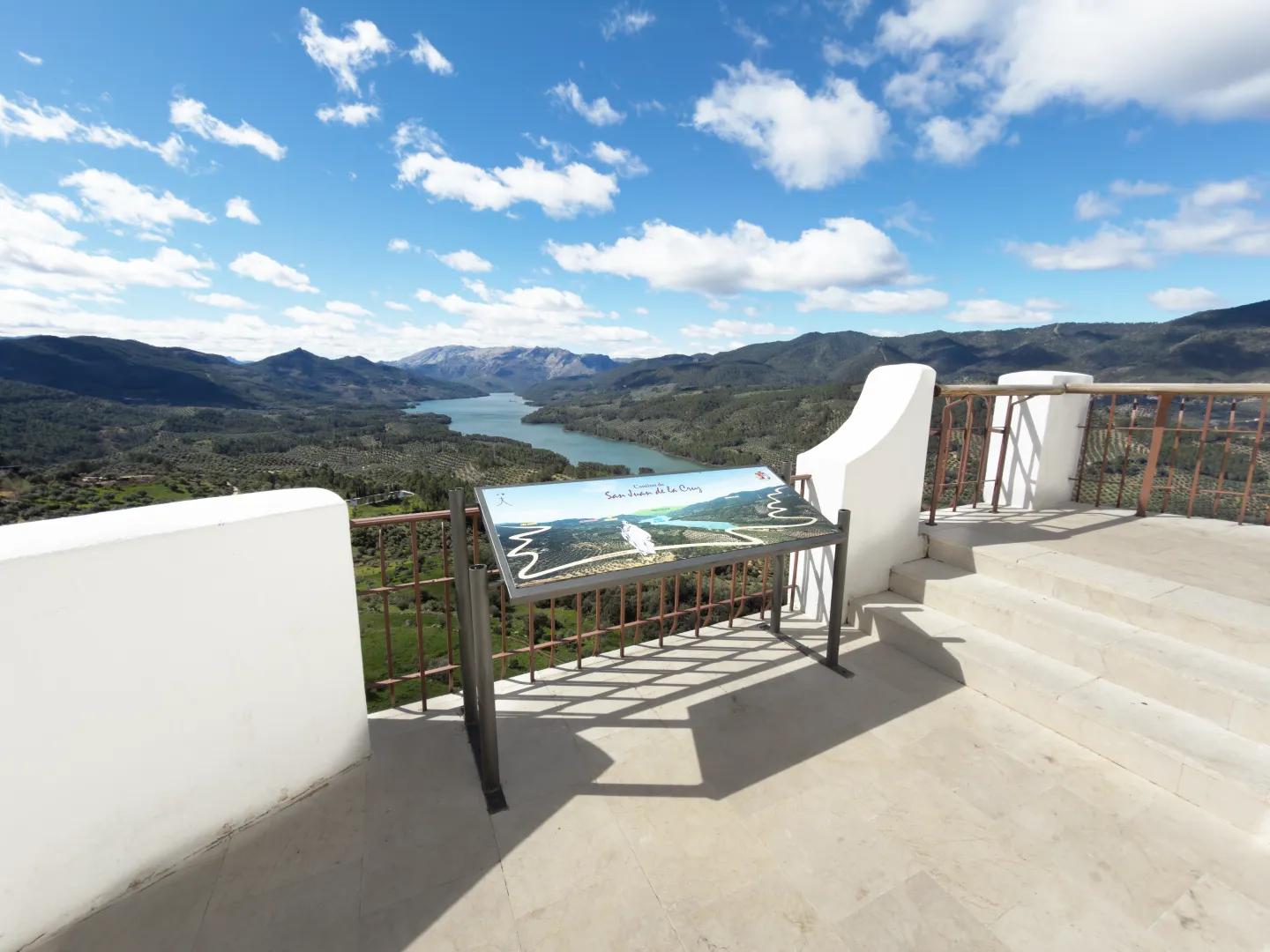
Aguilon Viewer. Located next to the City Hall shows one of the best views of the Natural Park and an impressive view of the waters of the Tranco reservoir.
The municipal term of Hornos is located in the heart of the Sierra de Segura, and by it they run the waters of the high courses of the Segura and Guadalquivir rivers, it takes its waters to the Tranco reservoir.
The water is present in much of its term and makes that nature is overflowingboth in the arid High summits villages of larive pine trees and high-rise tiles, as in the lower areas where the black pines grow, whose wood is very resistant to rot, oaks, oaks, moans and chopos.
Here we find more than thirty endemic species that cover the steep surfaces of the rocks, such as aromatic plants or the curious trapping.
The variety of ecosystems also makes the number of animal species living in these areas very diverse. In the higher and more steep areas live the large-game, muflon, deer, go and boar species; Rapes and scavengers like, eagles, broken bones and lethargy vultures. And in the less high areas, the cynetic species of minor hunting: badgers, foxes, hares, rabbits or gines. Without forgetting the fauna that lives in the crystalline waters of these rivers: trout, barbs, otters, salamanders. No the birds who either live in olive trees, or feed on their fruits in their migratory movements: carboneros, abbullas, jilgueros, petriroreds, ratoneros...
The municipal term of Hornos will present us with thousands of routes to discover and that it will surely leave a deep footprint on us when you go through them.
We point out three places that we should not miss:
These are the parties that are held in Hornos:
They are also held Other parties as: San José, in Cañada Morales and the Virgin of Carmen in the Tranco.
Among the most typical dishes of Furnaces are:
To highlight the drinks which are usually taken on festive occasions. This is about "the crow," a mixture of wine and water with a lot of sugar and pieces of fruit; "Mistel." made up of spirits, coffee and spices.
To accompany these drinks you will take some traditional sweets, including the panets and Fried roses.
The site currently occupied by Hornos He was busy. for the period Copper age and remained busy during the Bronze age. This place was subsequently abandoned.
From the Roman times There are many remains of tombstones, coins and ceramic pieces in the La Laguna field.
It's in the Middle age when this population reaches its greatest splendor, mainly due to its strategic and defensive situation. The Arabs know her as Fornus and was a small village inaccessible for its situation.
The Islamic Age in the area of Hornos, and in the mountains in general, she was convulsed by the struggles between the leaders who wanted to impose her authority. The population for the most part was Muladi. During the X and XI centuries, is a zone of great splendor, Since along with the surrounding populations are the border between Christians and Muslims, they will be the starting point of war expeditions against Christians.
The Christian conquest was carried out by the knights of the Order of Santiago in 1239, in particular by Pedro Pelayo Correa, master of the Order and was attached to the commission of Segura de la Sierra, dependent on the spiritual of the diocese of Cartagena. Fernando III will grant you the Villa title.
Hornos was one of the places, along with Segura de la Sierra, from which members of the Manrique family actively participated in the Spanish politics of the 15th century. This family was generally confronted with the kings of Castilla Juan II and Henry IV, as they always controlled a large part of the forces and resources of the Order of Santiago, of which Don Rodrigo Manrique, the commander of Segura, came to proclaim himself Grand Master, resisting and defeating in Hornos the troops sent against him by John II and his valid Don Álvaro de Luna.
In 1833 the demarcation of the municipality within the province of Jaén, after a stage of secondment and belonging to the province of Murcia.
The period of the largest expansion of this population was between the mid-19th and mid-20th centuries. From this date its population has declined to reach the just over 700 inhabitants at present.
A characteristic sport in Furnaces are the serrano bowling, which consists of throwing a ball without passing a line and giving the "mingo" of wood to send it as far away as possible. They are made championships and come neighbors of the rest of the villages that make up the municipality.
18
6
3
3