Saltar al contenido principal

Alcaudete

MUNICIPIOS
  • alcaudete-baena-3-jpg
  • 80e747f2-e97c-94df-583a-42e6306567b4?t=1583262294673
  • castillo-desde-sierra-ahillos-jpg
  • img_0645a-jpg
  • img_0910a-2-jpg
  • img_0913a-2-jpg
  • img_1469-2-jpg
  • img_1594-2-jpg
  • img_1655-jpg
  • panorama_sin_titulo1-2-jpg
  • 00716363-1d29-daf1-c47e-14878f00a61c?t=1585328067736
  • dji_0002-1-jpg
  • 1w9a5696-1-jpg
  • 1w9a1663-jpg
  • alcaudete-baena-3-jpg
  • 80e747f2-e97c-94df-583a-42e6306567b4?t=1583262294673
  • castillo-desde-sierra-ahillos-jpg
  • img_0645a-jpg
  • img_0910a-2-jpg
  • img_0913a-2-jpg
  • img_1469-2-jpg
  • img_1594-2-jpg
  • img_1655-jpg
  • panorama_sin_titulo1-2-jpg
  • 00716363-1d29-daf1-c47e-14878f00a61c?t=1585328067736
  • dji_0002-1-jpg
  • 1w9a5696-1-jpg
  • 1w9a1663-jpg

Description

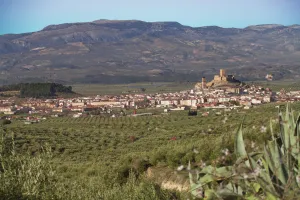
Alcaudete is located at the foot of the Sierra Achillos, on the south-west end of the province of Jaén, in the region of the Sierra Sur. Its geographical location allows it to be half an hour from Jaén, less than an hour from Granada and Córdoba and two short hours from Malaga and Seville.

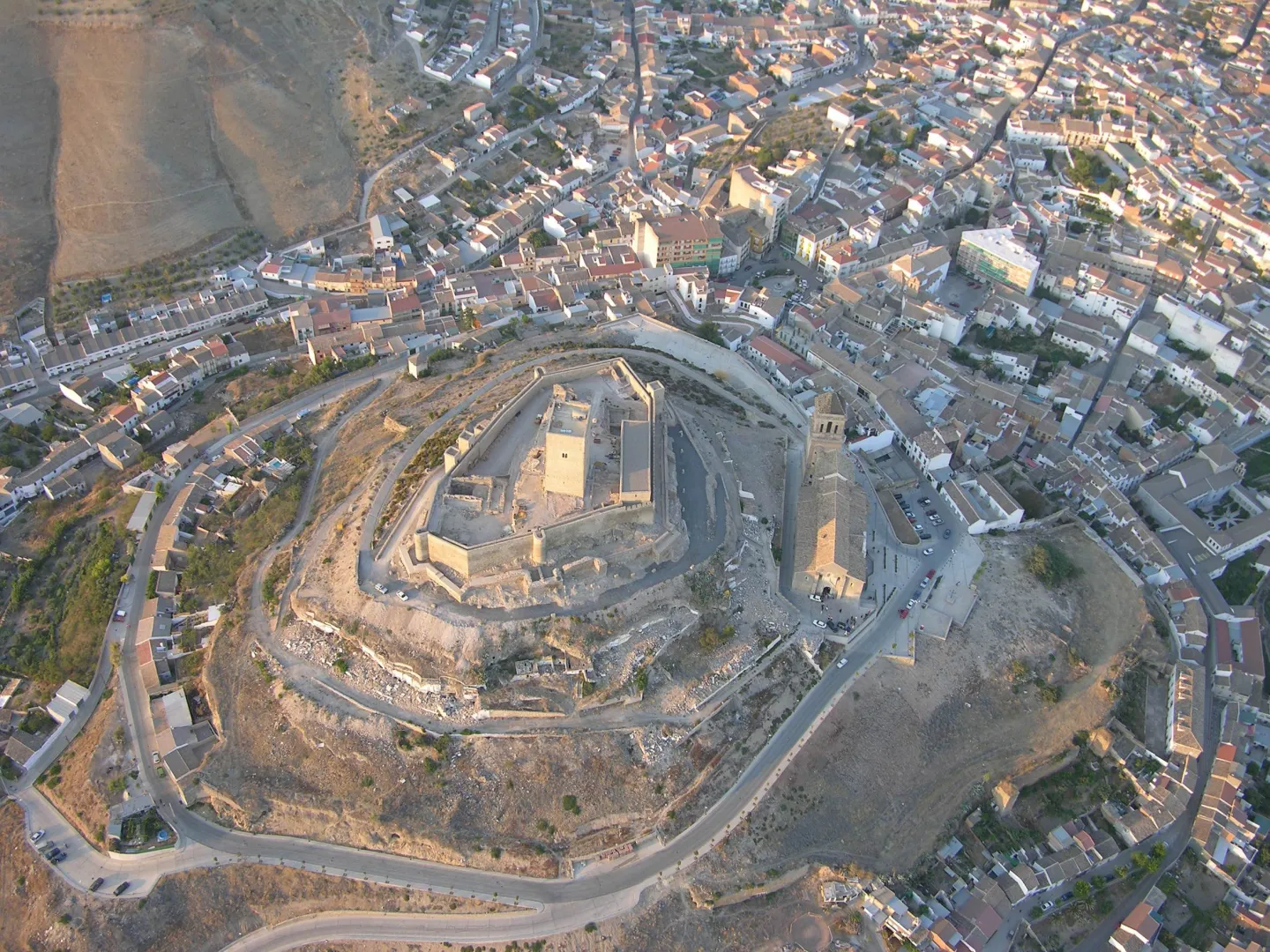
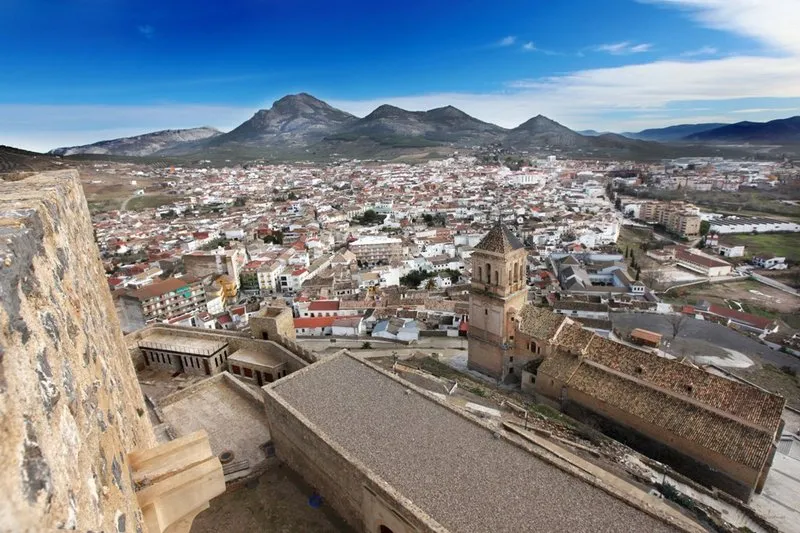
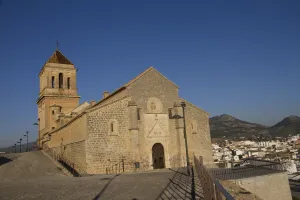
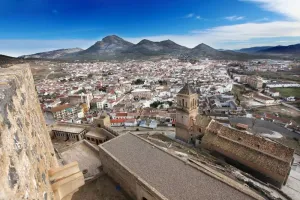
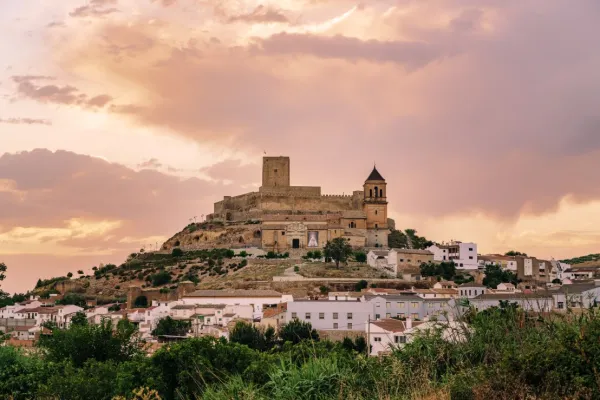
In Alcaute the story is breathed in all its corners. Its home is poured in the form of a ring on the hill side, embracing its two most important buildings: the Church of Santa Maria la Mayor and the Calatravo Castle, from which its rich olive lands and orchards are seen. It has three villages: La Bobadilla, Los Noguerones and El Sabariego, where the target of their houses stands out among the green olive tree.

The urban centre of medieval origin has an important architectural heritage since the villa has had a great expansion between the 16th and 18th centuries, building a large number of civil and religious buildings of many different styles, which embellish and embellish the streets of its historic town.

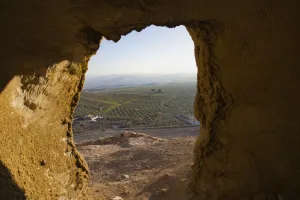
Its landscape is determined by strong slopes and areas of Vega around river courses, between the Guadalquivir countryside and the Subbetic Serras, which conditions the predominant type of crops: orchards and a "sea" of olive trees. In its term are the natural reserves of the Laguna Honda and La Laguna del Chinche, endemic complex of great ecological interest for the avifauna that inhabits it (evil, flamenco, anade real, squid...).

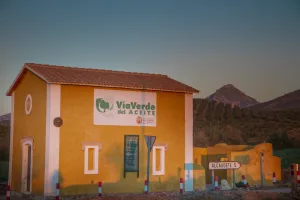
For its municipal term it runs the Green Way of Oil and is integrated into the route of "Castles and Battles," as well as the route of the Caliphate, belonging to the Andalusian Legate Routes.

Tourist Office

Plaza de Santa María, s/n (Junto Iglesia de Santa María la Mayor)
Tlf: 953 560 304 
E-mail: turismo@alcaudete.es

Useful Information

Tourist area: Sierra Sur and Campiña de Jaén
Distance to the capital (km): 48
Altitude over sea level (m): 676
Extension (Km2): 238
Number of inhabitants: 11015
Gentillo: Alcaudetés
Postal code: 23660

Is part of

AUDIOVISUAL CONTENT

MORE INFORMATION

Culture

The urban centre of medieval origin has an important architectural heritage since the villa has had a great expansion between the 16th and 18th centuries, building a large number of civil and religious buildings of many different styles, which embellish and embellish the streets of its historic town.

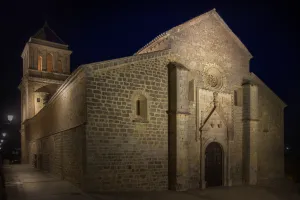
  • Church of Santa Maria la Mayor. The temple of Santa María de Alcaudete is a faithful exponent of the plurality of aesthetic offers that characterize the Spanish art of the 16th century, which explains the coexistence in its plant of two spaces or defiant structures: a Gothic body of three ships and a major Renaissance chapel. In the preserved factory book, the intervention of Vandelvira around 1558 is mentioned, when a rostrum is commissioned by Bishop Diego Tavera. It is declared BIC (Good of Cultural Interest), published in the Gazette of June 4, 1931.
  • Church of the Incarnation or of Carmen.At present, the early convent of the Incarnation only remains the church known as the Church of Carmen. In its interior it houses images of great artistic importance, such as Our Father Jesus Nazarene, the Holy Inlay, a lying, articulated Christ possibly attributed to Joseph of Mora or St. Elijah, attributed to the famous sculptor Peter of Mena and currently the most important work of imagination of Alcaudete.
  • Church of St. Peter.The Parish Church of San Pedro was created on an ancient hermitage, in the new arrabals, as a result of the spectacular increase of the population that Alcaudete experienced from the 16th century. The author is the architect Francisco del Castillo, although he was finished by his collaborator Juan de la Monja in the second half of the 16th century. A simple exterior gives way to an interior of great beauty and harmony, which also reflects an atmosphere of austerity, accentuated by the outer counterstrengths of the walls of the silery.
  • Convent and Church of Santa Clara.The convent of Santa Clara belongs to the order of the clarisas, within the order of San Francisco. The convent is made up of a set of buildings that rise in the neighborhood of its own name, highlighting among all that of its church. In the province of Jaén is the only example of full cover in stone that exists, appearing overlaid on two floors The building is rectangular, drawer type. It can be placed on the border between the 16th and 17th centuries.
  • Cemetery and Chapel of Santa Catalina: Although the oldest reference is that of its chapel, dated 1511, as regards the municipal Cemetery, in 1807 it was built to extramuras of the villa, next to the hermitage of Santa Catalina, is considered one of the oldest in Spain, and surely in the province of Jaén. The Cemetery of Alcaudete, on the occasion of the third prize in the category "Best Cemetery of Spain as a whole" of the 3rd Cemetery Contest 2016 of the Cultural magazine Adios, is included in the Spanish Cemetery Route.
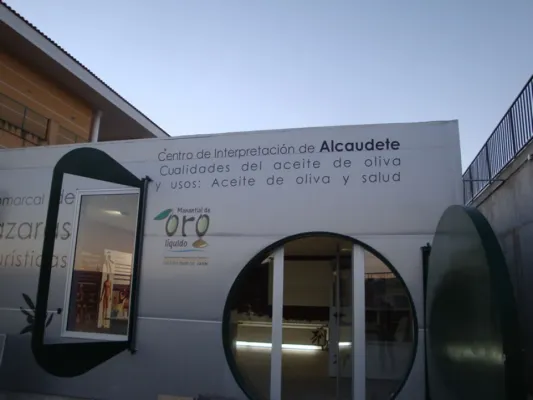
  • Castle-Palacio de Alcaudete. El Castillo- Palacio, declared a historic monument in 1985, defended the population and controlled the communication route that links Córdoba with Granada. It is one of the highest examples of the power that, in the Middle Ages, reached the Order of Calatrava, to which King Fernando III the Holy entrusted the protection of the western border of the kingdom of Jaen in front of the Nazari kingdom of Granada. The castle has a centre of interpretation dedicated to its historical evolution and, in particular, to the stage occupied by the nuns-warriors.

    The enclosure has three aljibes, on one of them, the one located next to the main door, is located the guard body, in charge of controlling access to the castle and connected directly with the adarve of the walls. In the southern area of the walled perimeter are the cavalry and above them, the capitular room. But, among all these buildings, in the center of the fortress and at the highest point of the hill, the spectacular Tower of Tribute, a symbol of the power of the Order, is prominent for its dimensions (22 meters high and walls up to three meters thick) and is practically inexorable for the difficulty of its access. In it, in addition to the aljibe and the warehouse to store the food, on the last floor, the residence of the planner was located.

Nature

To the perfect comfort of a rich historical-cultural heritage and an extraordinary natural heritage. The visitor who approaches our city can enjoy beautiful walks in the heart of nature a few minutes away.

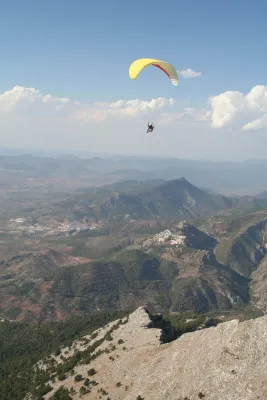
Surrounded by a mountain belt, Alcaudete is the ideal place to practice sports such as hiking or paragliding.

Within the municipal term of Alcaudete, there are two protected natural spaces: the natural reserve of the Lagoon del Chinche and Honda lagoon (natural, endorreic lagoons).

The highest heights located in the municipality are: the Sierra Ahillo with 1,455 m, Morron Redondo with 1,020 m, Morron Largo with 957 m, Cerro de los Santos with 831 m, Sierra de la Caracolera (de Codes) with 1,285 m, Sierra de San Pedro with 1,043 m, Caniles with 839 m, Torre Maestra with 812 m, Sierra Orbes with 787 m, Calvary with 688 m, Villodres with 615 m, Sierra Chircales with 1,205 m and Utrera with 979 m

In Alcaudete the aromatic plants are of great importance for their family use: (food condiments, sausages, etc.) These include: thyme, rosemary, fangs, etc. There are also another series of plants that are in a way profitable such as the oak (pig feeding); zarzals (white or red purple producers, which are very much appreciated fruits in Alcaudete); arbulagas (characterized by its large number of thorns, which makes it almost impossible to pass between them); the olive tree (species of olive whose fruit is olive, but in small size, and which is used as bait for the hunting of certain birds).

The most characteristic wild animals of Alcaudete are: the common badger, who live in almost all of the municipal term (Sierra Orbes, Ahillos, Chaparral, etc.), the hedgehog which is also common in all areas of Alcaudete and which is especially abundant in Los Noguerones, the montés cat, of which are increasingly less and less exemplary in Alcaudete, with an estimated 3 to 7 couples, most of them in the Sierra Achilos and some in the Sierra Orbes, being in extinction in the municipality. The hare that is found throughout the term Alcaudete. In addition to all the animals named in this section, it deserves special attention due to their low frequency, not only here but throughout Spain, the real eagles that are located in Alcaudete at certain times of the year, establishing themselves in the Sierra Achillos and the Sierra Orbes. There are also very small hawks in Alcaudete, but in greater numbers than eagles, because they are more extensive: Sierra Achillos, Sierra Orbes, Los Morrones, Sierra de Chircales, etc.

Víboras River. It is born in the urban centre of Fuensanta de Martos, having at the beginning the name of Arroyo de Fuensanta, to which other streams are joined, which, by thickening its waters, give it true character as a river.

San Juan River. It is born in the municipal term of the Castle of Locubin, although its birth is not very clear, it seems that it is born in the Gracia and Cerro Marroquí mountains, near Valdepeñas. It enters the Alcaudete border on the Alcalá bridge, continues on Saltobazos leaving the Ajos Tower and other places to its left.

Source Amuña. Its flow rate is very irregular, it has a very high flow rate with the rains and it decreases considerably in times of drought. The municipality for the public supply of Alcaudete, which had a private character, is part of this water source. Hence the importance of this source, which was a decisive factor in the establishment of Alcaudete in this area.

Parties and Events

  • Fruit fair: The hortellans of the region, present their best, melons, watermelons, pumpkins, apples, pears, tomatoes... and as not their excellent and odorous peaches, in all its varieties, to meet with some prizes, where the most important thing is to be winners. The participating fruits are exposed in a peculiar Fruit Exhibition. At night, on the 18th, the fruit is popularly auctioned.
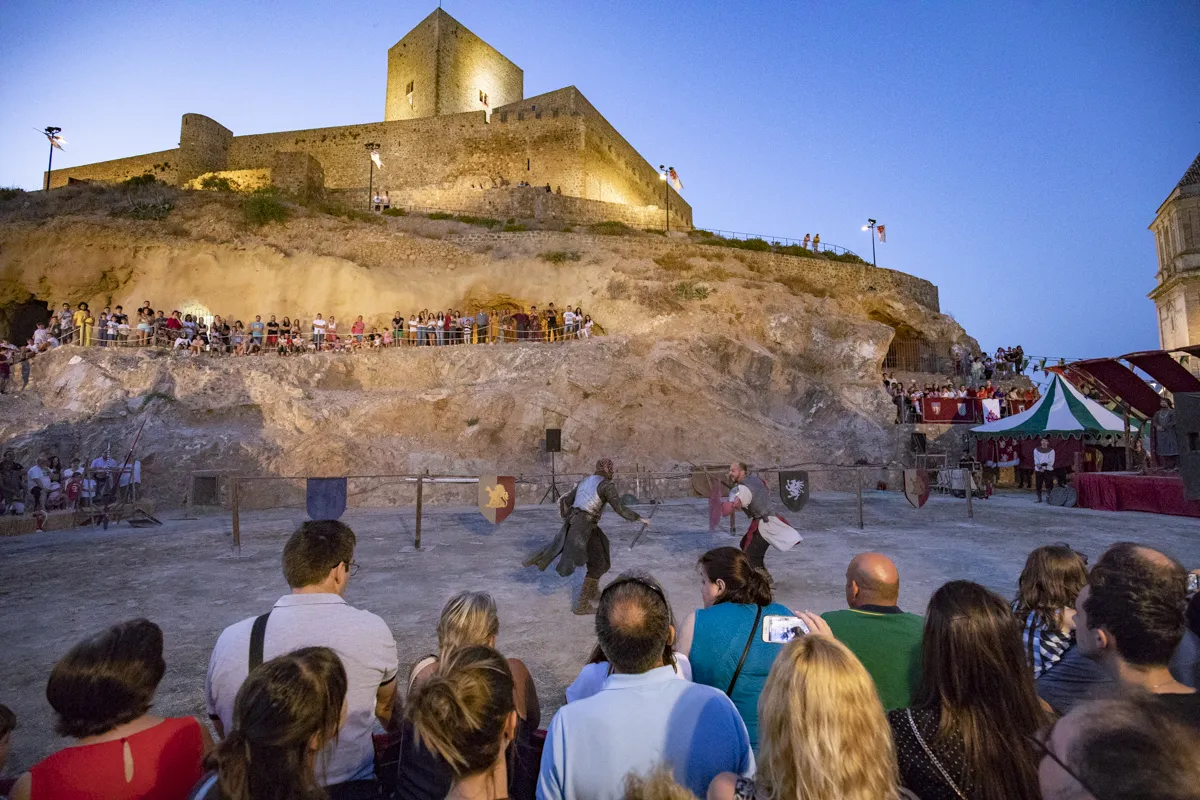
  • Festivals through:will be held on Friday, Saturday and Sunday of the second week of July. The parties will take place mainly around the Calatravo Castle of Alcaudete. The parties begin with a pasacalles with gentlemen, comics, phonies, juclars, jugarists, acrobats, balancers... The Calvia Fiestas also have a prepondero, a market, tournaments, concerts and medieval dinners, theatrical and didactic visits for schoolchildren to the castle, and as they could not miss, musical performances. The weekend before the Mediaval party is the Medieval Viandas Fair where you can taste the most exquisite Medieval tapas irrigated with good wine and beer.
  • Real Fair:originally from cattle, which is held from 15 to 19 September in the incomparable framework of the Park of Our Lady De la Fuensanta, highlighting its day fair, as well as its horticultural region competition. Another local party is the celebration of Santiago and Santa Ana on July 25 and 26.
  • Romeria Virgen de la Fuensana.The night of the 14th to the 15th of August is celebrated "La Velada," a night rosary in honor of the Virgin, and at dawn is celebrated the "Mass of the dawn." The hortellans heard this mass earlier after having processed the Virgin for her gardens accompanied by torches, then beginning the rosemary.
  • Holy Week:where about thirty steps process associated with thirteen cofradies and with images like that of St. Elijah of the 17th century. It highlights the staging of liturgical steps, such as the passage of Abraham, the Sale of the Lord, Repentance of Judas, Good and Bad Thief, Veronica, Apostles, with texts dating back to the 13th century. A characteristic element is the Roman band parade.

Gastronomy

  • Typical dishes. Typical Alcaudete dishes are the bathrobe (potato salad, beans, eggplant and spices), the overbony (green beans with artichokes and spices) and the Easter potage (chickpeas with spinach and cod).
  • The orchard will cause:Products of its gardens are the artichokes, light green, tight, soft and juicy, which are prepared in the Alcaudete style, filled with a mass of bread, egg, parsley, minced meat and wine, and boiled with a sauce made with garlic, parsley and flour. They also highlight the very used green beans in the overbone and types of salad
  • Delicious desserts.The sweet tradition of the city, of long conventional tradition and decisive Arab influence, is manifested in two large companies Doña Jimena with its excellent line in chocolates and Mata with its famous Hojaldrinas, both also with the manufacture of Christmas sweets. Not in vain, Dean Mazas, at the end of the 18th century, glossed, in his "Portrait to the Natural," something as diverse as the sugar capers who used to eat on this land. These exquisite desserts, such as peaches that are usually accompanied by resol or risoli, herbal liquor that in its origin was prepared with the grass "ros solis," that is, dew of the sun, and that in its various varieties accompanied the desks of our Golden Century. It is usually prepared with spirits in which coffee, lemon, sugar and some herbs, such as chamomile, peppermint or mejana are made

History

In Alcaudete, the oldest population remains date from the Paleolithic and Neolithic, identifying themselves with camps in the nearby mountains. Its occupation dates back to the third century BC, as a result of the colonization carried out by the Iberians.
The romanization of the area is sufficiently demonstrated by the presence of dozens of rural settlements. At this time belongs the Paleocristic sarcophagus of the time of Constantine, of the 4th century, found in the gardens around the street Torres Ortega at the end of the 19th century and preserved today in the National Archaeological Museum.
The Muslims will call it hoss al-Qabdaq or al-Qibdaq, attached to the Cora de Ilbira (Granada), forming part of its defensive structure along with other castles and athalayas distributed throughout the territory. After the triumph of 'Abd al-Rahman III and the implementation of its policy of Islamization, Alcaudete became the head of an administrative district (Iqlim), under the supervision of officials representing the Omeya State, whose main task was the control of the territory and the tax collection of the region.
It was conquered in 1246 by Fernando III and given to the military order of Calatrava, becoming the most advanced point of the Christian border with the Nazari Kingdom of Granada. The Calatravos carried out profound reforms in the Almohade alcázar, not only to adapt it to the conventional life of the freires, but to enhance its unbeatable or unbeatable character.
In 1312, both the fortress and the villa become part of the realingo lands and since then very close to the family Fernández de Córdoba and Montemayor. Alcaudete became a Lordship in 1385 and later, in the 16th century, Charles V transformed him into a county.
The villa had a large expansion between the 16th and 18th centuries, building a large number of civil and religious buildings of many different styles, which embellish and embellish the streets of its historic town.

In this municipality

14

Accommodations

4

Restaurants

7

Services

9

Events

We recommend