Saltar al contenido principal

Villanueva de la Reina

MUNICIPIOS
  • 5728708b-04d9-bfe9-16d6-f64974791cfb?t=1603894317060
  • 9eec0947-4e96-d628-ff1f-09b1e45ed344?t=1594823444734
  • 3e0c8147-c039-1d1f-0819-d526b9e3abb0?t=1610978789230
  • bdcbb137-926c-d3ae-13a5-4a906409f681?t=1594823444071
  • 3bae9ce7-6b92-c6b0-d516-a9b56578601e?t=1594823448503
  • e4c67879-5466-d96f-c5a8-a9d913f664b0?t=1594823460914
  • 03488039-8206-0b72-029e-ad2dd5e2a914?t=1595431570981
  • 5728708b-04d9-bfe9-16d6-f64974791cfb?t=1603894317060
  • 9eec0947-4e96-d628-ff1f-09b1e45ed344?t=1594823444734
  • 3e0c8147-c039-1d1f-0819-d526b9e3abb0?t=1610978789230
  • bdcbb137-926c-d3ae-13a5-4a906409f681?t=1594823444071
  • 3bae9ce7-6b92-c6b0-d516-a9b56578601e?t=1594823448503
  • e4c67879-5466-d96f-c5a8-a9d913f664b0?t=1594823460914
  • 03488039-8206-0b72-029e-ad2dd5e2a914?t=1595431570981

Description

Villanueva de la Reina is located in a privileged area to the north-west of the province and belongs to the region of la Campiña.

Its municipal term forms an elongated strip occupying the medium region of Guadalquivir and has a flat and unhighlighted orography. La ribera del Guadalquivir, as it crosses the municipality, is conducive to the existence of orchards and irrigation olive groves.

The northern part of the term is occupied by the Mediterranean forest landscape of Sierra Morena, which in turn forms part of the Natural Park of the Sierra de Andújar.

The economic activity of the municipality is basically based on agriculture, mainly olive, promoted by the excellent fertile land of the Vega. The cultivation of the asparagus and in general the fruit and fruit crops are important. In recent years this activity tends to diversify, looking like the handling industry, mainly asparagus for export and under-coat cultivation.

Its municipal term includes the pedanities of: La Countess, La Crujía, La Quintería and Rincón de San Ildefonso.

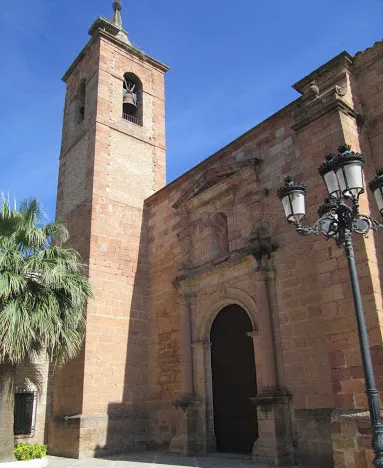
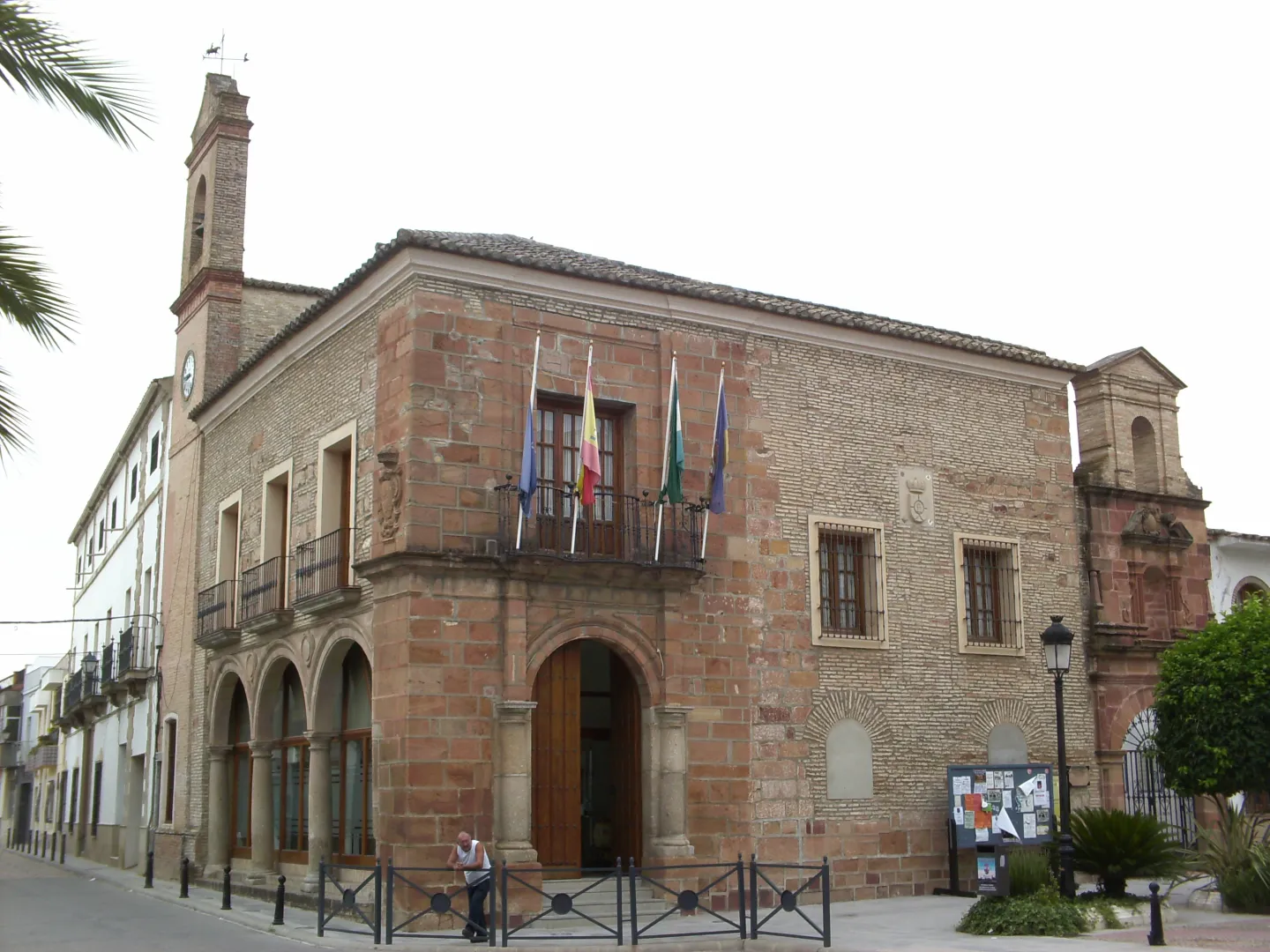
Among its historical-artistic heritage is the Church of Our Lady of Nativity, the City Hall, the Chapel of the Cortijo of San Nicolás and the Press of the Tower, a press of oil mill from the 18th century.

Contact Details

953 537 110

Fax: 953 537 502

vreina@promojaen.es

www.vreina.com

Useful Information

Tourist area: Sierra Morena / Sierras de Andújar and Despeñacolos
Distance to the capital (km): 35
Altitude over sea level (m): 220
Extension (km ²): 209
Number of inhabitants: 3,081
Gentillo: Villanovens
Postal code: 23730

Is part of

AUDIOVISUAL CONTENT

MORE INFORMATION

Culture

From its heritage we highlight the following monuments:

  • Church of Our Lady's Nativity. It dates from the 15th to the 18th century. It is made up of a three-ship plant. A previous one is preserved Mudejar chapel from the 13th century, at the foot of the temple with an outside entrance door. The current altarpiece was made in 1961, as the previous one was burned in the Civil War. There was a major altarpiece of the school of Alonso Berruguete attributed to Sebastián Solís, which was burned during the Spanish civil war. The present one was performed in 1961 by the talented master Mariano Piñar Ferrer. The chapel of the Rosary, located in the northern part of the left ship of the temple, stands out the plaster of its vault as an example of the Andalusian rock art of the 18th century.
  • City Hall. The building of the Conistory House dates from the 18th century, and it is located in the corner with two facades. It is a large building and presents its two facades with silery stone, on two floors high. In the main facade shows its cover, where a half-point arch-finished hole opens, framed in two-fold semi-columns. A ledge separates it from the top floor where a balcony opens. The left side is composed of three half-point arches on ground-floor columns, and intoned holes on the upper floor. Next to it is a tower, on the upper body it shows a watch and above it is a bell.
  • Fachada from the chapel of the cortijo of San Nicolás. It is attached to the City Hall building. Baroque style, It consists of a cover of silery with a half-point arch flanked by two double pilasters, a second body with baking and a third one that overcomes with swordwork.
  • Press of the Tower old oil mill press. Possibly from the 17th century, currently located in the park of Guadalquivir.
  • It has a archaeological site of the Roman era in the Hermitage of Santa Potenica, next to the Guadalquivir River, as well as two hermites, that of San Marcos and that of the Holy Christ of the Humiliadero.
  • The parish church of theImmaculate Conception, shows in its arches and Gothic pillars that origin, although it is transformed in the first decade of the 17th century. Hence its elegant classic cover and the tower with a beautiful chapiel.

Nature

The municipal term of Villanueva de la Reina is an elongated strip that occupies the middle region of the Guadalquivir River, and in it we can distinguish the following areas:

  • In the north From the term, the landscape is mountainous. This area belongs to the Natural Park of the Sierra de Andújar. A half mountain area with a varied morphology and altitude. It has a rich and varied fauna in which the Iberian lince stands out. The vegetation of this area is made up of: oaks, alcornoques, pines, oaks, cornicabres and bushes such as rosemary and thyme. In his fauna We find: deer, we go, lynches, boars, imperial eagle, black vulture and the leonate vulture.
  • Area of the countryside, in which the cultivation of the olive tree predominates, which also serves as a shelter and sustenance for species that live in this ecosystem: insect birds, parrots, codornices, clumsy pigeon... and mammals such as rabbit, hare, fox or badger.
  • In the central area, the quiet course of the Guadalquivir River determines the Vega, where fertile land is dedicated to the cultivation of orchards and fruit trees. The cultivation of asparagus is of great importance. The forest called gallery, which grows next to the river's riverside is the predominant vegetation, and is made up of chopos, allies, strawberries, mimberas, willows... With a fauna characteristic of this place: storks, storks, tents, trout, salamanders, frogs... as well as the fauna of these areas.
  • To hisr, it's a dry area, where cereals are especially grown.

A territory with areas of different characteristics and that each of them provides the vegetation and fauna that characterizes it, and that makes Villanueva de la Reina a municipality with a privileged natural wealth.

A place very visited by the neighbors of Villanueva de la Reina is, The Battle. It is located next to the Guadalquivir River and is a recreational area that is populated by a lot of eucalyptus, fountains, children's playground, ideal for spending the day with the family.

Here it is preserved a Batan, machine that was composed of thick wooden mocks moved by a shaft to hit, unfat and sharpen the cloth.

In this place is celebrated the Romeria of Santa Potencio.

Parties and Events

The following parties are held in Villanueva de la Reina:

  • Saint Anton. It is held on January 17. The night before are done "lumbres" with olive branches in different parts of the village. Around the lumbres you sing, dance, drink and roast chorizos, cheeks...
  • Carnivalwhich is held on Saturday after ash Wednesday. A party with a lot of roots and in which the neighbors come out to see the comparsas and the people dressed in "mask."
  • Holy Week. During the Holy Week processions, the "armed," typical Roman soldiers who walk in front of the steps, dressed in the typical Baroque suits and sing the traditional ones "Passion Cups" and "Questions.", songs that sing without musical accompaniment.
  • Romeria in honor of Santa Potentena. It takes place the second weekend of May, in the place called the Batanejo. It starts on Friday with the traditional paellaon Saturday with the walk through the streets of the village of Brotherhood of Santa Potenica accompanied by the authorities and people dressed in typical flamenco suits, who are followed by beautifully gilded carrots. The party will end on Sunday with the procession of Santa Potentian to the Batanejo.
  • San Isidro. It is the pattern of the village of The Quinteria and is held on May 15. On that day, activities are organized for children and older people and the Holy One is processed.
  • Patronal parties in honor of Santa Potentena. Which take place on the first weekend of August, from Thursday to Sunday. On Saturday the tasting of the "Singing" eggplants in vinegar and in the afternoon the procession in honor of Santa Potencio.
  • Romeria de Santa María de la Cabeza. It takes place on the last Sunday of April in the sanctuary of the Virgin of the Head which is found in the middle of Sierra Morena. It is the oldest rosemary in Spain, and there come neighbors of the surrounding villages, dressed as rosemary and with the gilded carrots, which look like rivers of color that climb up the mountain. A very bright and emotional romance.
  • The "Monones", are native songs / Coplas of Villanueva de la Reina that maintain the tradition of going out alone or in group on the streets to sing them at Christmas. The content is jumpy, loving or spicy. Contests are organized and the number of participants is increasing each year.

Gastronomy

There are two ideas that are present in all the dishes that make up the gastronomy of Villanueva de la Reina: The first is that the virgin olive oilproduced in their fields, will be present in all their dishes; and the second is that they will be used as ingredients those products on the ground, vegetables, fruit or mountain meat during the hunting season.

Among the most traditional dishes, we highlight:

  • "Old clothes." or the rest of the cooking: cooked chickpeas, onions, garlic, egg, salt and oil.
  • "Lent power": chickpeas, olive oil, flour, cinnamon and lemon scrapes.
  • "Tyruabuzas": eggs, olive oil, flour, cinnamon and lemon scrapes.
  • "Pipirrana", is a salad in which tomatoes, cooked eggs, green peppers, onions and tuna are chopped.
  • Monkey stew. (Rabbit, hare, perdiz)

In pastry shops:

  • "Bienmesabe", a dessert with clear Arab reminiscent, which carries almonds, sugar, water, egg yolks, lemon shell and cinnamon in stick. It is in the form of a pasty cream with an exquisite taste.
  • "Pestiños", rosy types passed through the frying pan, to which sugar is added.

History

Vestiges located on the terraces of Guadalquivir confirm its paleolithic origins; the settlement of The Crujia is one of the archaeological sites already of the Neolithic. The human presence during the Iberian era is evident in other settlements and in the discovery of abundant ceramics.

These lands were very moved by being located on the way from Cástulo to Iliturgi, from the Via Augusta. In the Vasos of Vicarello, the route from Cadiz to Rome by Cattulo appears, and a stop is mentioned. Ad Noulas or Nobia, identified with the Vega Baja site, close to the current city centre. It was the old one. Ipra where findings reveal systems of Roman parcelation, in places such as the Garden of Enmedio, Arroyo del Tesoro, the Crafts or in the surroundings of the pedanea The Quinteria. The most emblematic is the villa of Santa Potencio.

In Muslim times it was a small alquería, given to Andújar after his conquest by Alfonso X. In the 15th century, it was the scene of the battle of San Bernabé, in which when the Andújar of his battle against Don Juan de la Cueva in Baeza, led by the Constable Iranzo, returned, were surprised by Don Fabrique and those of Córdoba with 500 horses and 800 children.

In 1628 Bishop Moscoso and Sandoval began a process on the miracles of Santa Potenica, weaver whose martyrdom consisted of pairing; ten years later he was beatified by Urban VIII.

During the French invasion, General Castaños organized here the column that he defeated at the Battle of Bailén. On July 22, 1808, the French capitulation was signed at the Casa de Postas de Villanueva de la Reina.

The old one Villanueva de Andújar was segregated from this city in 1790 and took the name of Villanueva del Río, until later, for aid received from Queen Elizabeth II, he changed his name to the current one.

In this municipality

7

Accommodations

2

Restaurants

2

Services

3

Events

We recommend