Saltar al contenido principal

La Puerta de Segura

MUNICIPIOS
  • la puerta del segura
  • 8bc3e428-c20a-30be-004b-7c6d65b0b2eb?t=1595347564411
  • dc8e41c2-7974-0553-fd55-693b2e8694d2?t=1595347579489
  • la-puerta-jpg
  • ayuntamiento-2-jpg
  • 373f3443-24d1-3952-9160-ed22d9795d42?t=1595347702076
  • fuente-alegorica-jpg
  • arquitectura-colorista-jpg
  • teatro-1-jpg
  • iglesia-de-san-mateo-jpg
  • rio-guadalimar-2-jpg
  • la puerta del segura
  • 8bc3e428-c20a-30be-004b-7c6d65b0b2eb?t=1595347564411
  • dc8e41c2-7974-0553-fd55-693b2e8694d2?t=1595347579489
  • la-puerta-jpg
  • ayuntamiento-2-jpg
  • 373f3443-24d1-3952-9160-ed22d9795d42?t=1595347702076
  • fuente-alegorica-jpg
  • arquitectura-colorista-jpg
  • teatro-1-jpg
  • iglesia-de-san-mateo-jpg
  • rio-guadalimar-2-jpg

Description

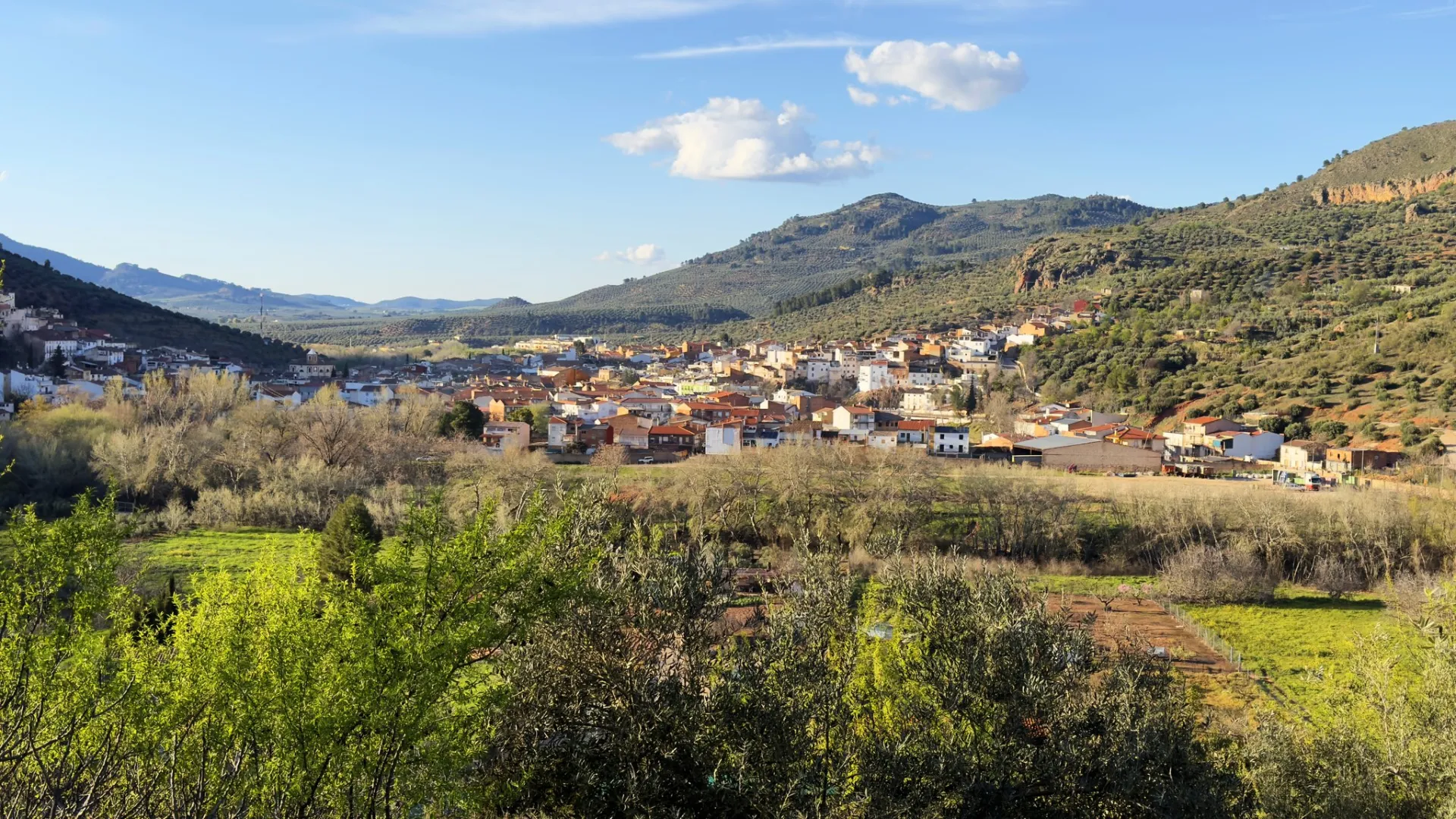
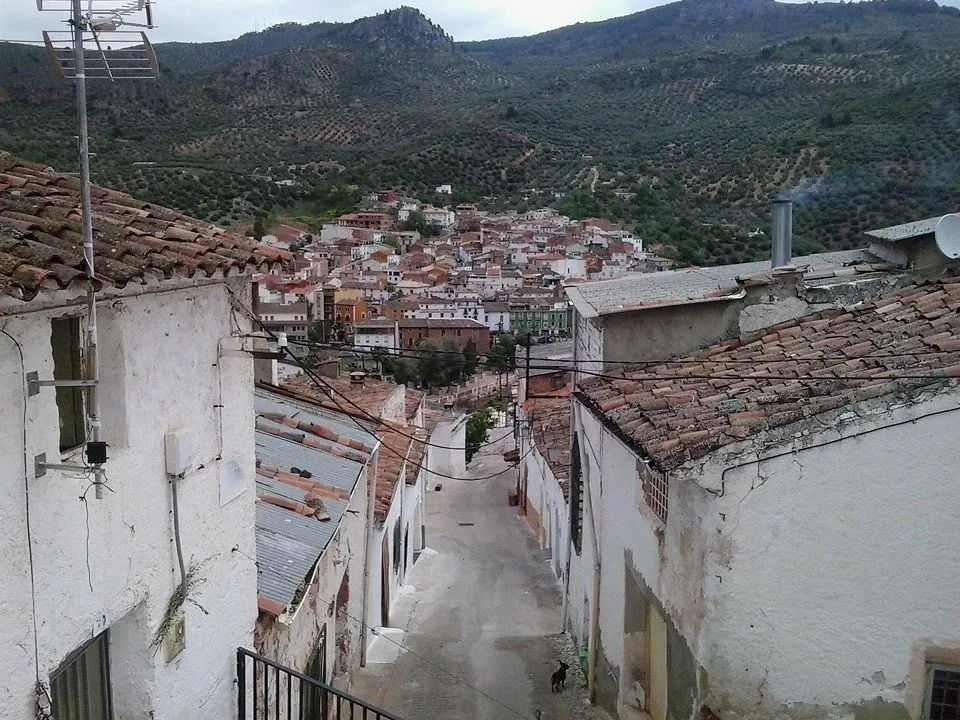
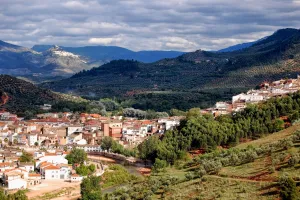
La Puerta de Segura is a municipality located in the north-east of the province of Jaén, in the Sierra de Segura region. It owes its name to its privileged position, as a natural entrance to the Sierra de Segura and one of the main accesses to the Natural Park of the Sierras de Cazorla, Segura and the Villas, within which is found much of its municipal term. It offers a mountain landscape full of nuances and variety that goes from olive fields to saw areas.

The villages of Los Pascual, Las Graceas, Bonache, Los Llanos and Los Yegüerizos are also part of this City Hall.

Its main economic activity is agriculture, the olive tree being the predominant crop. Tourism and hotel activity have some importance in the income of the municipality. Minor hunting, major hunting and fishing are also practised.

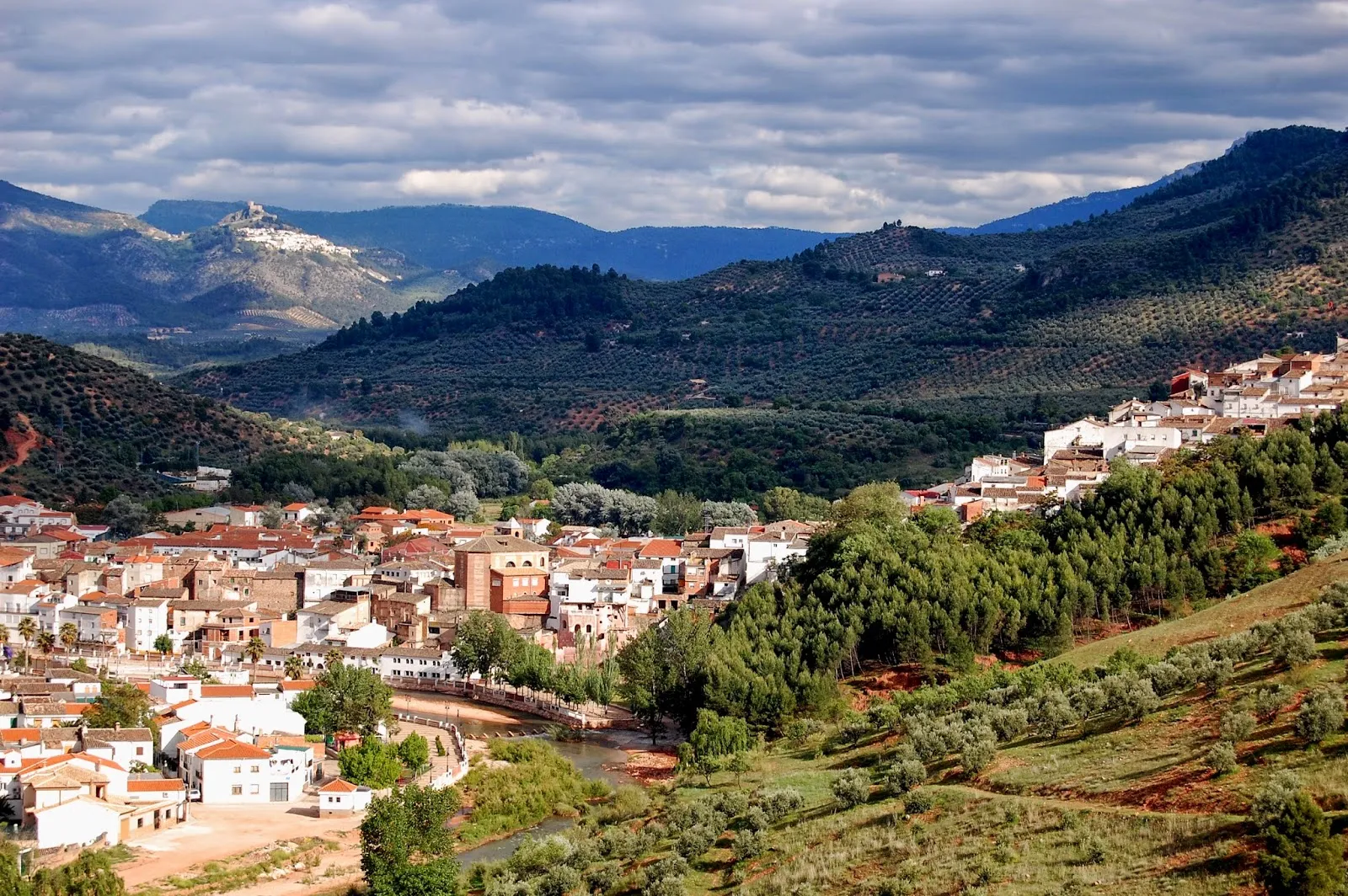
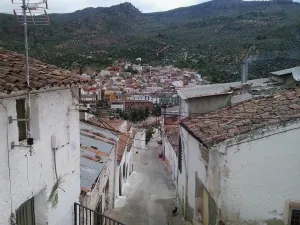
The urban core of La Puerta de Segura is divided into two parts by the Guadalimar River.

From its historical heritage, we highlight: Church of San Mateo, the Theatre, the Bridge on the Guadalimar River, the Castle of Bujalamé, the Casa Tercia.

Tourist Office

Oficina de Información Turística 
Ctra. de Siles s/n
Tfno.: 953 48 70 06
http://www.lapuertadesegura.es/turismo.html

Useful Information

Tourist area: Serras de Cazorla, Segura and the Villas
Distance to the capital (km): 145.5
Altitude over sea level (m): 585
Extension (km ²): 98
Number of inhabitants: 2,646
Gentillo: Porceños
Postal code: 23360

Is part of

AUDIOVISUAL CONTENT

MORE INFORMATION

Culture

  • San Mateo Parish Church: It was erected in 1821 in the same place as the old medieval temple, which was burned by French troops in 1811. Despite its valuable dimensions, it was organized from a single ship, divided into two sections, with canyon vault cover that unloads on fajon arches. The inner walls are totally flimsy. The header covered by semi-spherical vault defines the circular arrangement of the main altar. A neoclassical air is observed externally. The main cover, of a quarry, consists of an intellized door of remarkable proportions, on it a large circular window and two smaller ones on both sides. The rest of the facade is made of embossed brick. The tower, of low height and lacquered appearance was later added and has a body of bells and a watch. In the sacristy is a processed cross of silver from the 16th century, which reflects in a very clear way the characteristics of the Renaissance goldsmith.
  • The Castle of Bujalamé. The strategic location of La Puerta de Segura resulted in the lifting of defensive constructions since the Islamic era, there is a record of two strengths in the place where the urban core is located. One of them popularly known as "The Castle" it has been deteriorating, its stones were used for other constructions. At present from the medieval fortress, only the remains of an old turret of the outer defensive belt, belonging to the Almohad period of the late 11th and first half of the 12th century, are preserved. In 1985 declared Good for Cultural Interest.
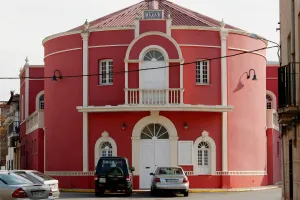
  • Theatre: The La Puerta de Segura Theatre was built in 1928. It is representative of the current trends and the most characteristic is its circular plant. The façade is versed on two floors: at the bottom the arched half-point door with trapezoidal key resting on pilasters and windows on both sides. On the upper floor, the central balcony with the ancestor of balaustre and double columns stands out. Two pilasters frame the height of the building to which a ceramic panel is crowned with the date of its construction. It's been rehabilitated recently.
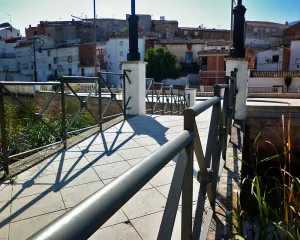
  • Bridge: Built in the Muslim era, at the foot of an old fortress, it was made with calicanto masonry and with one eye. Dam service in case of danger. At present, the calicanto and the large and irregular medieval bulkheads are kept semi-hidden. Another bridge has been built in the same place, which is wider
  • Casa Tercia: Building on whose door the cross of the Order of Santiago appears, under whose domain the Sierra de Segura was found.

Nature

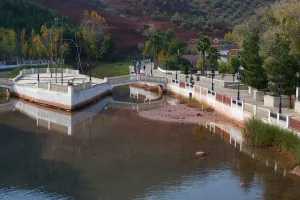
The name of The Safe Gate comes from being the natural entrance to the Sierra de Segura along the Guadalimar River. This river that divides the village into two, on its shores is a nice walk with recreational areas and children's park.

On the Guadalimar River there was a bridge built in the Muslim era, however, the small eye of its only eye caused numerous floods, which led to its flight at the beginning of the 20th century, with a larger one currently appearing.

Across the river is a new ship-shaped bridge, built to facilitate people's passage from one shore to another.

In recent years, the town, like many of the surrounding municipalities, is orienting its future towards tourism to make known the rich natural heritage they have. Other initiatives include:

The Natural Way of Segura. Through this "Natural Way" programme, the Ministry of Agriculture, Food and the Environment, since 1993, has been building roads and infrastructure with the aim of creating marked routes that contribute to the development of rural areas and to meeting the demand of the urban population for the use of non-motorized routes that allow them access to nature and rural areas.

The Natural Way of Segura, with 27 km. in the municipal terms of Arroyo de Ojanco, Segura de la Sierra, Puente de Géave, La Puerta de Segura, Géave and Villarrodrigo.

A tour from which we can see the wild fauna of these sites. In addition to the large herbivores (deer, muflons, gooseberries, boars...) and the rapacious birds of impressive bearing, the term is full of many other animals whose observation can be enjoyed; the case of the small birds (coal, horseradish, pinkles, oroping, myrtle, reyezuelos...

The flora is made up of: oaks, cornoques, moans, oaks, moorish, Mediterranean nobleman forest, mother-of-pearl, brezo, lentils, cornicabra, coscoja and repopulation pines, as well as the gallery forests in the water courses. This riverside vegetation brings a color brush over the landscape with the change of the seasons, especially in the autumn season.

There are numerous enclaves that exist in the term to get fantastic panoramic from the region:

  • The Vulture: Located to the south-west of the town, at 1,245 m of altitude, it is an ideal place to view beautiful landscape views. Just 5 km away. We can move on foot or by vehicle.
  • Sierra de Oruña: This massif to the north-east of the town, with a maximum height of 1,153 m, is on the edge of the Natural Park and 7 km. of the city centre. It is an excellent place to contemplate the typical mountain vegetation.
  • Monte Salfaraf. The elevation of Salfaraf is a residual relief of the tectonic unit of the tabular shed of the plateau which, as a witness hill, is independent from the surrounding area, causing a landscape milestone, with a large visual basin. The topographic contrast with the surrounding terrain and the altitude of more than 1,000m make it easily identifiable. From its peak there are interesting views of other milestones such as the Guadalmena reservoir, the Yelmo or Segura de la Sierra.
  • Río Guadalimar The Gate of Segura is surrounded by the river Guada- limar from west to east, giving away a landscape of riverside to its channel, with a still preserved vegetation that contrasts with the olive plants that develop in its surroundings. The natural entrance to the Sierra de Segura that forms its valley, where the river has caused a narrow passage between the Alto de La Buitrera and the Pico Oruña, is remarkable.

Parties and Events

All the villages of La Puerta de Segura celebrate their patron parties. The Llanos, Last weekend of July. The Yegüerizos, July 26, Santa Ana. The Pascals andMay 3rd, Cross Day. Bonache August 15, Virgin of the Assumption.

The Safe Gate:

  • San Blas: February 3rd. The habit of lighting luminaires on the eve remains. On that day, the traditional donuts of the saint are distributed, which according to the popular sense will free all those who ingest them from the evils of the throat during the year.
  • Virgen del Carmen: Between the 15th and the 18th of July, festivals in Honor de la Virgen del Carmen. On the 16th day of the Virgin, a solemn Mass is held in the morning and in the afternoon the procession that will go through the streets of the people. Various activities are planned, playful, sports, cultural and every night popular greens.
  • Feast of St. Matthew: A cattle fair is held in La Puerta de Segura between 20 and 23 September, in honor of Saint Matthewit has now become a festive and outstanding fair of that part of the serrana region.

In addition to the traditional Multisectoral Agricol- Livestock Fair, a wide range of activities are planned, including bulls, bullfighting, the release of braves in the bullfighting square, plays, children's games and every night popular verbenas.

Gastronomy

In La Puerta de Segura they make good serrano dishes such as:

  • Andrajos: Serrano stew in which a thin mass made of water and wheat flour is cooked, in the sauce of a tomato saffrito and pepper with hare meat flavoured with herb.
  • Gahamas: It is based on flour, potatoes and olive oil. It can be accompanied with chorizo, torrezos...
  • Galians: Stew made with a cake of unleavened bread (galianera) hare, tomato, green pepper, olive oil water and salt.
  • Beads: They are made with the corn panizo flour accompanied by cucumbers, chorizos and torreznos.
  • Ajopringue: Owner of the time of the massacres. It is made with the liver of the ground pig and a lot of olive oil, with which it is customary to give to all those who participate in the singular rite of making the marrano a soul of orza and garlands of chacinas, with which once hung the ceilings of the pantries are adorned.
  • Sweet peas: of the feast of all Saints. Made of roasted flour, milk, cinnamon, orange shell and picatostes.

In pastries: fried rosses, oil rosses, baking, pestidos, entangled in Easter, flowers.... And to accompany, the home-made mistel.

History

The Gate of Segura has been populated since prehistory, with settlements on the banks of the Guadalimar River.

The strategic nature of the town is shown in the Iberian period in Bujalamé, whose remains reveal an agricultural, livestock and commercial activity.

The strategic position of this population led to the lifting of defensive constructions since the Islamic era. There are two strongholds, the one that was in the place that today occupies the urban town and the one of Bujalamé from which a stylized tower is preserved.

In 1235 it was conquered by the Knights of Santiago and became part of the extensive command of the Order, based in Segura de la Sierra.

During the reign of Philip II he was included in the territorial demarcation of Toledo, within the Order of Santiago's Order, later passing to the Dependence of the Segura Government.

For its geographical location, it was with Segura de la Sierra mojón of the kingdoms of Toledo, Granada and Murcia. In 1833 he passed with the entire region to depend on the province of Jaén. That same year he received the title of the villa and in 1917 he was added "de Segura."

In 1933 he was segregated Génave Bridge and Peñolite This represents a significant demographic and economic decline for the municipality, which lasted until the 1960s.

La Puerta de Segura currently records one of the minor depopulations of the region for its natural condition as the gateway to the Sierra de Segura.

In this municipality

6

Accommodations

1

Restaurants

1

Services

3

Events

We recommend