

Trail Ravine of la Niebla
Description
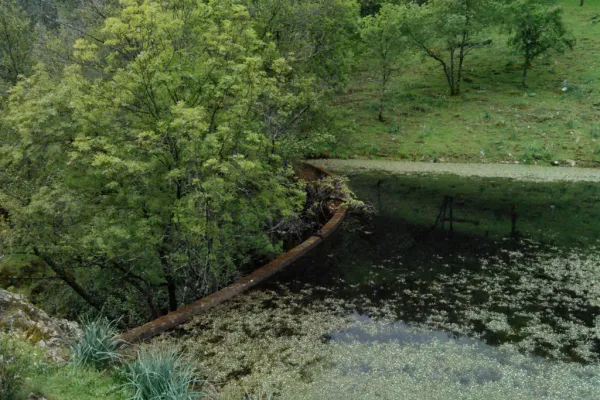
The explanade that we find at the beginning of the path will serve as parking, there is an old fountain that has been restored. The vegetation we can observe, as it happens at other points of the former National IV, is not the one we would expect to meet in a place like this. This is a consequence of a landscaping project that was the object of the Natural Park Despeñacolos in the 1950s, and that introduced exotic species such as cypresses and cedars, which today give us a contrast more than to enjoy.
Datos de la ruta
ROUTE NAME
Sendero Barranco de la Niebla
TRAIL TYPE
Trail
DIFFICULTY
Alta
TOTAL DISTANCE (IN KILOMETERS) 4,8 km
-
Stretch of asphalt or concrete: --
-
Section of track, forest road, or dry watercourse: --
-
Trail section: --
-
Sections of livestock trails: --
HUSO 30S
ESTIMATED TRAVEL TIME
2 h 30 min
ROAD SURFACE TYPE
Trail
--
--
DIFFICULTY. RATING ACCORDING TO THE MIDE METHOD
--
MEANS
Severity of the natural environment
--
ITINERARY
Route guidance
--
DISPLACEMENT
Difficulty moving about
--
EFFORT
Amount of effort required
ACCESSIBILITY TYPE
On foot
TIME OF YEAR
All year round
SIGNALING
No
MORE INFORMATION
TUNNELS
STEEL VIADUCTS
METAL WALKWAYS
WATER POINTS
PONTOONS
GUARD BOOTHS AND BARRIERS
SWITCHMAN'S CABINS
CYCLABILITY
RECREATIONAL OR SPORTS AREAS NEAR THE TRAIL
AID STATIONS
LINKS TO OTHER TRAILS
SHELTERS
RECOMMENDATIONS
- In front of COVID19, keep the safety distance and carry a mask, avoid agglomerations and contact with surfaces, wash your hands frequently, use hydroalcoholic gel and consult the available digital materials. Take care of your health and others.
- It works to prevent fires. Do not throw cigarettes or any other object that produces combustion.
- By consuming local products and having companies in the area you will contribute to rural development.
- He lives with the local people and other users. It respects private property and property.
- Unwind in a sustainable way: public transport, bike, walk, shared vehicle...
- Noise is another form of pollution. In silence you will enjoy your experience more.
- It facilitates the use of people with special needs.
- The trash doesn't come back alone. Take her with you to the nearest container. Reduce, reuse, recycle.
- Don't leave a mark on your way through nature.
- It practices a responsible and committed tourism with the environment. Be a real ecotourist!
- Respect the facilities at your disposal. We all pay for your maintenance.
- Check the weather forecast before starting your activity.
- Avoid going out alone. If you do, it communicates tour and time of return to other people.
- Extreme caution under adverse conditions and with the occasional presence of animals or motor vehicles.
- Please provide prior information on the possible existence of cynegetic activity.
- It has water, sun protection, proper clothes and shoes.
- It carries a mobile with enough battery in case of emergency (112), but remember that there is not always coverage.
- Don't even bother animals. You would negatively alter his behavior.
- For your safety and the safety of the environment, don't get out of the signposted road or take shortcuts.
- Remember that the capture of animals, light fire, fish and collect plants or minerals is prohibited.
- If you bring a dog, take him with his strap and make sure he doesn't bother other animals or people.
- Your safety is our concern, but it's your responsibility.
Thank you for your cooperation!
OTHER INFORMATION OF INTEREST (ARCHITECTURAL OR HISTORICAL-CULTURAL, GEOLOGICAL-ECOLOGICAL)
Technical Description
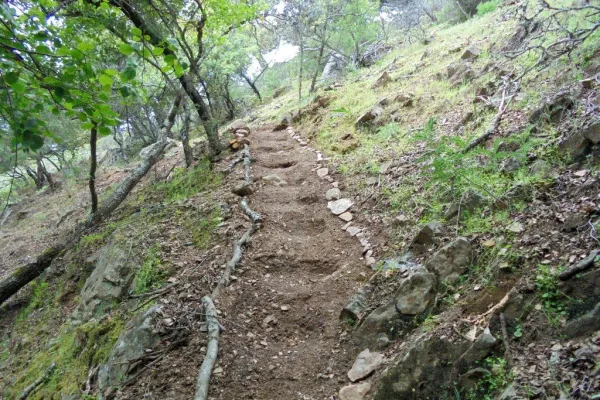
The first 1,000 meters of the path are of pronounced ascent, until they reach a somewhat more flat area. This is where the path continues on an existing path, which we must continue for about 500 meters until we are forced to leave it in the east direction, to reach the confluence with the Barranco de Valdeazores path. From here, and following the latter, we can reach the Collado de la Aviación Refugio, and a little later we can enjoy a spectacular view of the Natural Monument of Los Organos, in addition to being able to see, on days of good visibility, much of the province of Jaén.
It is at this point that we are offered two possibilities. On the one hand, the visitor will be able to continue his return on the Path of the Barranco de Valdeazores, or to choose to turn to the point of departure of the Path Barranco de la Niebla, but on a different path from that of ascending, which makes him a circular path.
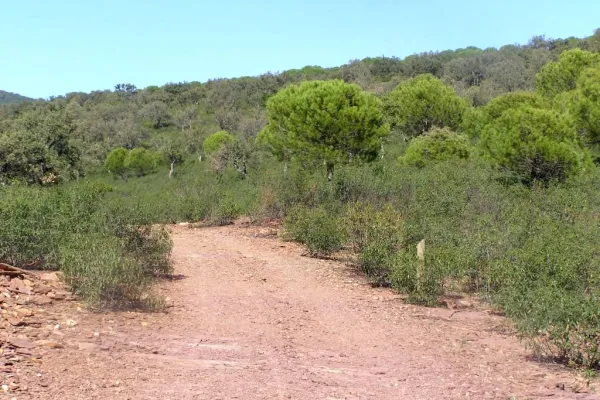
Along our way we will have been able to enjoy one of the best representations of what is the rest of the natural park in terms of different types of vegetation. The repopulations with species of the genus Pinus interspersed with areas of Mediterranean tiles in which the ocine and the cork are the predominant species in the solanas, while in the umbria the complaint is opened. All this, accompanied by a rich forest of juniors, madroños, olive trees and a long et cetera that provide support to the populations of ungulates that have made this natural park so popular.