
Saltar al contenido principal

Pozo Alcón

MUNICIPIOS
  • Pozo Alcón
  • 4a1af24f-5e10-d7f4-b310-6d488956b6eb?t=1621355480052
  • 1ca7f7e4-fdb2-99a3-6f26-6fd5015bda9d?t=1610988789849
  • df2400b1-a485-33ed-1b04-2bc6df5d6e8c?t=1621355480139
  • f975805d-814e-29f8-b061-57375da6c448?t=1621355480184
  • 0d168a3f-fcab-3f86-8f23-6b1e514cb97e?t=1621355480242
  • dee179f4-893f-23e0-07fb-5433c3a50289?t=1621355480290
  • 46d10711-3054-c7d7-c605-a95a68bac832?t=1621355480476
  • Pozo Alcón
  • 4a1af24f-5e10-d7f4-b310-6d488956b6eb?t=1621355480052
  • 1ca7f7e4-fdb2-99a3-6f26-6fd5015bda9d?t=1610988789849
  • df2400b1-a485-33ed-1b04-2bc6df5d6e8c?t=1621355480139
  • f975805d-814e-29f8-b061-57375da6c448?t=1621355480184
  • 0d168a3f-fcab-3f86-8f23-6b1e514cb97e?t=1621355480242
  • dee179f4-893f-23e0-07fb-5433c3a50289?t=1621355480290
  • 46d10711-3054-c7d7-c605-a95a68bac832?t=1621355480476

Description

Well Alcón is found to the south of the Natural Park of the Sierras de Cazorla, Segura and Las Villas, between two landscapes that combine the verdor of the mountains with the dryness of the lowlands that border Granada.

The agriculture is the main activity, highlighting the olive cultivation, herbaceous plants and almonds. The livestock It is also an important activity, dominated by sheep (Segureño lamb) and poultry. Bad communications with Jaén, makes this town is more linked to Baza (Granada)to other locations in the province.

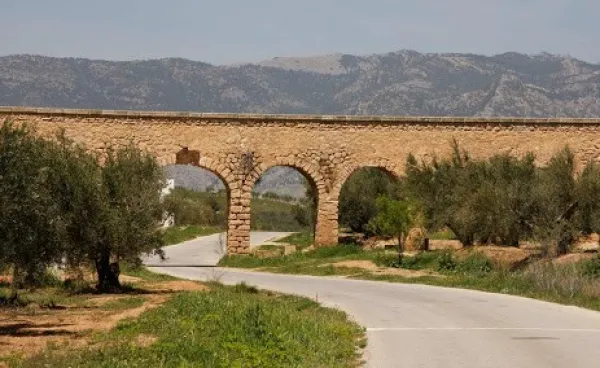
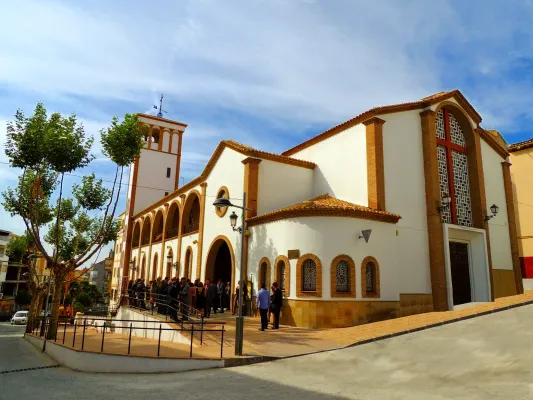
The villa, that up to the 18th century belonged to Quesada, owns a valuable and dedicated popular architecture. It's the only of the peoples of the Natural Park which has not lost population census since the creation of the Park. The municipality has been able to preserve old monuments such as the church of Our Lady of the Incarnation and the City Hall Square. His home shows deep respect for traditional architecture, especially in the high neighborhoods surrounding the church of Our Lady of the Incarnation.

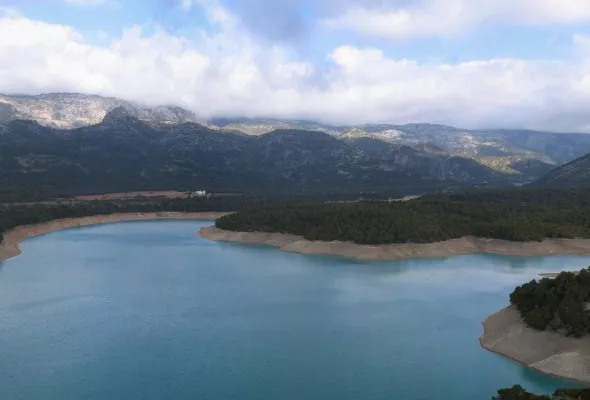
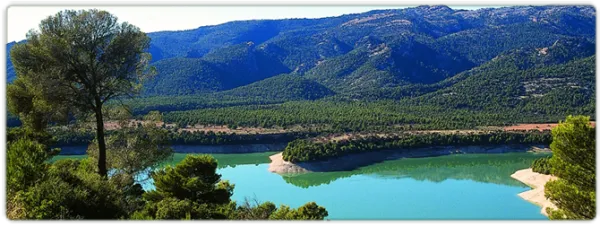
Tourism is consolidating as a future activity in the so-called environment "Sierra del Pozo," where there are numerous sites of great environmental value and exceptional landscapes. Near the village is the beautiful area of the Bread reservoir.

All this allows the enjoyment of numerous and varied activities ranging from extreme sports, hiking through sports fishing, observation of fauna and flora and astronomical observation.

Useful Information

Tourist area: Serras de Cazorla, Segura and the Villas

Distance to the capital (km): 134

Altitude over sea level (m): 854

Extension (Km2): 139

Number of inhabitants: 5,464

Cattle

Postal code: 23485

Is part of

AUDIOVISUAL CONTENT

MORE INFORMATION

Culture

  • Church of Our Lady of the Incarnation. Up in the middle of the the 1960s of the 20th centuryon another previous temple with the same advocation, whose origin was back to the 13th century. Its cover presents a vain of intellized access, Latin cross and hastial. The tower stands out for its volume, it is square-based and decorated with geometric elements.

Nature

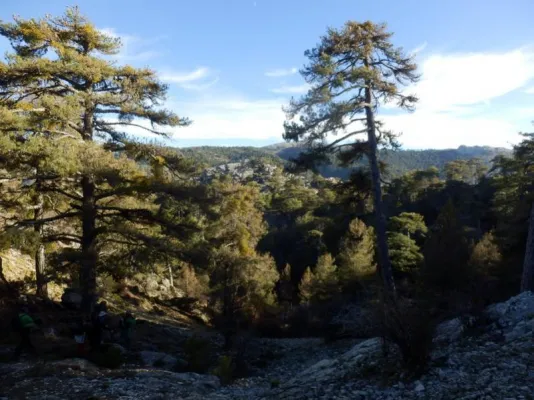
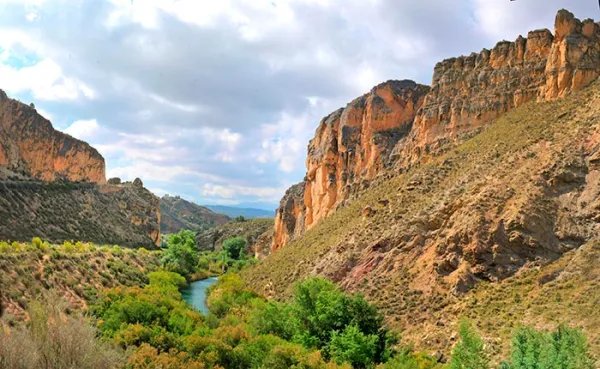
Pozo Alcón is a municipality del Alto Guadalquivir located on the border with the province of Granada. The North half of the term included in the Natural Park of the Sierras de Cazorla, Segura and Las Villas. Changing the natural environment to the south and south-east, on the hillside to the river Guadiana Menor and Guadalentín, changing the landscape abruptly with large half-life areas, very eroded, of splits and tumours.

Well Alcón is a natural paradise for sports lovers and activities in contact with nature. In a radius of a few kilometers we have three reservoirs near: El portillo swampat the end of Castril; The Negratin, in the region of the mountain plane; and La Bolera reservoir at the end of Well of Alcon. The water of these reservoirs, in addition to their use for irrigation and human consumption of the populations, can be practiced different sports.

The term municipal has many ecosystems in which infinity of species that make up rich and varied fauna:: from the rapacious birds, the carrionies, the cynetic species, both of major and minor hunting, the fish, amphibians, reptiles, as well as the characteristic fauna of the riverside vegetation that exists next to the stream and river.

No doubt, a true paradise where nature seems to be recreating. It is almost compulsory to make direct contact with one of the wonderful places that this territory hides, where in addition to observing "in situ" both vegetation and fauna, we can enjoy a fabulous panoramic view of the mountains and the jienese countryside.

Among the different sites, we mention:

  • Cold rice. This tributary of the Guadalanimín River, with crystal clear waters, is a beautiful enclave that invites you to travel through any of its margins. We can see his lush coastal vegetation: chopos, alamos, willows, mimberas... It's 17 km away. of the city and belongs to the Natural Park of the Sierra de Cazorla.
  • The Hornic. Here is most of the vegetation of Natural Park and is the starting point for start routes for the Sierra del Pozo. 10 km. of the city centre and is in full Natural Park.
  • Peña de Quesada look. This impressive massif that reaches 1329 m of altitude is a natural lookout for the stunning panoramic views of the boulder and the Sierra del Pozo. It's 10 km from the town.
  • Mirador de Guazalamanco, You can reach by enjoying a pleasant hiking route and watching from there magnificent views of the swamp and Sierra del Pozo.
  • Pico Cabañas. It reaches a height of 2038 m and is the emblematic place to contemplate the beautiful formations of larix pine. The rise to the peak will show you beautiful pictures. It's 25 km from the population.

Parties and Events

The people are looking forward to the arrival of the following local parties:

  • Feria y Fiestas de Santa Ana Patrona de Pozo Alcón. Since 3013, these parties are held during the days 25-30 Julyafter having been approved by a vote of the neighbors to recelebrate the parties on these dates, which had previously been modified by the risk of fires that may be caused by the rockets of the parties when coinciding with the period of collection of the mieses.
  • San Sebastiánon May 9. This day is celebrated a curious pilgrimage in honor of St. Gregory, which is taken in procession to an image of the Child Jesus which is popularly known among the poor as the "Boy of the Ball," and also with a cross to the place called "the Cross of St. Gregory," distant 1.5 km. on the road leading to the swamp of The Bolera.
  • Celebration of "El Paso" on Good Friday. At the dawn of this day an image of Our Father Jesus Nazarene, popularly known as "The Pass," comes out in procession. At a time of the journey the image of Nazarene, the Virgin of the Dolores and San Juan shall be composed "The Pass" to the full.
  • Festivity of the Immaculate Conception, on December 8. The day before the holiday the call was held "Viva's party", in memory of a friar who went through the streets of the village giving live and praises to the Immaculate Conception. Hence the popular name of the party, praises that were answered and chorted by the entourage of children who accompanied him during the tour, while filling a sack that he carried on his shoulder with sweets and nuts with which the neighbors gave him.
  • Living Bethlehem of Fontanar (nearest Saturday to December 25).

Gastronomy

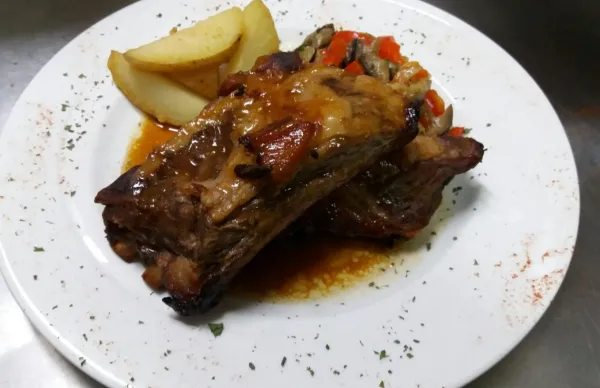
The kitchen of Pozo de Alcón sinks its roots in the old fires that for generations have seen the preparation of daily sustenance. Among those dishes we remember:

  • "Hachapecho," also called a pharinera, with which the gluers were fed (workers who had as their trade the extraction of fish by combustion of pine wood). It consists of this dish in a "labrao garlic" made from olive oil and salt, to which some strips of cod were added.
  • "Rice with beans," Pintas beans that eat next to the caldy rice and that are usually accompanied by rabbit meat, symbol in the times behind the pocense Christmas.
  • "Bread crumbs." For the Romeria de San Gregorio, the Pocenses prepare the traditional "crumbs" accompanied by torreznos, chorizo, olives and some fruit.
  • "Arroches with meat," which are made in the Romeria of San Gregorio, next to the swamp of La Bolera.
  • "meat fries," also on the day of the rosemary in the fantastic surroundings of the La Bolera swamp. All this accompanied by the good wine of the earth.
  • Chickpeas with acelgas, is a dish that along with that of "fried cod ', are used preferably in Easter, it is a very deep-rooted custom in these southern lands.
  • "Spicy gazhas," made of fried or scabbering bakers, or the cakes with which the Carnival was celebrated and entered in time of abstinence.

In pastry shops:

  • Fruits of frying pan, typical of Easter, among which we can count the "fried rosses" and "Pens."

History

The first written reference of this locality dates from 1331, in which reference is made a "Pozuelo," between the limits of the term Cazorla, but without any population. After the completion of the Reconquest, a colonization of the area known as "El Pozo de Campo Cuenca."

In 1529, it was rotated by its inhabitants, who will begin to make their ground, which meant that the population was increasing, and in 1618 it already had the Hermitage of Santa Ana and the Church of the Incarnation.

The day 12 July 1648The king. Felipe IV separated the place of the well from the village of Quesada, passing to be a real and independent villaTo get it, several neighbors had to pay 5,000 ducats.

In achieving independence the municipality experienced a progressive increase in population, and already the mid-18th century had 2,227 inhabitants, a parish, two hermitage, a posite and a hospital.

In the town, wheat, barley, rye, oil, wine, cumin and anis are produced.

The main occupations of the neighbours included the "rivals," which consisted of going from village to village, with the goods on donkeys, to sell what they could.

In this municipality

22

Accommodations

21

Restaurants

9

Services

5

Events

We recommend