Tourist Office



Municipality located to the northwest of the province of Jaén, in the region of the Jienese countryside. It's the most western urban core of the province, limiting to the west with villages of Córdoba.
Geographically it is characterized by a soft orography, typical of the olive countryside. Its economy is based on agriculture, being the cultivation of olive trees the most prominent, although there are others like cotton, sunflower, sugar beet, corn... that are sown in the vegas of the Salado stream. There are still some reductions of white grape and cereal vineyard, which were important at the time. It has a long wine tradition, but at present there are very few hectares of wine planted.
Its economy is complemented by the wood furniture industry, the service sector and construction, among other activities.
The river Guadalquivir crosses the municipal term in the north and its tributary Salado stream that runs from north to south with low flow rate.
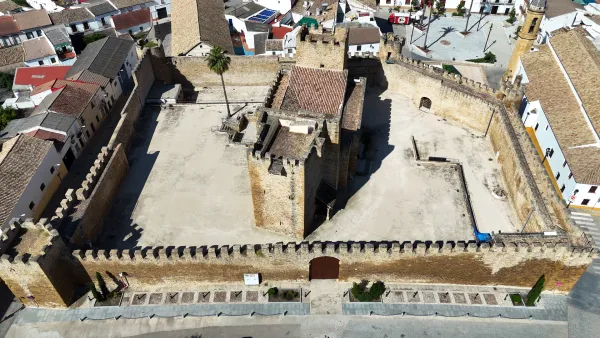
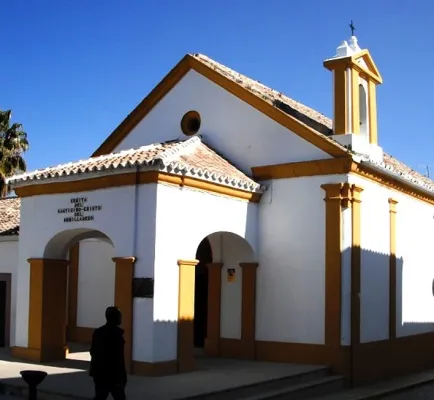
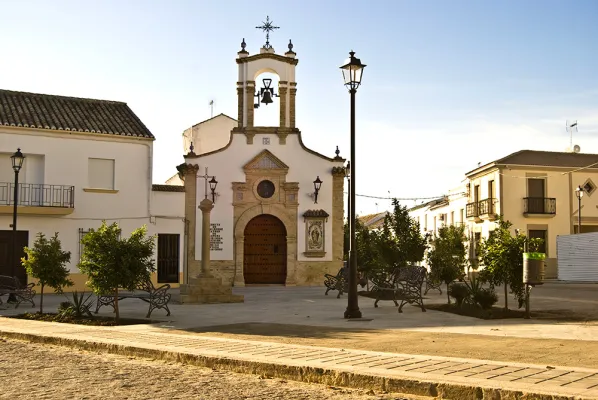
Among its rich heritage is the Castle of Lopera, the parish church of the Immaculate Conception, the Casa de la Tercia, the City Hall and the hermites of Jesus El Nazarene, the Humilladero Christ and San Roque.


Is part of


Of the ancient artisan trades in Lopera, only two activities related to the ebanistía have been maintained to this day: the silery and the tortería. In both cases work is done following a classic Spanish line, of Renaissance air and close to the furniture that characterized Granada in the first half of the 20th century. Among the different wood used are those of beech and chestnut.
Other craft works, carried out today only by hobby, are reluctant to disappear. This is the case of the "guarines," made with olive pods, which were used to transport water pitchers or agricultural utensils to the loins of the beasts; or the anea works, especially those made for the "asses" of the traditional chairs.
In the Plaza Mayor of Lopera we find the three factual powers: the military power, represented by the castle-fortress of the Order of Calatrava; the religious power, represented by the Church of the Immaculate Conception and the civil power, represented by the City Council.
Lopera, located in the area called the lower countryside and the Andújar valley, is the westernmost core of the Jienian municipalities. The Guadalquivir River crosses its municipal border on the north side, while the Salado stream, tributary to the east, serpents from south to north, forming fertile vegas.
The orography is soft, with wavy hills, the typical olive countryside, which has other irrigation crops located in the lower vegas of the Salado stream, such as cotton, sunflower, corn or sugar beet.
The vegetation, with a clear predominance of the olive tree, presents next to the channels of the rivers what we call the gallery forest: willows, strawberries, tarais, mimberas, white chopos and black alms.
The fauna is composed, among others, by Rape: a brine eagle, black millano, close it; carnivores: fox, rabbit, hare, weasel, chickpea, gineta, badger; reptiles: the lizard, snakes, and the fauna own of the riverside forests: the imperial garza, the martinete, or the aquilucho lagoon.
Lopera, due to its soft orography, is an ideal place to travel in direct contact with nature. Among the areas of the area we highlight the New Pilar site.
A short mile from the village of Lopera, along the way of the Spinillas, is the location of the New Pilar, true environmental lung of this area. The site has a pilar-abrevadero dating from 1875, and a meadow populated with trees and chaired by the hermitage of the farmers' pattern, San Isidro Labrador. No doubt an ideal place to spend a day in the field.
Throughout the year, many and many different parties are held in Lopera.
The gastronomy of Lopera follows the common denominator of the villages of the region, uses virgin olive oil on all its dishes, in addition to the products obtained on its land, whether they are vegetables, fruits or game meat.
Among its most traditional dishes, we highlight:
From the pastry shop a dish with much roots in Lopera:
The first data go back to the Bronze Age by the remains found in some cortijos. From the Iberian era there are several deposits in the municipal term, the Cerro de San Cristóbal one of the most important of Alta Andalucía.
There are remains of the Roman era in various areas of the municipality. His name was "Polesi." Many of the Roman settlements remained occupied in the Visigodic era. The most studied site is that of the Roman-Visigoda city of the "Morrones" which had a Visigoda basilica.
The current population core would probably emerge around the X and XI centuries in a small house that gradually consolidated the population. In 1240, Fernando III the Holy, conquered Lopera to the Muslims and from then until the 16th century it was under the jurisdiction of the Order of Calatrava.
Philip II decides in 1559, declare it villa that was materialized by the payment that the neighbors made to the coffers of the Royal Hacienda.
As early as the 19th century, with the decriminalization of the Church's property, the bourgeois people increased their heritage. It is worth noting the purchase of the Castle by a deputy and mayor of Lopera.
It has been a great wine center, reaching ten wineries. At present there is only one left.
The Spanish Civil War was held in the municipality from 27 to 29 December 1936. Battle of Loperabetween the Nationals and the XIV International Brigade. The result of this historic event, there are now two important nests of machine guns popularly known as "trenches".
It has a Museum dedicated to the civil war in the tower of San Miguel, and there is also a monument to the International Brigadists in the Old Pilar.
The town commemorates the confrontation on the third weekend of April, in which a "living museum" in the courtyard of the castle, a military passageway through the village and closes the day with a time dance in the town square.
Discover Lopera through Miguel Hernández: visit the space dedicated to the poet and take the opportunity to learn more about the epic Battle of Lopera, one of the most important confrontations of the Civil War in Andalusia, knowledge of which would go on to profoundly influence the poet's work.
1
1
5