Saltar al contenido principal

Espelúy

MUNICIPIOS
  • espeluy
  • 137adff0-56f2-784c-8d39-aebc48242024?t=1609852902033
  • 666c2ab3-16e7-8f09-5053-9fe5b6f26997?t=1610991093584
  • 68c60a8f-4b35-e7de-3e82-59e2cb3dd7a9?t=1610991131762
  • 1241818d-83c3-14dc-abaf-8bfbfa8bb72b?t=1610991195674
  • espeluy
  • 137adff0-56f2-784c-8d39-aebc48242024?t=1609852902033
  • 666c2ab3-16e7-8f09-5053-9fe5b6f26997?t=1610991093584
  • 68c60a8f-4b35-e7de-3e82-59e2cb3dd7a9?t=1610991131762
  • 1241818d-83c3-14dc-abaf-8bfbfa8bb72b?t=1610991195674

Description

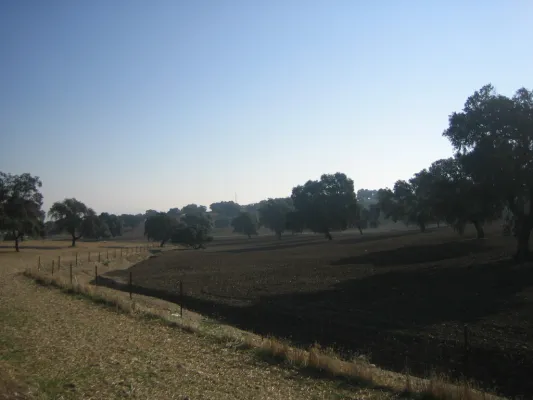
Espelúy is a small municipality in the Campiña region, occupying its central-western part, on the banks of the Guadalquivir river. It lies right in the heart of the Jaén countryside, at an altitude of 282 m and with a population of 619. Its population is spread across three settlements: the town itself, La Estación de Espeluy, and the Poblado del IARA. With flat terrain and clearly shaped by the Guadalquivir, almost the entire territory consists of irrigated farmland, with olive groves (irrigated), market gardens and cereals as the main crops. The Guadalquivir river winds slowly and quietly through striking meanders, its gallery woodlands seeming to trace a vivid band of colour across the landscape. Besides sustaining the crops, this waterway also enriches the town's vegetation and wildlife. Alongside the abundant olive trees, there are also fruit trees, an area of holm oak woodland, and the characteristic vegetation of gallery forests: ash, willow, birch, poplar, black poplar and more. Its castle, of Arab origin, belonged to the Order of Santiago and was declared a Historic-Artistic Monument in 1985. Only fragments of its walls, a cistern and a few rooms survive. The parish church was built in 1954 on the site of an old oratory dedicated to Santa Catalina.

Tourist Office

HOW TO GET THERE

Useful Information

Tourist area: Sierra Morena/Sierras de Andújar and Despeñaperros 

Distance to the provincial capital (km): 35 

Altitude above sea level (m): 283 

Area (km²): 26 

Population: 805 

Demonym: Espeluseños 

Postcode: 23628

AUDIOVISUAL CONTENT

MORE INFORMATION

Culture

  • Castle, built during the Caliphate period, played a key strategic role in controlling the Guadalquivir and Guadalimar rivers. It was destroyed by King Ferdinand III in the first third of the 13th century. Once in Christian hands, it was rebuilt. Its most authentic feature is the keep, square in plan, with two superimposed rooms inside covered by barrel vaults. 
  • Hacienda del Pilar. Built in 1904 as a working farm estate, later remodelled into a private noble residence used to host visiting authorities. King Alfonso XIII stayed here during his visit to Jaén in 1916. It takes its name from the image of the Virgin under this same title placed on its façade. 
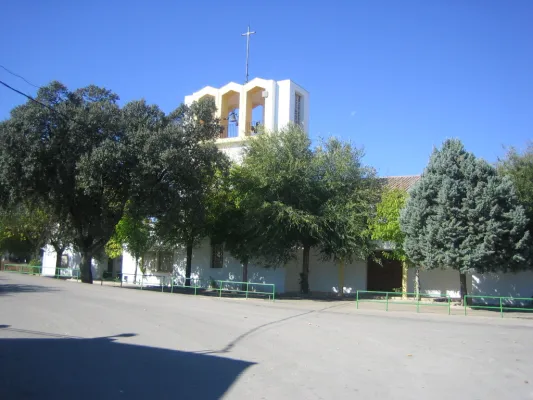
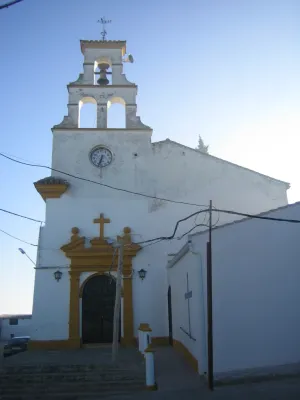
  • Church of Santa Catalina, inaugurated in 1954, a small parish church built on the site of the old Oratory of Santa Catalina, reached by a gentle flight of steps. Its façade features a simple doorway, with a broken pediment and three openings for bells.

Nature

Alongside the mammals typical of the countryside — deer, rabbits, hares, foxes — there are numerous birds of prey, including eagles, kestrels and vultures, as well as the birdlife and aquatic fauna living along the river. Reptiles are also abundant, including lizards, snakes and the false smooth snake. 

To get to know this landscape better, there is nothing better than visiting nearby spots where nature can be observed first-hand. Two areas stand out as the most distinctive in the municipal area of Espelúy: 

  • Las Aceñas, a spot just 2 km from the town, reachable by car or on foot, home to the spring that once supplied the town with water. 
  • Paraje de Santa Ana. A place home to the largest holm oak reserve in Andalusia, with close to a thousand trees. It offers wonderful panoramic views of the region.

Parties and Events

Espelúy is a vivid example of the blending of customs and traditions brought by the peoples who have passed through the town, from the Romans to the colonisation carried out in the 1960s, when people from the Sierra de Segura came to resettle these lands. 

  • Feast of San Antón, celebrated on 17 January, a deeply rooted festival of the agricultural community, in which bonfires are still lit in his honour. It was traditionally a date when the pig slaughter (matanza) took place. 
  • San José, on 19 March, the town's former patron saint. Originally, the brotherhood organising the festival was made up exclusively of railway workers, but today it welcomes anyone who wishes to join. 
  • Las Bolas de Semana Santa (Holy Week balls). Two teams of men take turns throwing metal balls from the town centre of Espelúy to the train station, about 4 km away. Meanwhile, wine is drunk, the bill for which is settled at the end by the losing team. It was a way of continuing social gatherings at a time when bars remained closed during Holy Week. 
  • San Gregorio Nacianceno. One of the oldest celebrations. Held on the first Sunday of May in honour of the town's patron saint, regarded as protector against locust plagues. This saint holds particular devotion among those who have had to emigrate and who return to their town, to their roots, on this date. 
  • The May Crosses are celebrated on the second Sunday of May, with locals taking great care in decorating them. 
  • Feast of San Miguel. A festival celebrated by the settlers who came from the Sierra de Segura. Along with their traditions and cuisine, they also brought their patron saint, San Miguel, and "the game of bolos" (a traditional bowling game), which locals now also play with great skill and mastery. 
  • Santa Catalina. Celebrated on 25 November, organised by a women-only brotherhood, whose members attend a banquet that day without their partners, leaving the husbands free for the entire day to celebrate the festival on their own.

Gastronomy

In the summer of 1965, as part of the Plan Jaén, the population of Espelúy grew with settlers arriving from the Sierra de Segura. This is why two culinary traditions coexist in the town: "mountain cuisine" and "Campiña cuisine". The most notable dishes are: 

  • Pipirrana, which here refers to the gazpacho-style dish prepared locally — despite its name, it is closer to a "salmorejo". 
  • Dried broad bean stew with aubergines, a culinary memory linked to a local hermit tradition. 
  • "Espárragos trigueros esparragados" (wild asparagus in asparagus sauce) — a somewhat redundant name referring to the sauce it is served with. 
  • Bread migas with melon. As the autumn chill sets in, the last melons of the season are put to good use. 
  • Chickpea stew with bread rolls (typical of Holy Week). Here it is made by adding wild thistles, or failing that, spinach, to the chickpeas and salt cod. 
  • "Canto de pan con aceite" (a heel of bread with oil) is something the people of Espelúy carry in their bag during the olive harvest, usually accompanied by a piece of bacon, salt cod or some other simple addition. 
  • Lamb stewed with peppers. 

Some dishes from "mountain cuisine" have also taken root here, such as: 

  • "Gazpacho de segadores" (harvesters' gazpacho), cucumber and onion swimming in plenty of water seasoned with oil, vinegar and salt. 
  • "Ajopringue", typical of pig slaughter days. 
  • Pulenta, an egg-and-flour soup, a remnant of imperial Roman cuisine. 
  • Others: "Ajoatao", "snails stewed with potatoes" and "arroz cortijero" (farmhouse-style rice). 

Among the pastries, the following stand out: 

  • "Bienmesabe" (typical of Holy Week), made with a base of biscuits soaked in syrup. 
  • Others: fried milk custard, milk-based roscos and pestiños.

History

Espelúy has an important prehistoric legacy. Among its numerous settlements, Las Tiesas stands out, a settlement from the 3rd millennium BC, with remains of circular huts and slag, clear evidence of metalworking activity. Another prehistoric settlement is that of Cerro de la Plaza de Armas de Sevilleja, later than the previous one, where houses were already built on terraces. 

The first time Espelúy is mentioned in a historical document was in the 13th century, listed as one of the castles attacked by King Ferdinand III in 1224, which later became part of the estate of the Order of Calatrava. 

In 1321, it was granted as a lordship to Díaz Sánchez de Biedma, lord of Estivel and Jabalquinto, during whose time the castle was built. The family would later change its name to Benavides, to whom the county of Santisteban del Puerto was granted. 

Throughout the 15th century, the settlement became established, as evidenced by the construction of a parish church. At the end of that century, Santa Teresa was cared for at Espelúy Castle following an accident while crossing the Guadalquivir, as she recounts in her Book of the Foundations. 

By the mid-19th century, Espelúy already had 722 inhabitants, although it still had the appearance of a hamlet, with houses scattered without forming proper streets. 

Between 1880 and 1885, the railway connection with Jaén was built, leading to a significant population increase. A settlement grew up around the station, which today is larger than the old town centre.

In this municipality

3

Events

We recommend