

Description
The archaeological set of Catulo and its monographic museum in Linares are the ideal sites to know the cultural diversity of Andalusia. The Ibero-Roman city is located on the right bank of the Guadalimar River, it is one of the capital centers of the peninsular noon during the antiquity, both for the extension of its walled enclosure (70 hectares), and for its strategic position in the Alto Guadalquivir and its mining holdings of silver, lead and copper. The "oppidum"- or fortified city - of Cattulo, first, was the most important nucleus of the population of the Iberian Oretania and, later, was formed as a Roman municipality, becoming episcopal headquarters in the lower-imperial era.
The Archaeological Set of Catulo and its monographic museum in Linares are the ideal sites to know the cultural diversity of Andalusia. The Ibero-Roman city is located on the right bank of the Guadalimar River, it is one of the capital centers of the peninsular noon during the antiquity, both for the extension of its walled enclosure (70 hectares), and for its strategic position in the Alto Guadalquivir and its mining holdings of silver, lead and copper. The "oppidum"- or fortified city - of Cattulo, first, was the most important nucleus of the population of the Iberian Oretania and, later, was formed as a Roman municipality, becoming episcopal headquarters in the lower-imperial era.
Catulus, Ibero-Roman city
The archaeological area of Catulo comprises a vast surface where multiple evidence is overlapping which are expression of other forms of occupation. There are necropolis, factories, public infrastructure and other suburban facilities related to the Ibero-Roman city, but also other settlements from Prehistory to the low Middle Ages, which complete the historical value of this archaeological area. This complex stratigraphic and temporal sequence, which has reached our time in exceptional conditions of conservation and integrity, is a significant segment of the entire history of Andalusia.
The tour begins with the reception center, where the visitor will find all the keys to understand the historical development of the site. In the walls you can make a stop in the highest part of the city and visit the Gate of the Lions of the Republican period, where the famous León de Catulo, the best preserved of the entire Iberian peninsula, was discovered. In the central area of the plateau do not forget to make a tour of the different archaeological areas and to contemplate the spectacular "Mosaic of the Amores," considered one of the ten greatest discoveries of 2012 by the magazine National Geographic. Also in the same area you can see an important religious building within which the "Patena de Cristo" was discovered, a fourth-century glass dish with one of the best preserved images of Christ which is currently exposed in the Museum of Linares. At the most eastern end of the settlement, you can see the Castle of Santa Eufemia, a fortification that dates from the Arab period and is also part of the cultural itinerary Route of the Castles and the Battle.
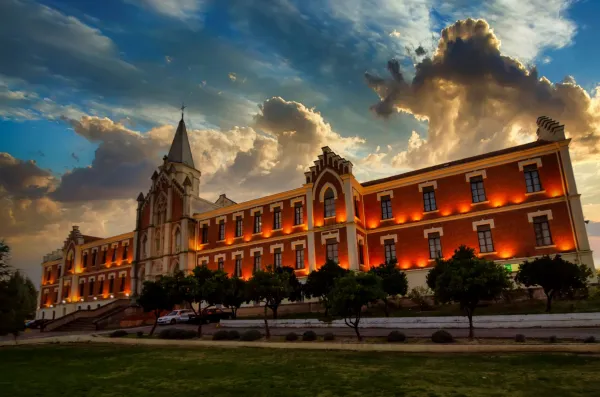
Archaeological Museum
This museum cannot be understood in its integrity without reference to the Archaeological Set of Cattulo, as they are intimately related. In fact, an important impetus in the development of the Museum occurs when the expropriation of the lands of the former Cattulo is carried out, a process that began in 1968 and concluded in 1972, thus facilitating the research work that has been carried out in these areas since 1958 and from where the most important and numerous part of the collection comes from.
The tour is arranged on several floors, a covered courtyard and the basement. Its rooms treasure the most important findings of Catulus, including the Ibero-Roman Lion dating back to the 1st century BC and the Patena of Christ dating back to the 4th century AD.
Is part of