Tourist Office
Punto de información en Torredelcampo Jaén
Patronato de Cultura, Quinto Centenario, s/n
Teléfono 953 568 649



Torredelcampo is a municipality that is located located 11 km. to the northwest of the capital of province. Posee a characteristic landscape in which they contrast the smooth and moist forms of the countryside with the abrupt and accidental reliefs of the saw. It has an extension of 182 km2, with an average altitude of 640 m. over the sea level and presents the typical landscape of the countryside, splashed with the typical Andalusian cortijos.
Its strategic geographical location, on the edge of the A-316 motorwaywhich connects Jaén, Córdoba, Madrid and Granada, gives it a decisive role in economic and social development of the region. In primary sector, the cultivation of the olive tree stands out, being among the first ten municipalities of the province in the production of oil olive. The 90% of surface of the municipality is cultivated.
The polygon of "The Llanos" welcomes important industries of computer technology, clothing, mechanics, wood, upholstery, ferralla... The construction sector is the one that gives occupation to many torrecampeños who move daily to Jaén to work.
The Services sector, trade, bars, restaurants, transport, education, health... reach to 47 per cent of the occupied population.
Many families in the municipality have spent years in the holiday sector. Tradition that has passed from parents to children. The town is characterized because much of the population is dedicated to this trade
From an agricultural point of view, olive crops are an important income injection for family economies.
Torredelfield now has extraordinary prospects for further progress in the future.
It has two pedanias: Garciez and Megatín.
In his monumental heritage We have to highlight: Parish de San Bartolomé, Ermita de Santa Ana, Castillo del Berrueco, Torre de la Muña, Torre Forgotten and the Torre de la Aldehuela.

Is part of


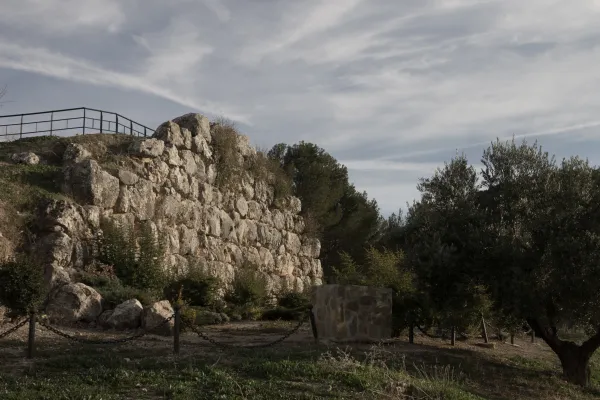
The municipality of Torredelcampo has an ancient architectural heritage, highlighting the following enclaves, which belong to the Archaeological route of the Torreones (bike route).
The flora of the term is dominated by olive, located in a large percentage of the land of the municipality. It also exists indigenous vegetation of the Mediterranean forest in the mountain areas, where we see species such as: the oak, coscoja, white jara, cornicabra, complaining and abundant number of aromatic plants such as lavender, rosemary or thyme.
The fauna is mostly made up of animals of medium or small size. The large vertebrate fauna associated with forests and bushes is currently very little due to the agricultural transformation and persecution of many species. The great Iberian mammals: the bear, the wolf and the lince... disappeared. Other species of great natural value such as the royal eagle or the royal owl They still have some couples.
In addition to invertebrates, small fauna is particularly interesting. Insectivorous birdsthe ecological role they play. Birds like look at it, the zorzal, the red petrored, the curled... play a very important role in insect control to avoid possible harmful pests.
For nature lovers, Torredelfield offers various natural resources to make routes, tour theGreen Oil Way or close to the natural space of the Bañizuela, offers unparalleled views of the landscape of the countryside and the surrounding mountains.
Green Oil Way. It is presented as a new and attractive offer of interior tourism based on the use and recovery of the old Jaén - Campo Real (Córdoba) railway as a green corridor, ideal for the practice of cycling, hiking and other sports in contact with nature. Built between 1882 and 1893, this railway belongs to the line Linar- Puente Genil, and was dedicated for much of the 20th century to the transport of different metals from the mines of Liares and especially from the abundant olive oil produced in the region. It was finally closed in 1985, to passengers and goods. It was commonly called "Oil Train." The tour begins in the sports "Las Fuentezuelas" of the jienese capital, continues by Torredelcampo, Torredonjimeno, Martos and concludes the jienese part of the Green Route, on the great iron bridge over the Guadaljoz River, right in the tail of the Vadomojón swamp, in the municipal term of Alcaudete.
Another reason to stop at Torredelfield are their multiple and colorful parties:
Other celebrations include:
The Torredelfield cuisine has top quality ingredients: virgin olive oil, orchard products and game meat (gamo, corzo, hare, perdiz, rabbit...), among the most traditional:
Pipirrana:tomato, green pepper, onion, garlic, canned tuna and hard egg. Add extra virgin olive oil and salt produced and produced in the local
In pastry: mantecados, pestiños, almond sweets, bread rosches, with and without wine, pebbles, biscuits, canutilos, mazapans, alfajores, ajonjolí...
The first signs of human occupation on torrecampeña lands go back to Calcolytic, according to the findings found in deposits near the municipality.
Although the most important date from the Iberian periodin particular the Cerro Villarfato (Cerro del Pintado), being a network of fortified settlements called "oppidum."
During Roman occupation the Iberian population scheme, with an abundant number of agricultural centressome of them considered villae, like the one in La Muña, Forgotten Tower, Cerro de San Anton, La Divina. The set would be complemented by towers or defensive settlements (Turres) from which one example is preserved in the New Cortijo.
The origin of the present municipality would be very related to the former inhabitants of the Iberian oppidum of Cerro Miguelico. A settlement that, after a deep crisis, is abandoned in the first and second centuries of the century, moving the population to the north-west slope and to the current Torredelcampo site, establishing small settlements aimed at the agricultural exploitation of the irrigated area (gardens).
This situation continues until the final settlement of Muslims in the eighth century. During the Omeya Caliphate (10th century) the current term is attached to two of the main fiscal districts, the Aqalim de Martus (Martos) and Yayyan (Jaén).
This small village, along with others, is consolidated and fortified during the Almohade period, due to the proximity of the border with the Christian territories.
After the conquest by Fernando III "el Santo," is integrated into the realingo territories under the jurisdiction of Jaén.
Once the border with the kingdom of Granada has been disconnected, at the end of the 15th century, some municipalities begin the procedures to segregate themselves from the domain of the great councils.
It will be the case of Torredelcamp, which is bound by the Chancellery of the Catholic Kings to remain under the jurisdiction of Jaén.
The segregation disputes would continue until the 10 June 1804, date on which it is finally segregated, obtaining the title of Villa by Charles IV.
2
9
6
5