Saltar al contenido principal

Santiago Pontones

MUNICIPIOS
  • Santiago Pontones
  • dce75f72-d400-a9e8-f11a-b25ce9edbe11?t=1621443948721
  • ddbd58bb-7d83-95a4-8853-e41b290e6efd?t=1621443948783
  • 4c5ef463-4e6e-a954-74aa-d355b98b6a93?t=1621443948834
  • faca425a-e62b-46a2-ed26-d017c6fd5c84?t=1621443948890
  • c9e175cd-4b5f-c8e3-050f-51a57a8ce18a?t=1621443948945
  • de18043b-f741-c890-7b35-dc081accb77d?t=1621443948992
  • 78ddc946-a1c4-cf99-b9ae-1c680b4772c8?t=1621443949154
  • 7f97a099-c6bb-bc6e-8d93-1c5c5d48b088?t=1621443949283
  • 5aae6190-0f83-fd6a-5298-77b81bb658cf?t=1621443949420
  • 33ab0f60-a38d-154a-2fba-409e20fe1188?t=1621443949679
  • cazorla-cabras-jpg
  • Santiago Pontones
  • dce75f72-d400-a9e8-f11a-b25ce9edbe11?t=1621443948721
  • ddbd58bb-7d83-95a4-8853-e41b290e6efd?t=1621443948783
  • 4c5ef463-4e6e-a954-74aa-d355b98b6a93?t=1621443948834
  • faca425a-e62b-46a2-ed26-d017c6fd5c84?t=1621443948890
  • c9e175cd-4b5f-c8e3-050f-51a57a8ce18a?t=1621443948945
  • de18043b-f741-c890-7b35-dc081accb77d?t=1621443948992
  • 78ddc946-a1c4-cf99-b9ae-1c680b4772c8?t=1621443949154
  • 7f97a099-c6bb-bc6e-8d93-1c5c5d48b088?t=1621443949283
  • 5aae6190-0f83-fd6a-5298-77b81bb658cf?t=1621443949420
  • 33ab0f60-a38d-154a-2fba-409e20fe1188?t=1621443949679
  • cazorla-cabras-jpg

Description

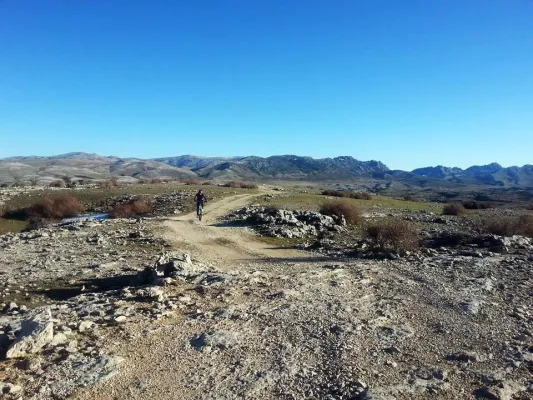
Municipality formed by the localities of Santiago de la Espada and Pontones, based in Santiago de la Espada which is where the institutions are located. Until 1975 they were independent municipalities. In addition to these localities, there are 27 other population centres. Located north-east of the province of Jaén, it belongs to the region of Sierra de Segura. By extension is the largest municipality of the Natural Park of the Sierras de Cazorla, Segura and Las Villas and the second of the province. It symbolizes the deep saw, with spectacular ravines, beautiful valleys and arrogant summits, which offer idyllic landscapes. The Segura River is born in the area of Fuente Segura.

For the climate and the orography only 3% is cultivated land, dedicated to the cultivation of herbaceans. Its climatology is the coldest in the province. The economic activities are the livestock, mainly the cattle (it has several cattle cattle), the forestry, the inland tourism, hunting and fishing.

From the Architectural Heritage we highlight the Church of Santiago Apostol, the urban helmets of Santiago, Pontón Alto and Pontón Bajo and other monuments located in some of the population centres that are part of the City Council.

Tourist Office

https://mosaicoinfinito.es/
Oficina de Información Turística: Avda. de Andalucía s/n –Santiago de la Espada
Oficina de Información Turística: Las Juntas, s/n  -Las Juntas de Miller
CENTROS DE INTERPRETACIÓN Centro de Visitantes Torre del Vinagre 
Ctra. del Tranco A-319 km 48

Useful Information

Tourist area: Serras de Cazorla, Segura and the Villas
Distance to the capital (km): 218
Altitude over sea level (m): 1340
Extension (km ²): 683
Number of inhabitants: 2,956
Gentillo: Santiagueños or Pontoneros
Postal code: 23290

Is part of

AUDIOVISUAL CONTENT

MORE INFORMATION

Culture

  • Church of James the Apostle: Built on an ancient hermitage in the 16th century with influences of the last Levine Gothic. It is a single ship divided by four arches, covered by a pair of armor in a row of Mudejar tradition, sustained by a half-point diaphragm arches. It reproduces the scheme of the early churches of the final Gothic, with Baroque altards and a wide wooden choir with curious craftsmen and a banner. The major Retail is from the 18th century and is the most valuable artistic element of the temple. On the outside stands the square-floor tower, which in 1763 was necessary to rebuild.
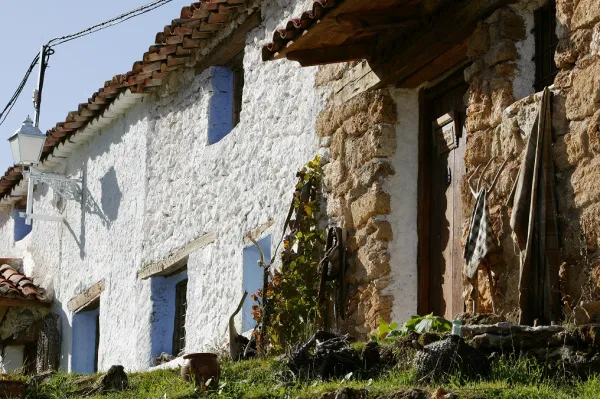
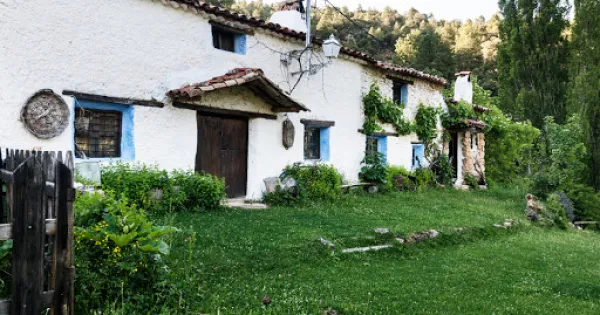
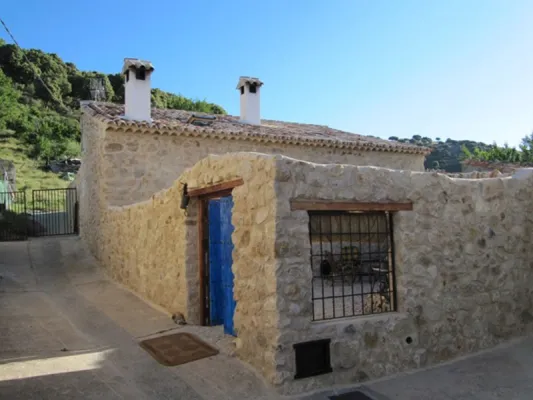
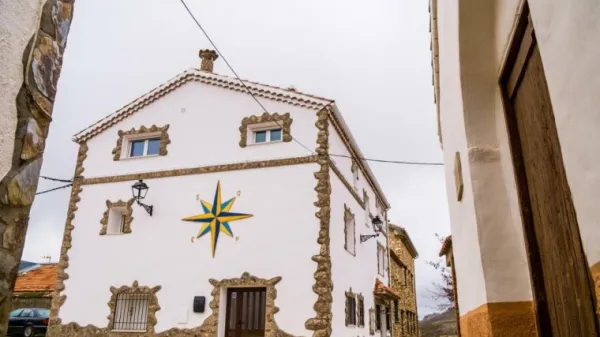
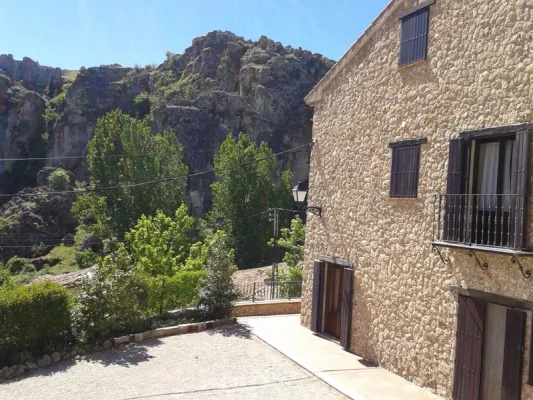
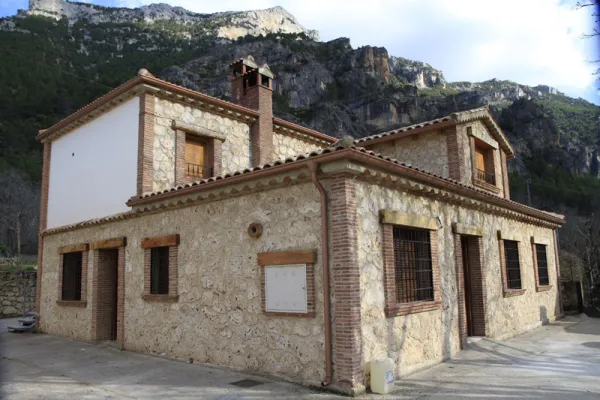
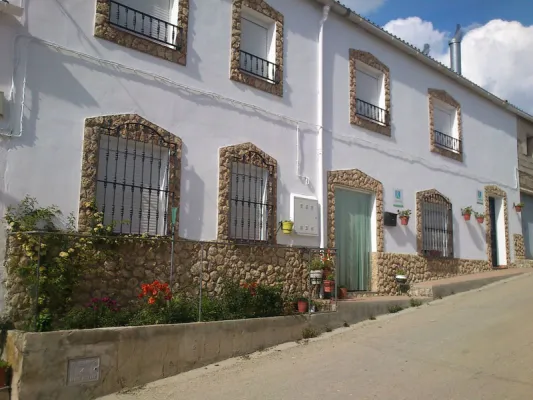
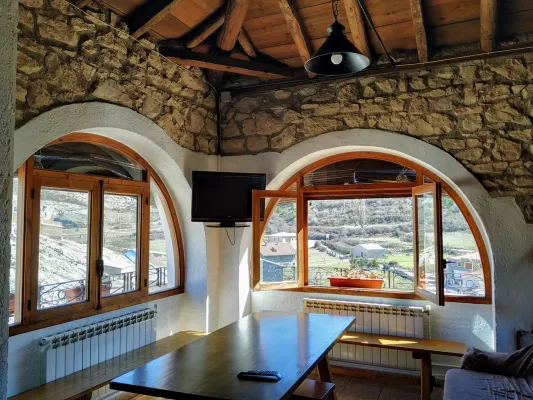
  • Urban helmets of Santiago, Pontón Alto and Pontón Bajo. The urban helmets of these nuclei are made up of streets that remember the morphology of medieval urbanism, in which regular and geometric planning is not followed, but is built according to needs. This gives rise to narrow and irregular streets with typical serrana houses: stone facades, farmed and encased, with small gaps, outstanding tiles to fire water and snow and thin chimneys.
  • Church of Our Lady of the Rosary. Located in Pontones, it has been built in the late 19th century. It is small, with a single rectangular ship and a simple facade with a stone cover, in harmony with the type of architecture surrounding it.
  • The Brush: Old inn of the 16th century. You can see a wooden balconade, a sample of the vernacular architecture, whose zapatas and balastres are well protected by the wide aldero of the roof.
  • Miller's Fort House, topped with thin aspilleras from the 13th to the 16th centuries, which could be a defensive bastion in front of the Alphavars and which was rehabilitated in the 19th century, during the Carlist wars.

It also has five declared property of Cultural Interest: The Castles of Matea and Gorgollitas, the coats ofCold River, No. Cañada de la Cruz y del Engarbothe latter, in addition World Heritage.

Nature

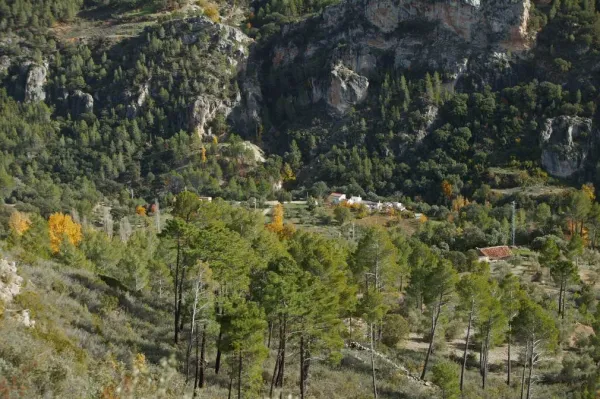
Innailed in the Sierra de Segura, the municipality of Santiagos- Pontones, has an average altitude of 1,340 m., with a surface of 684 km ² that makes it the second municipality in extension of the province after Andújar.

Su orography which prevents its usefulness as a land of cultivation, differs with the rest of the municipalities of the province, occupying the olive tree an almost nil extension.

By the altitude it has a mountain climate, being much colder than the rest of the municipalities at all times of the year and one of the few where snow is not an extraordinary event.

Santiagos- Pontoons, fully included in the Natural Park of Cazorla, Segura and Las Villas, one of the most valuable forest areas in Spain, both for its density and variety of species.

The area of high mountain is populated by salgarean or larice pine, sabinas, maples, acebos and thorns; in the valley of Guadalquivir welcomes the engraving in addition to the black pine and in the intermediate area The dense pine trees and pastures abound. Next to the rivers and banks of the swamps develop the gallery forests: chopos, birches, willows... that put a color note in the landscape with the passage of the seasons, especially during the fall.

The fauna It is also very varied, in forests are often observed large mammals like the boar, and the muflon, and the deer, and the shrimp, and the goat, small mammals like the liron, the otter, the jineta and the common squirrel. Among the reptiles is the Valverde lizard, endemic to the area, and among the fish is the common trout.

However, the birds are the majority, for which the municipality was declared a Special Protection of Birds Zone (ZEPA). Here we can see large-scale raptures: leonate vulture, rattlers, pilgrim hawk, eagles of different species, and even broken bones.

It is also easy to see another type of smaller birds like the blue climber, common gateer, carbonero tick, piquituerto, verderon, pinzón, zorzal, picapinos..., and close to the rivers and reservoirs, the aquatic myrtle, the watershed or the bastard nightingale.

The numerous natural enclaves that are scattered by the municipal term are the best spaces that offer us the best information to appreciate the landscape, the morphology of the land, as well as the fauna and flora of this municipality. These include:

  • Pico Banderillas. A summit of almost 2,000 m (1,993 m.) altitude from which we can see beautiful panoramic views of the Natural Park of Cazorla, Segura and Las Villas.
  • The birth of the Segura. Inside the peculiar calcareous crest of Sierra de Segura, at 1,410 m of altitude, a crystalline water spring known as the Birth of the Segura River. Along its northwestern route it goes to the Mediterranean and collects the waters of the Wood, Zumeta and Tu rivers.In its surroundings there is a recreational area surrounded by a gallery forest. It's 22 km away. to the west of Santiago de la Sword.
  • Pino Galapan. It is an impressive natural monument, a 40 m tall larix pine and over four centuries old and four adults are needed to be able to surround its trunk with extended arms.
  • I jump from the organs. Next to the birth of the Borosa River, the Los Organos power plant presents a beautiful landscape that contains all the typical elements of the Natural Park. It highlights the geological environment, made up of calcareous formations of unusual forms that cause grotto and caves of great beauty.

Parties and Events

The traditional parties are very numerous in this municipality, because most of the population centers celebrate their own popular parties.

During these many and varied activities are carried out, such as the Romeria in honor of the pattern of each of the localities, the champions of the serrano bowling, popular verbenas, horse racing, children's games.... In Santiago de la Espada, Pontones and La Matea, there are also the popular bulls of braves, which are brought from the field to the square and which are tasted in the afternoon.

22 May Santiago de la Espada the Romeria of Santa Quiteria. The tradition of eating "hornazo" on that day has continued since the 16th century.
In mid-June, parties are held in the village of The Cerezo in honour of the Sacred Heart and during the last days of the month, festivals of the Virgin Miracle in La Matea

In July many villages celebrate their holidays: in Miller Santa Isabel, in the Atascaderos the Virgin of Carmen, on the 25th Santiago in Coto Ríos.
It is the month of August when more parties are held: Carrasco houses in honor of San Antonio, in Pontones the Virgin of the Rosary, in Pontón Alto meeting in which the neighbors prepare crumbs. In honor of the Immaculate Conception, parties are held in La Toba, Los Teatinos and Santiago de la Sword.

During the month of September the feast in honor of the Immaculate Conception takes place in Marchena. Maybe it's the party where the most traditions are preserved. Between 15 and 17, the Santiago de la Sword Livestock Fair And we finished with the Ponton Livestock Fair on October 12.

Gastronomy

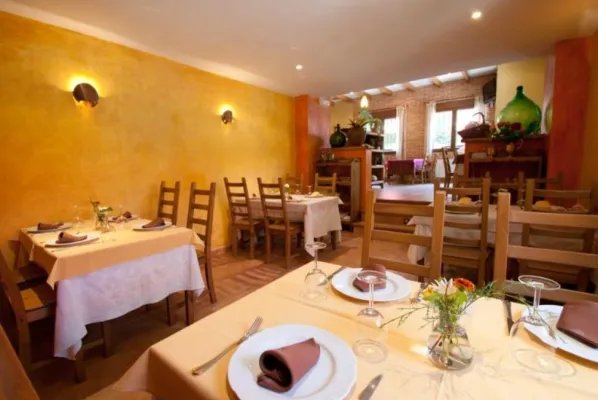
It is to the transhumanous pastors to whom the municipal term of Santiago - Pontones owes the particularity of the serrana food, made with great patience as the saying indicates: "the crumbs of the gañan at both turns are, and the crumbs of the pastor the more the better."

  • The following lamb, star product of the local gastronomy.
  • Segureño lamb dish: lamb, red pepper, onion, garlic, pepper, laurel, water, white wine olive oil, flour, black pepper, vinegar and salt.
  • The sausages: from the massacres of the past.
  • Guisote: made of pork, potatoes, onion, pepper, peppers, tomatoes, spices and very fine minced almonds.
  • Gachamita: Made of flour, potatoes, oil or a "garlic."
  • The Pontoon's "spoon": Meat with garlic, olive oil, parsley, spices, aromatic herbs and pepper. It is left to rest and made in the oven in a casserole.
  • The "dyed rabbit 'means: dish that the shepherds prepare. The skin is removed and joined with butter, wine, aromatic herbs and spices and the skin is replaced.
  • Let us quote also, The Migas, El ajoatao, El ajo pringue, Las andrajos...

Warehouse: The fried donuts, the flowers, the chandelier of egg-plated mass...

The Carrascana catfish It is made in the villages of Vites, Tobos, La Marchenica, La Muela and Miller.

History

The municipality of Santiago Pontones was born from the merger carried out by decree in 1975 between the municipalities of Santiago de la Espada and Pontones.

In the Cave of Birth in Fuente Segura (Pontones), the oldest human occupation of the province has been documented with absolute dates. A community of kinship who lived from the hunt. To this first phase of occupation is added another in the Neolithic and to a later one belongs the coat of Rio Frio, where a collective tomb has been found.

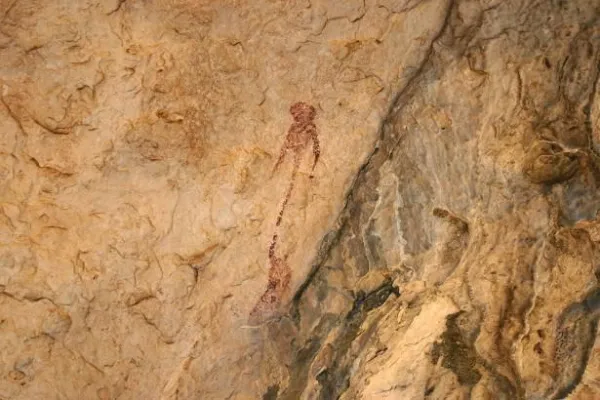
The cave paintings of the Caves of Engarbo I and II, the Abrigo de Río Frio and the coat of the Cañada de la Cruz must be highlighted. All of them are included together with all of those who make up the Rupestre Art of the Spanish Mediterranean Arc on the list of World Heritage made by UNESCO in 1998.

+ INFO

In the forty years of the last century, a great treasure of goldsmiths was found, which is supposed to be of the first century BC. It is composed of more than a hundred objects, highlights a set of gold earrings in the form of a grape cluster, of Iberian manufacture, which inserts a figure of winged woman. It should be noted that these pieces are included among the key works of Iberian art. It is preserved at the Instituto Valencia de Don Juan in Madrid.

During Muslim period the municipal term of Santiago - Pontones was populated by numerous fortifications and alqueras or small populations. In the municipal term there are traces of fortified enclosures among them the Castle of Miller, or the castle of the Gorgolillas. This area was conquered to Muslims around 1247, by the Order of Santiago becoming part of its domains.

James of the Sword was founded in 1525, with its origin being a group of pastors who came with their cattle to this place, whom they called "The Bake.". For the Endowment of Santiago was "Puebla de Santiago" which in 1570 was declared a village by King Philip II, although under the jurisdiction of Segura de la Sierra. It was later declared "Villa de Santiago" and around 1770 would be given the current name: "Santiago de la Sword".

Pontones, in the time of Philip II was a village of Segura de la Sierra called "El Pontón," reached its independence in 1837 with a municipal term of about 200 km ²., being called "Pontones de Segura." Its work, legal and economic activities were regulated by the ordinances of the Segura Common from 1580 and was later part of the Maritime province.

The entire municipal territory is included in declarations of protection and conservation of the Sierra de Segura:

  • National Court on 21 July 1960
  • Declaration by UNESCO as a Biosphere Reserve on 30 June 1983
  • Natural Park on 5 February 1986
  • Special protection of birds by the EEC in 1988

Other information

It has more than ten peaks with an altitude of more than 1.800m. With an extension of more than 700 km2 the distance between some points of the municipality exceeds 100 km.

In this municipality

62

Accommodations

17

Restaurants

2

Services

12

Events

We recommend