Tourist Office
Oficina de Turismo de Quesada
Plaza de la coronación, 5
https://admin.dipujaen.es/municipios/Quesada/turismo.html



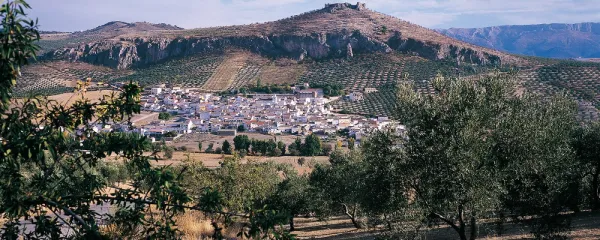
Quesada is a municipality in the Sierra de Cazorla region, south-east of the province of Jaén. The east and south of its territory are part of the Natural Park of the Sierra de Cazorla, Segura and Las Villas.
This municipality is made up of Quesada and the villages of Belerda, Don Pedro, Collejares, Los Rosales and Tícar, as well as El Cortijuelo.
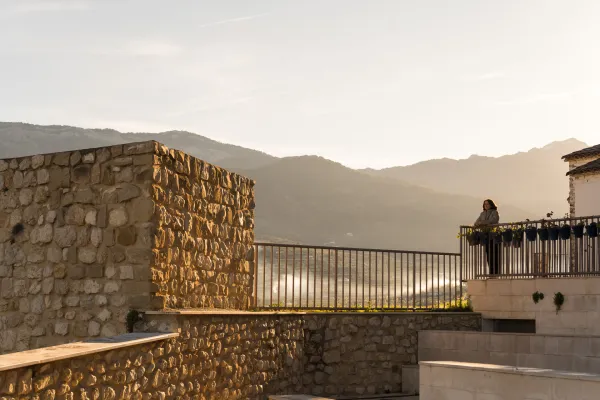
This is one of the most beautiful and historic villages in the park. Built around a hill, the streets and squares present the curved and heterogeneous physionomy of the medieval route.
In its municipal term is the birth of the Guadalquivir River, in La Cañada de las Fuentes.
In agriculture the olive grove dominates. It has an olive cooperative that is part of the designation of origin "Sierra de Cazorla." It is also very important to have sheep. The cultivation of the cereal is residual and has been replaced by the olive tree.
Its surroundings are splashed with places of environmental and heritage interest, such as the Roman villa of Bruñuel and the venerated shrine of the Virgin of Tícar.
Among its heritage is the Parish Church of San Pedro and San Pablo, the Atalaya del Infante Don Enrique, the Arc of the Saints and the rock paintings of the style of the Levine, declared World Heritage and located in the Cave of the Encashier; and finally the Museum of Rafael Zabaleta, a native painter of Quesada, and that of Miguel Hernández, whose wife was born in this town.


Is part of


From the abundant and rich historical-artistic heritage, we highlight:
Other monuments are: The Church of Purification, known as the Chica Church, built in the 17th century with Baroque-style features and the Hermitage of San Sebastián.
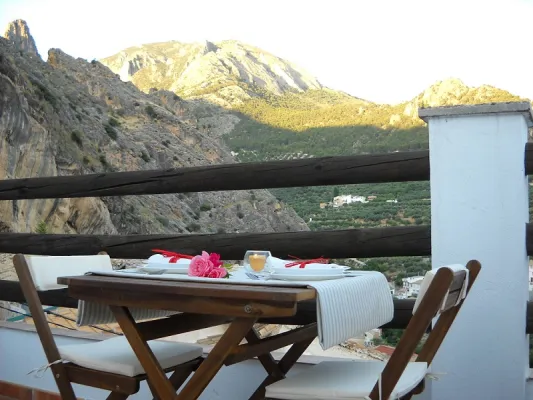
It is surrounded by mountains of considerable height, such as the Gilillo peak (1899 m.), Rayal (1884 m.), or Magdalena (1219 m.), which is located in the surroundings of the Guadiana Menor River, with streams that serate along its slopes, it is an invitation to travel one of the many paths to let us be surprised by the botanical and faunistic wealth of its territory.
Part of its municipal term is included in the Natural Park of the Serras de Cazorla, Segura and Las Villas, the largest protected space in Spain. An orographic labyrinth of valleys, calares, slices, mountains, high-rise hydrological importancebecause of the large number of rivers and streams that run by their end; botany (larix pine, carrasco pine, tejos and a wide variety of endemic species; pheasant-cynetic and landscape.
In the mountains of Quesada there are numerous coats with rock paintings including the Cave of the Encarejo, the coat of the Cerro Vitar, the cave of the ivy and the Cave Cabrera, in which in addition to the rock paintings were found ceramics and lytics that have allowed to give the first human occupation of these lands in the third millennium BC
The variety of ecosystems also makes the number of animal species living in these areas very diverse. In the higher and more steep areas the major hunting speciesand muflons, and deer, and we, and boars, Rapes and scavengers like, eagles, broken bones and lethargy vultures. And in the areas of lower height, the cynetic species of minor hunting: badges, foxes, hares, rabbits or gines. Without forgetting fauna living in crystalline waters of these rivers: Trout, barbos, otters, salamanders. No the birds who either live in olive trees, or feed on their fruits in their migratory movements: carboneros, abbullas, jilgueros, petriroreds, ratoneros...
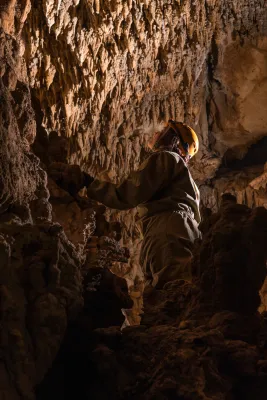
One of the places we can't stop visiting is the Water Cave. It is one of the first natural clusters of limestone formations discovered in Spain, in which the water of the Tícar River and the Roca del Monte de Caballo are combined.
He is also known by the names of the Cave of Wonders, for the spectacular waterfalls in the melting season and their stalactic formations, and Cave of the Virgin of Tícar, because according to the tradition there the Virgin appeared in 1391 to the king of Tiscar, Mohamad Abdon. Near the cave is the Sanctuary of the Virgin of Tícar.
Access to the cave is made through a tunnel about 10 meters long and 1 meter high. Inside, concerts are organized for the fantastic acoustics it has. This cave is 13 kilometres from Quesada.
In addition, Quesada has the following areas of environmental interest:
The Chorro.They highlight their impressive rocky cuts, places where it is very easy to observe how large carrion birds like the leonate vultures or the aloches fly over us.
The birth of Guadalquivir.Impressive landscape, belonging to the Natural Park of Cazorla, Segura and Las Villas, characterized by the abundance of large formations of larice pine trees associated with rake juniper.
Valley of the Tejos.It is a unique forest of tejos, among which one millenarian, with over 3,000 years of age, stands out.
The following parties are held in Quesada:
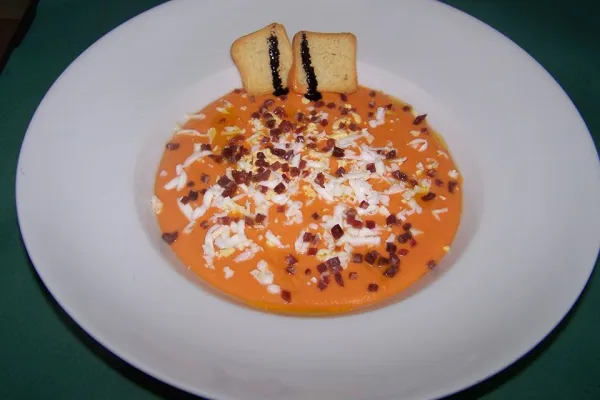
Quesada's kitchen is serrana, and therefore it is strong. Among the dishes we highlight:
The pastry shop is also important and prepare: Sweet fig bread, papajotes, florites, drunks, bathrobes.
In the quesada saw there are caves with rock paintings, ceramic and lytic remains that allow us to give the first human occupation of the area in the third millennium BC
During Bronze age, With the arrival of the first argaric populations these same caves and others, such as the village and necropolis of the "Corral de Quiñones," were again occupied.
Of his Roman past, Villa de Bruñel It's a clear example. It is made up of a Roman necropolis from the 1st to the 4th century, a third century villa, with patios, peristilos, impluvium and an interesting collection of mosaics. From the 4th century the remains of a Paleocrist basilica. In addition to this villa, others have been located, such as Voladero, Aguas Calientes, Allozar and the Rosales.
The current location of the city centre is attributed to the Visigoths, according to the many remains that appear in the town, such as the capitals that pull access to the garden.
It was in the cunado Arab era it acquired entity as a population core becoming within the ten most important populations of Jaén. In its texts it appears as Madinat, a fortress at the foot of a mountain with markets, bathrooms, inns and arrabal village. At this time, its industry of dishes and wooden vessels were sold throughout Al-Andalus and the Maghreb.
Since the first Christian conquest in 1157, by King Alfonso VI, he has changed several times from Christian to Arab and vice versa. In 1310 it was finally recovered by Fernando IV, and in 1331 it became part of the advance of Cazorla, and was later given to Ubeda by King Alfonso XI.
In the 19th century, Queen Elizabeth II granted him the title of city.
In the early years of the 20th century they visited the city, Antonio Machado and Manuel Cigues Aparicio, which based some of their works in Quesada. The painter Rafael Zabaleta was born in 1916 and Josefina Manresa, wife of Miguel Hernández, was born.
An excellent way to get to know one of the most beautiful and historic villages in this Natural Park is to follow in the footsteps of two illustrious poets: Antonio Machado and Miguel Hernández.
Quesada's connection with Antonio Machado stems from the fact that it is one of the places the poet visited during some of his frequent excursions to the source of the Guadalquivir river. You can follow in Machado's footsteps in a park where you'll find ceramic tiles bearing a fragment of one of his poems, and the same is true at the Sanctuary of the Virgen de Tíscar. Once there, be sure to visit the incomparable Cueva del Agua.
Quesada's link with Miguel Hernández, on the other hand, comes from the fact that his wife was born in the town. You can see how the people of Quesada cherish the poet's legacy through the Miguel Hernández-Josefina Manresa Museum and pay tribute to him through various corners linked to his memory.
The Zabaleta Museum
Rafael Zabaleta was born in Quesada in 1907. After studying at the Madrid School of Fine Arts he travels to Paris, where he studies the teachers of contemporary painting, such as Picasso. In 1942 he made his first individual exhibition and since then there will be many successes. He won the UNESCO Prize for the Third Latin American Biennial in 1956. In their painting, light, color, family objects, the fields of Quesada will be immortalized and hang in many museums around the world. He died in Quesada in 1960.
The Zabaleta Museum was created in 1963 with the important legacy donated by the heirs of the painter. All the works exposed are of great interest and constitute their most complete exhibition.
Museum of Miguel Hernández and Josefina Manresa
Located on the ground floor of the Zabaleta Museum, it contains much of Miguel Hernández's legacy. It offers a tour of the work and life of the poet and his wife, the quesadeña Josefina Manresa, a story of love full of passions and emotions.
Quesada Archaeological Heritage Interpretation Center, CIPAQ
The Center for the Interpretation of the Archaeological Heritage of Quesada, CIPAQ, opens its doors in September 2015 to join the extensive cultural offer of this picturesque jiennense villa, cradle of the Guadalquivir. The aim is to show the extraordinary legacy, prehistoric and Roman, which treasures Quesada. Thus, the first floor is dedicated to one of the most important sets of rock, eulin and schematic art in the province of Jaén, declared World Heritage by UNESCO in 1998. On the ground floor the theme revolves around the Roman villa of Bruñel, with an amazing group of mosaics in excellent conservation. The tour is set with the exhibition of interesting objects, recreations, audiovisual, interactive and a teaching classroom for small visitors to learn by playing. "
31
6
4
2