Saltar al contenido principal

La Guardia de Jaén

MUNICIPIOS
  • Castillo La Guardia
  • 9f2f7fe1-a2e3-2526-e4c0-a2eb7280a6c5?t=1619533436230
  • 8b59eaa2-d788-aed5-41ef-2192c85235ad?t=1619533436351
  • 14f0c086-e569-5556-8020-16841cd1ee8e?t=1619533436430
  • 9207c7d4-f324-733d-8c04-aefef5419649?t=1619533436560
  • f2cc53fd-32de-a38a-bb84-c117db911ddb?t=1619533436616
  • 2a63b17a-f270-00f3-7dee-1fc530826cce?t=1585673921591
  • 4f197d68-aa37-4f2a-a768-56d87694e115?t=1585673920649
  • Castillo La Guardia
  • 9f2f7fe1-a2e3-2526-e4c0-a2eb7280a6c5?t=1619533436230
  • 8b59eaa2-d788-aed5-41ef-2192c85235ad?t=1619533436351
  • 14f0c086-e569-5556-8020-16841cd1ee8e?t=1619533436430
  • 9207c7d4-f324-733d-8c04-aefef5419649?t=1619533436560
  • f2cc53fd-32de-a38a-bb84-c117db911ddb?t=1619533436616
  • 2a63b17a-f270-00f3-7dee-1fc530826cce?t=1585673921591
  • 4f197d68-aa37-4f2a-a768-56d87694e115?t=1585673920649

Description

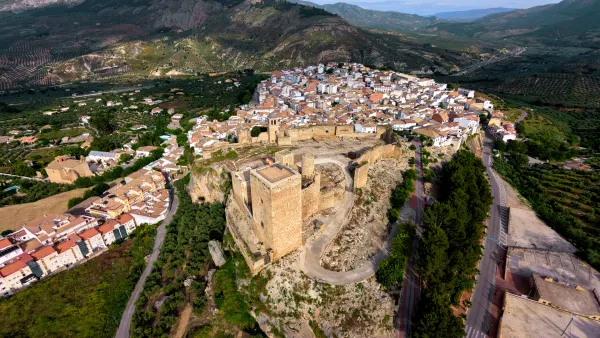
Small municipality located in the west of the Sierra Mágina region, a few kilometres from the capital. The urban core, located at the eastern end of the Cerro de San Cristóbal, looking at the Guadalbullion River, conserves the tipism of its white houses and its steep and narrow streets.

Among the natural enclaves of interest of La Guardia are the Cerro de San Cristóbal, whose summit is repopulated with pine trees, and the Vega of the Guadalbullón river itself, which continues to preserve an abundant riverside vegetation.

La Guardia offers many possibilities for walking, horse or bicycle excursions, such as the Cañada del Santo or the banks of the Guadalbullion River. Of archaeological interest are the settlements of Guadaola (period of emiral), the Roman villa of the Yuca, or the different Ibero-Roman necropolis of Las Eas de San Sebastián and Barranquillo.

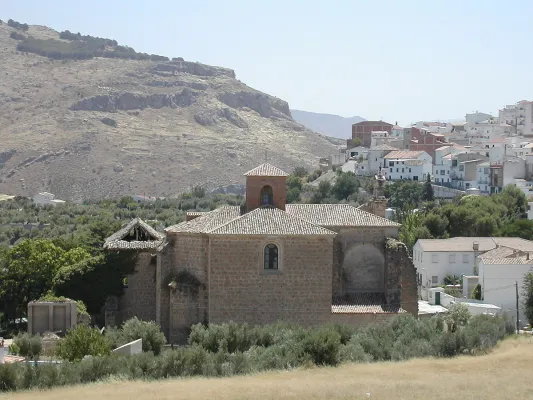
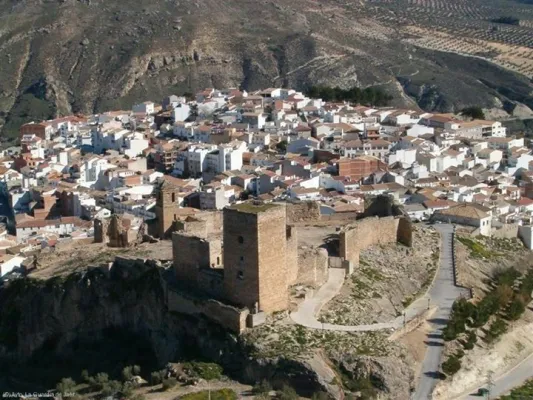
The castle, of Arab origin, which was remodeled as a palacio-citadel by the Messias in the 14th and 15th centuries, is the main architectural jewel of the town, along with the parish Church of the Assumption, a work of the 16th century that was originally convent of the Dominicans.

Useful Information

Tourist area: Jaén and Environment
Distance to the capital (km): 10
Altitude over sea level (m): 645
Extension (Km2): 38
Number of inhabitants: 4465
Gentilicon: Guards
Postal code: 23170

Is part of

AUDIOVISUAL CONTENT

MORE INFORMATION

Culture

The most important monuments of La Guardia are:

  • Castle of the Jaén Guard. It is a fortress of considerable dimensions, settled on Iberian vestiges. Most of its defensive structure was built in the period of Al-Ándalus, with subsequent remodeling, mainly of the alcázar to serve as a church or palaciega residence in the 15th and 16th centuries. From the Tower of Tribute a stunning panoramic that shows us Sierra Magina, Sierra Morena and the fields of La Loma.
  • Old convent of Santo Domingo. The church is the best preserved building of the Old Convent of Santo Domingo de La Guardia, the rest being in advanced state of ruin or hidden by the reforms of the last century when it is occupied by an almazara. After the deamortization and abandonment of the church of Santa Maria on the grounds of the castle, the church of the convent was converted into Parish of Our Lady of the Assumption.Decoratively, the temple is of a pure classicist style, typical of the Vandelvira of the second half of the 16th century, hired in 1542 by the Dominicans for its project and execution. With a one-ship Latin cross plant, respecting the patterns of the Dominican order, it stands out its header, in which the date of 1556 is recorded. A Renaissance work of great beauty that has been declared Artistic Historical Monument, protected as Good of Cultural Interest in 1975.
  • Public laundry of the Second Republic. A place with a special charm, in which it still seems to be impregnated by the atmosphere that the people occupied in daily hygiene created every day. The utensils they used and which have been donated by the neighbors can still be seen in it. On the first floor is the Fountain Lavadero Museum.
  • Set Plaza Isabel II. It's another major enclave in La Guardia. The historical set was built to illustrate the greatness of the Marquise granted by King Philip II in 1556 to the first Marquis of La Guardia, Gonzalo Messia Carrillo de Fonseca.

The square concentrates several monuments concerning the 16th century and the Renaissance:

  • The Source of the five years, they are bronze and they used the water of a local spring.
  • The Source of Mary Magdalena, a central fountain topped with a sedent virgin that belonged to the ancient convent of the Dominicans.
  • Sole house of the Ochoa familywhich was built in 1813 and which seems to preside over the square.

Nature

The Jaén Guard is a town on horseback between Sierra Sur and Sierra Mágina.

Since privileged area at 635 m altitude The Guadalbullan River is dominated in its search for Guadalquivir, Sierra Morena, Sierra Mágina and the fields of the region of La Loma, most of which are populated by olive trees.

Its vegetation in the high area, slopes and top of Cerro San Cristóbal, is the one of the Abrupt and steep land, highlighting the repopulation pines on the top and slopes of the hill, as well as shrubs and aromatic plants. The rest of the land is colonized by olive trees except for the area of the Vega del Guadalbullón on whose fertile land fruit trees, cereals, maize and vegetables grow.

The fauna is the characteristic of the small hunt: hares, rabbits, partridges, foxes and numerous rapacious birds nesting on the steep rocks of the hill. In the area near the river, the typical avifauna of the gallery forests.

The best way to get to know this area and discover the living nature is to walk one of the many paths that are serpentating for its municipal term. One of the most representative and best panoramic on the region is the so-called "San Cristobal Hill Path."

The path ascends by the area of Monte Prieto, and descends by the vicinity of the Peña de San Cristóbal, the point of beginning and ending being the municipality of La Guardia itself. We will find the impressive coat of Cave, with remains of human occupation from the Neolithic. At the flat summit of the Cerro de San Cristóbal you can enjoy a pleasant walk between the pines. The north and south slopes have spectacular views, being authentic natural views of the mountain reliefs of the south and the province of Jaén.

Parties and Events

The set of parties held in La Guardia, the Guardeños are grouped into two blocks: the major parties (San Sebastián and Divina Pastora), and, on the other hand, the rest of events and celebrations.

  • Celebrations in honor of San Sebastián. He is the patron of La Guardia and are the most loved by the neighbors, and especially by those who emigrated and return to their own in these days of feast. The 20 January and last from the 19th to the 22nd. It is a feast of agricultural origin, and the tradition consisted of taking the image of the saint to the ages, the place where the harvest was torn.
  • Fair and Festivals of Our Lady The Divine Pastor. The day is celebrated 10 August and its origins are related to the world of agriculture and the blessing of crops and crops.
  • Fair and Festivals of our Patron Our Lady of the Rosary. They take place around the first Sunday of Octoberand are characterized by one of the oldest traditions: the Song of the Aurora Or just La Aurora. It consists of the departure of a group of people, the "auroros"in the early morning, accompanied by musical instruments, they go through the streets of La Guarda singing to call the brothers of the brotherhood to the prayer.
  • Romeria de San Sebastián. The Third Sunday of May in honor of the patron saint, a tradition of more than four centuries. It is held in the natural area and recreational area called "Allanadas del Santo." The rosemary begins with the transfer of the image of the saint to his hermitage, located in this place. In the morning the Mass is held, and in the afternoon the saint is processed in the surroundings of the hermitage.

Gastronomy

La Guardia's gastronomy presents a wide variety of flavors, textures and ingredients, whose secret lies in the Arab reminiscent of typical recipes. A whole culinary mosaic that has been enriched throughout history to this day.
Among the most typical dishes, we highlight:

  • Wigs: is a stew made with wheat cakes, clams, bowels, meat and different vegetables.
  • Cod, a typical dish that is consumed especially at Easter.
  • CatsThe bread is added chorizo, ham, peppers... and other ingredients that change depending on the time of year.
  • Pomegranates.

They are also made sweets that are typical of this locality:

  • Pumpkin, the dessert par excellence of La Guardia. It is made with pumpkin, pepper and sugar.
  • Gusanillo, a typical gardena confectionery.
  • Sweet peas, which are consumed on the Day of All Saints, on November 1.
  • Other: fried rosses and Peach punch.

History

The San Marcos slope The Guard is a strategic enclave, a silent witness to the different peoples and cultures that have passed through this place. The remains that have been found thus attest to it from the Neolithic to the present. For this reason, La Guardia is known as "Cult Gate."

Apart from its important border role between Castile and Granada, what really distinguishes La Guardia from other border areas is the location of a ancient and illustrious population settled in the current location For centuries. The Guard was an important Iberian oppidium called Bastia lie About 1500 years ago.

During the Roman era it will reach its highest splendor. He was known as the Great Mentess. A strong, economic, social and political city. With a population that reached 5000 mentesans. They exploded the gold from their mines, which came to Rome, and coined coins.

With the Muslim invasion In the eighth century, the city was looted and burned. It will be during this century when the construction of the castle's defensive structures begins.

In 1244, Fernando III El Santo conquered the city and again became a defensive bastion of Castile in the Guadalbullion Valley until the conquest of Granada.

With the taking of Granada and the loss of value as a strategic and defensive position, it begins its stage of peace and immerses itself in the Modern Age.

Family Messiah is established here in the 16th century, modifying the castle to adapt it as a palaciega residence, reusing the existing tower as a church dedicated to Santa Ana. The bell tower is built on it and will be the Parish church until the mid-19th century.

Also in the 19th century, the Ochoa family sits in the municipality and decides to build a solarium house next to the fountain of the Pilar de los Messia.

Little remains of the glory of Mentesa, since since the 19th century its main sustenance was agriculture and oil and flour mills, an economy that precipitates the migrations of the people during the post-war period.

At present, its situation near the capital has encouraged the revitalization of the municipality.

In this municipality

8

Accommodations

1

Services

4

Events

We recommend