Tourist Office
ADR La Loma y las Villas: www.adlas.es



Canine is a small municipality in the province of Jaén, located in theNorth slope of the region called The Loma.
It is an olive town, as the almost whole of its municipal term is dedicated to the cultivation of the olive tree. Canine is a municipality with a 14 km ², very small compared to the villages around him: Ibros, Rus, Baeza or Ubeda.
It has an impressive castle - palace of the Renaissance period, ordered to build by Mr Francisco de los Cobos, secretary of King Charles I.
The parish church dedicated to Our Lady of Conception is Renaissance in style and is raised in the first half of the 16th century.
Special mention deserves the interesting spa of thermal waters dating from the Roman era and was officially declared as a spa in 1853. Its mineromimicinal waters were declared public utility in 1948, currently being the only spa in operation within the province of Jaén.
Is part of


From its artistic heritage we highlight:
A Canine is considered as the entrance door to the region of La Lomaa plateau above the basins of the two rivers, to the north the river Guadalimar and to the south the Guadalquivir.
The landscape that is presented to us when we are located in the lands of Canena is really spectacular, a true sea of olive trees, the most representative image of La Loma jiennense. The promontories are low and the earrings are soft. Some small areas are reserved for the cultivation of cereals. In the areas near the Guadalimar the vegetation changes by what we know as the riverbank forest: willows, alms and low bushes.
The small extension of the municipal term, Only 14 km ², compared to the extent of the villages around you. Although in recent years it has been increasing as farmers have to buy other land in the nearby municipalities: Baeza, Ubeda, Ibros, Torreperogil... among others. The agriculture in these places is very mechanized.
The fauna of this municipality is made up of the minor game animals: rabbits, hares, foxes, parrots, codornices... And it is very common to see the silhouette of the rapacious birds fly.
There are many roads and paths that go through the term Canena, with ideal points from which to obtain extraordinary panoramic views of the region of La Loma.
The festive celebrations in Canena have as their main reference the celebration of the celebrations of the employers: Saint Mark and the Virgin of Remedies popularly known as the August Virgin.
At the parties of the Virgin of the Remediestogether with the religious spirit, migrants from the town are also received and welcomed who, on these summer dates (August), return to their people on holiday.
In late April, on the 25th, the canaries celebrate the holiday of his pattern, San Marcos. It tells the tradition that in the 17th century,It had to be processed through the streets to free the people from a plague of locusts that devastated their fields, and at the passage of the procession, the locusts were disappearing.
Since then, the grateful people have held the feast in the surroundings of their hermitage, to which they have to come, men, women and children... Barefoot! And it was also stipulated that they would not eat meat that day.
On that day, the superior of the Holy Brotherhood gives the "roscas of charity" to all the neighbors and visitors that there is that day in the town.
The San Isidro holidayin which farmers participate, processing the Holy Labrador to one end of the village to bless the fields.
The owner of the Castle lends its dependencies for the celebration of the Music Festival "Villa de Canena" held every year, on the weekends of July.
The inhabitants of the town retain the custom of distributing "roscos of Charity" to all those present at the feast of their patron, San Marcos, in the times when Canena had vineyards, the neighbors accompanied the roscos with wine from their harvest, and in years of bonanza and prosperity also for stewed meat.
From the Moorish cuisine There's still a relic in the gastronomy, it's the call "sweet omelet."which consists of a light mass of yeast flour, which once made pieces is fried in olive oil, then bathed in honey.
Of the most traditional dishes of the local gastronomy, we list the following:
At the parties, both at the San Marcos and the Virgin of August, the "meatball stew." and take the traditional ones "pigeons" consisting of dry anis mixed with water, accompanied by sugar and lemon juice.
On the Sunday of Resurrection the bakeand for the Saints the "Cucumbers candy."
At Christmas they are unique to this villa the "Home-packed syrup" who are filled with angel hair, and the "Wine doughnuts."
Canena Castle is a family company that offers an exclusive, unique and 360º experience about the exciting world of Extra Virgin Olive Oil, with olive tradition since 1780.
The origin of the municipality can be traced back to the Prehistory, since in the vicinity have been found stone axes polish.
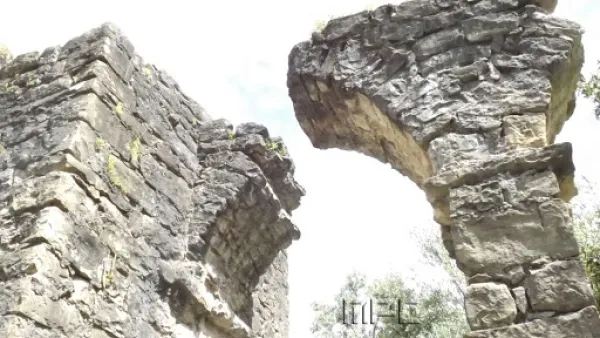
Although it is in the Roman era that the first stable populations appear in the area of the spa, as shown by the location of mosaics and a hydraulic work of the same time.
The current enclave has its origin in the Arab era. The settlement of the Banu Kinana tribe was produced in this territory around 750. Everything seems to indicate that the name of Canena comes from the name of this tribe.
1226 will definitely be conquered by King Fernando III the Holy as it advances to the lands of the Jaen countryside. After the conquest, he was handed over to the district of Baeza; shortly after, King Alfonso X would hand over these conquered lands to the military orders of Santiago and Calatrava; finally, in 1302, Fernando IV took it to the Order of Calatrava and gave it to the city of Ubeda.
At the end of the 15th century Sancho de Benavides took over from Canena in the context of his dispute over the Calatrava de Canena and began the construction of a castle, without real permission, and with the subsequent complaints of Baeza to the Catholic Kings, who had prohibited new fortresses in the territory to put an end to the struggles between the nobility sides.
In 1538 Don Francisco de los Cobos, secretary of the Emperor Charles V and great patron of the Renaissance in Ubeda and its region, buys the village of Canena. And it will be he who transformed the ruins of a castle into a sumptuous palace, whose path and direction of works were in Andrés de Vandelvira.
From then on, the town became part of an extensive Lordship of the Marquesado de Camarasa until well into the 20th century.
The image of the municipality in the 19th century was marked by the imprint of one for the care in the labour of the crops and by the presence of a property distributed from the Military Orders that exploited them in the form of a colonate, and thus would remain well into the 20th century.
The main crops were olive trees, cereal, vineyards and also orchard.
Other points of interest in his artistic heritage:
2
1
2
4