

Route de los olivos centenarios
Description
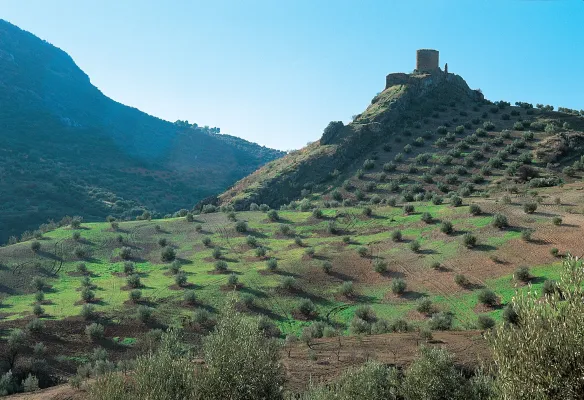
The olive treeMartosIt's traditional. More than 60% of plants are ageover 200 years. Among this olive forest, located in the world's first olive oil producing municipality, are the so-called Centennial Olives.
Datos de la ruta
ROUTE NAME
Ruta de los olivos centenarios
TRAIL TYPE
--
DIFFICULTY
--
TOTAL DISTANCE (IN KILOMETERS) --
-
Stretch of asphalt or concrete: --
-
Section of track, forest road, or dry watercourse: --
-
Trail section: --
-
Sections of livestock trails: --
HUSO 30S
30S x = 414487 and = 4175442
ESTIMATED TRAVEL TIME
ROAD SURFACE TYPE
Road
--
--
DIFFICULTY. RATING ACCORDING TO THE MIDE METHOD
--
MEANS
Severity of the natural environment
--
ITINERARY
Route guidance
--
DISPLACEMENT
Difficulty moving about
--
EFFORT
Amount of effort required
ACCESSIBILITY TYPE
TIME OF YEAR
All year round
SIGNALING
No
MORE INFORMATION
TUNNELS
STEEL VIADUCTS
METAL WALKWAYS
WATER POINTS
PONTOONS
GUARD BOOTHS AND BARRIERS
SWITCHMAN'S CABINS
CYCLABILITY
RECREATIONAL OR SPORTS AREAS NEAR THE TRAIL
AID STATIONS
LINKS TO OTHER TRAILS
SHELTERS
RECOMMENDATIONS
OTHER INFORMATION OF INTEREST (ARCHITECTURAL OR HISTORICAL-CULTURAL, GEOLOGICAL-ECOLOGICAL)
Technical Description
By oral tradition it is known that the olive trees located in theMotril plainhaveover 500 years. This enclave is located just over 1 km from the city centre, at the foot of the Martos road to Santiago de Calatrava. It occupies an extension of 84 ha, with 5,394 trees in total, some of them, true living sculptures. It is a fully productive olive tree, with an average production of 150 kg per tree.