

Description
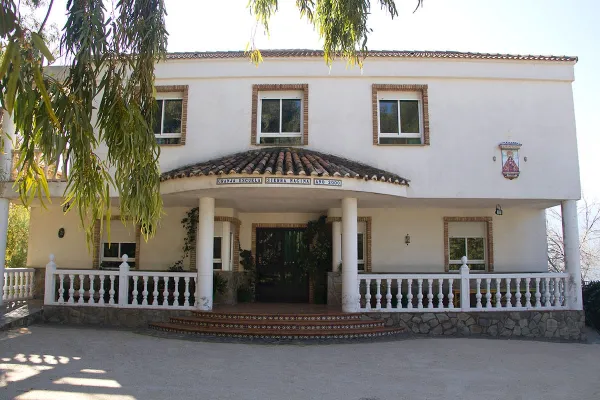
In the relations of Philip II, 1575, the great devotion felt in the region by the Virgin of Cuadros, whose sanctuary, five kilometres from Bedmar, was raised in 1615, forming together with a medieval turret and mill.
u external appearance is low stylized but viscous by its volumetric contrasts. Made of masonry, the cover framed by molded cornice opens with a half-point arch on imposts with smooth transdotes. On its axis is raised a high swordsman of two bodies, the lower one with two arches also of half point and the upper one with one, triangular front and vases. It keeps a cover in a carved stone that belonged to the Marquis de la Cueva palace.
Its plant is rectangular and consists of a single ship covered with false plaster canyon vault, with false fajon arches that are based on arquitrabed pilasters. Both the ship and the presbyterium - which is accessed by a reduced spinal arch and covered with a half-orange vault on the breast - are decorated with geometric and plant thematic motifs. The choir stands at the feet and is supported by two columns with shoes. The shrimp has a polygonal plant, was built in the early 18th century and has undergone various reforms and modifications.
It is possible that the devotion to the Virgin of Cuadros may be extended to the Middle Ages as it corresponds to a very active region militarily in the Christian conquest and with a primarily agricultural activity. The relaunch of his worship was based on the model of popular religiosity promoted by the Council of Trent and on the ecclesiastical policy carried out in the province by Bishop Dávila. The importance of both the process and the claim of the pilgrimage of rosemary of the Sanctuary of the Virgin of Cuadros exceeds its artistic and monumental value.
Is part of