Contact Details
Fax: 953 763 003



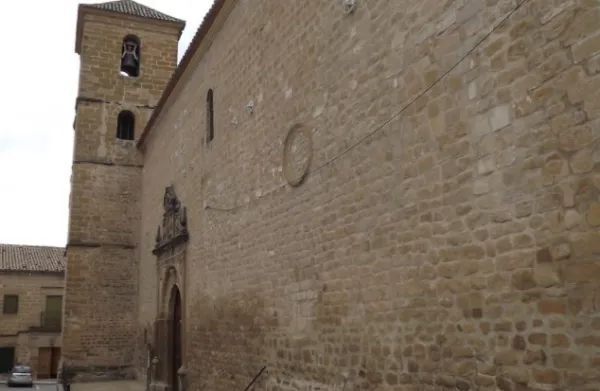
Small olive town located in the western part of the region of La Loma and Las Villas, reaching its end to the same route of the Guadalquivir River. From the historical-artistic point of view, we must highlight the parish Church of Santiago Apostle, built between the 13th and 18th centuries, of which its plateresque cover of the late 16th century stands out. Also interesting are the Torreon del Castillo, declared a Historical Monument in 1985, the Episcopal Palace, of medieval origin, and the City Hall, built in the 16th century.
Is part of


The olive tree is the majority crop, complemented by the cultivated lands of the Vega del Guadalquivir, where industrial irrigation crops are established mainly. The mining industry and the slaughterhouse of the Begíjar Station are the most important industrial activities.
From Iberian times are the remains of a fortification, near the station of Begíjar, in which the typical painted ceramic was recorded. In the Roman stage there was an intense human occupation of the territory by agricultural holdings, type of villa, including Piedra Hincada, the Vega del Bishop, Las Delicias or the House of Beautiful Love.
During the Islamic domination it was named Buxexat and must have passed to Fernando III by 1226, at the same time as Baeza. From this moment on, he will have, for some periods, an extremely agitated life, as it was disputed by the council of the city of Baeza and the bishops of Jaén, eager to take on the income that produced their rich lands. Initially, Fernando III left it attached to Baeza, as a land of realingo.
Shortly after that, the king himself gave land to the Order of Calatrava, which Alfonso X confirmed in 1254. He also gave another part of the land to the bishopric of Toledo. But the great change happened in 1249 when he gave the whole population to the Bishop of Jaén.
A century later, the population was in the hands of Enrique Enríquez, a major advance of the border. Alfonso XI decided to recover it and return it to Baeza. In the 15th century Bishop Don Rodrigo de Narváez took over the castle and incorporated it into the possessions of the diocese, despite the protests of the council of Baeza. In this context Begíjar will be seen to be undisturbed in the struggles between the nobility and Henry IV. In this struggle the Bishops and Baeza, on the same side, would turn the town into an advanced bastion against the capital of Jaén controlled by the Constable Luke of Iranzo. The dispute over this town culminated in the recognition by the Catholic Kings in 1477 of the property to the bishop. The bishops maintained the property of the castle until the 19th century, making it one of their main residences. In 1779 Charles III granted him the title of a villa, thus being definitely disconnected from Baeza.
Crafts
In Begíjar the wicker craftsmanship is kept alive, which is concentrated in the production of baskets. The articles are made by intertwining the pods, removing the skin or keeping its natural color, unpeeled, resulting in a darker tone. Other local artisan works are dry-rope ceramics and disyarns in clothing.
2
2
3