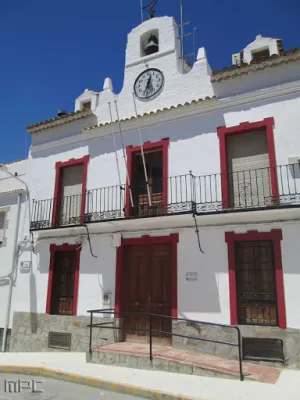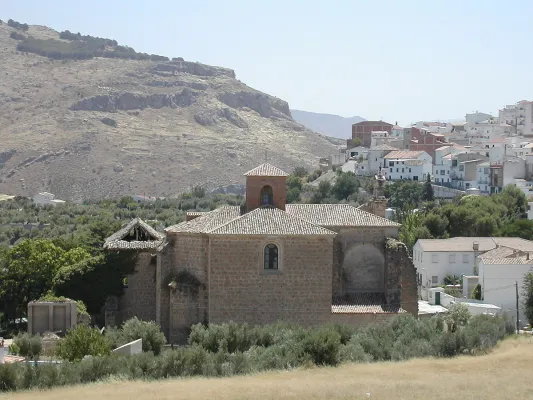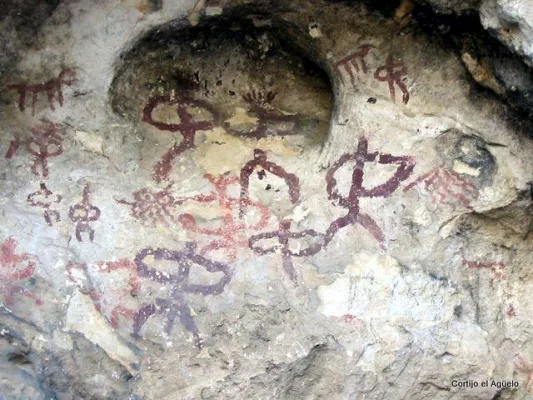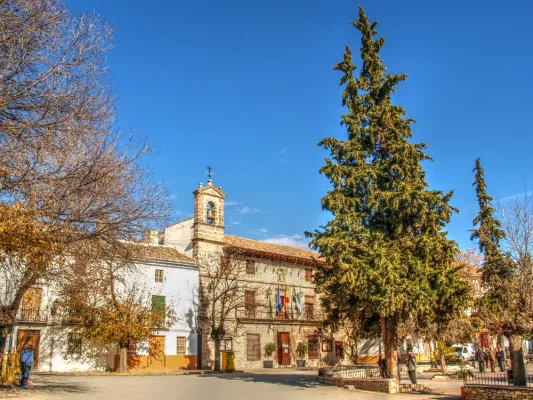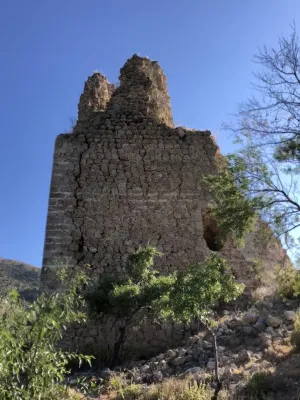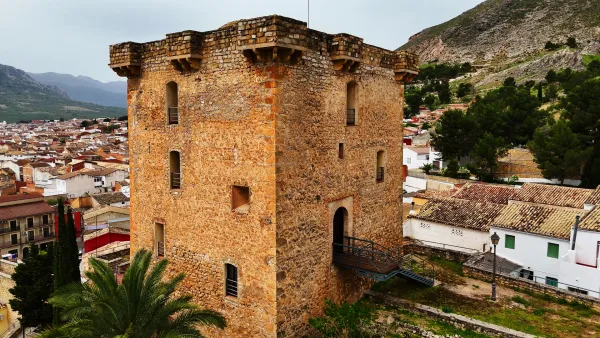


The heritage of Sierra Mágina tells the story of a region that for centuries formed the border between the Nasrid and Castilian kingdoms. This strategic position explains the presence of numerous castles, fortresses, and towers that watch over towns and valleys and which today form one of the most interesting defensive complexes in southern Spain.
The Sierra Mágina region boasts a rich heritage of castles and fortresses that reflect its border history. Among them are the castles of the Order of Santiago, such as those of Albanchez de Mágina, Bedmar, and Jódar, as well as the castle of Jimena, which belonged to the Order of Calatrava. Muslim fortresses transformed into manorial castles, such as those of La Guardia and Huelma, are also preserved. Furthermore, a chain of castles—Cambil, Solera, Belmez, and Campillos de Arenas—encircles the region, giving it a unique border landscape.
The imprint of the Castilian conquest is also reflected in the founding of towns with a grid layout, ordered by the crown, such as Mancha Real or Campillos de Arenas, or Noalejo, which was founded in the mid-16th century by a lady-in-waiting to Queen Isabella of Portugal, leaving its mark on its architecture and urban planning.
Mágina preserves an important legacy of Renaissance architecture, with outstanding works by the master Vandelvira, such as the Church of the Immaculate Conception in Huelma, the Church of La Guardia, the façade of the Camarasa Palace, and the Torres Bridge. The Church of San Juan Evangelista in Mancha Real is the work of his disciple, Alonso Barba.
Among the houses of these small municipalities are also Renaissance gems, such as the churches of Bedar, Albanchez, Jimena, or the Church of the Incarnation in Cambil, houses one of the most beautiful altarpieces in the province.
Meanwhile, in Cabra de Santo Cristo, the town's church is striking for its imposing Baroque grandeur and the legendary tradition linked to the painting of Christ of Burgos.
One of the region's most outstanding constructions is the Salado Viaduct in Cabra del Santo Cristo, an engineering marvel. This 109-meter-high and 300-meter-long structure defines the region's railway landscape.
Overall, Sierra Mágina offers a close-knit and authentic heritage, allowing visitors to explore its history by strolling among monuments, narrow streets, and landscapes that continue to shape the region's identity.