22
Nov
Early Music Festival
22 November 2026
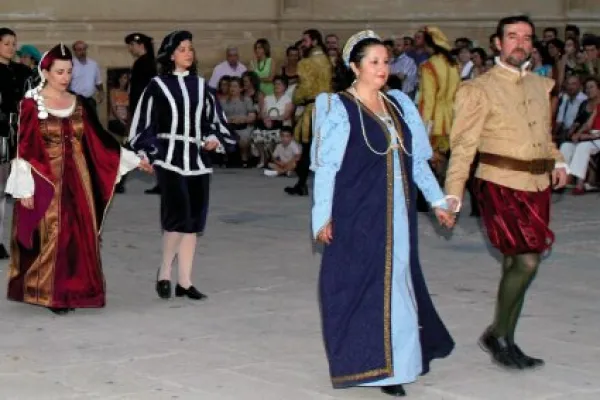


Baeza is an open, welcoming city at any time of year, rich in tradition and boasting a wealth of historic and artistic heritage that has earned it UNESCO World Heritage status. If there is one particularly special time to visit, get to know it and take part in its customs, it is without doubt Holy Week. In Baeza, every spring, tradition, art, history, popular fervour and devotion all come together exceptionally well, in perfect harmony with the monumental ensemble offered by its streets and squares, the processional floats, and the rich imagery of its carvings.
This is helped by the fact that it is a long-standing tradition passed down from generation to generation, with the involvement of an entire town that becomes, during this time, a religious and cultural benchmark, and which, owing to its own distinctive character, sets it apart and gives it its own particular shine. This deep-rooted brotherhood tradition is reflected in the 23 Brotherhoods and Confraternities of the Passion, which together form an extraordinary iconographic catalogue of Christs and Sorrowful Virgins. Carvings such as the Cristo de Jesús de la Caída, from the 17th century, the Cristo de la Humildad from the 16th century, or Sorrowful Virgins such as La Soledad from the 18th century, blend into beautiful processions with their surroundings, making Baeza's Holy Week one of those designated of National Tourist Interest.
Special mention deserves the performance of the Miserere composed on commission by Hilarión Eslava (1807-1878) for Baeza Cathedral, held on the night of Holy Tuesday. A choir made up of more than 100 mixed voices brings to life Psalm 50, which begins with the words Miserere mei Deus (Have mercy on me, O God). The distinctive feature of this Miserere is, as with the whole of Holy Week, its deep roots in local culture and the involvement of the people of Baeza. It is the whole town that sings, that has come to hold deep within its cultural identity this work, which each year echoes once again beneath the stone vaults of the church. Also worth noting is the ceremony known as El Paso, held on the morning of Good Friday, re-enacting Jesus's encounter, carrying the cross on his way to Calvary, with Saint Veronica and the Virgin. One of the most beautiful moments occurs when, through an articulated mechanism, the Cristo Nazareno blesses the townspeople as the images pass one another.
22
Nov
22 November 2026
12
Jun
12 June 2026
Recinto ferial

12
Sep
12 September 2026

26
Sep
26 September 2026